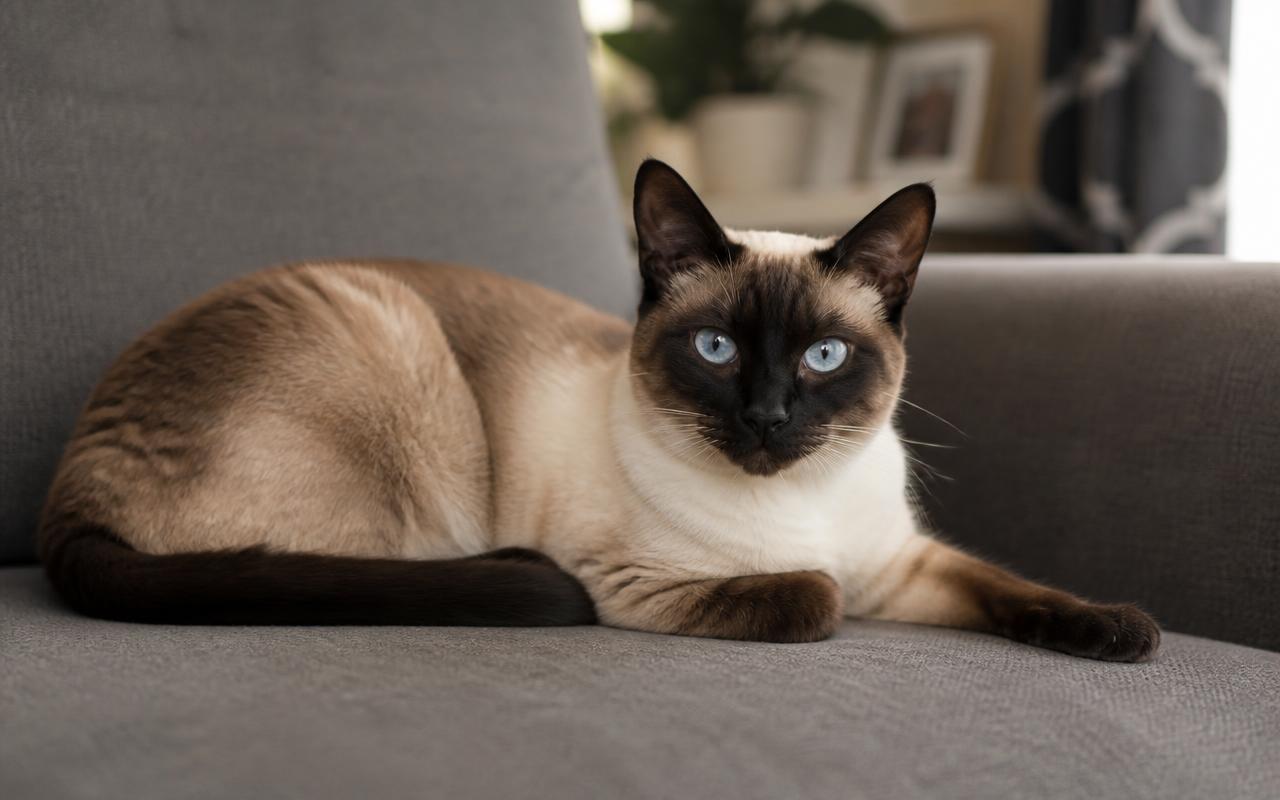
Siamese
History and background
The Siamese arrived in Britain from Siam (modern Thailand) in the 1880s, when a pair were gifted to the British Consul-General and exhibited at Crystal Palace. The breed split during the twentieth century into the extreme wedge-headed show type and the rounder, sturdier traditional or Thai type still popular with UK pet owners. Both share the same temperature-sensitive colourpoint gene that produces the pale body and dark points.
Temperament and family life
Siamese are the most conversational of the common UK breeds - they will answer you back, repeatedly. They form very strong attachments, dislike being alone, and are easily trained to walk in a harness, fetch, and open doors they were not meant to open. They generally do well with children and other cats, but a Siamese left with nothing to do will redecorate. Two cats, tall climbing furniture and puzzle feeders make a real difference.
Common health issues
Progressive retinal atrophy and convergent strabismus (the classic cross-eye) appear in some lines. The breed also has an above-average incidence of asthma and bronchial disease, amyloidosis affecting the liver, and dental disease - their fine jaw structure encourages tartar. Older Siamese are over-represented in feline hyperthyroidism and certain intestinal tumours, so annual blood tests from around age eight are sensible.
Costs of owning a Siamese in the UK
Kittens from GCCF-registered breeders usually cost £500-£1,000. Running costs are modest by pedigree standards - the coat needs almost nothing and they are small eaters - so most owners spend £70-£110 a month including insurance, food and litter. Annual routine vet spend typically falls between £350 and £650, with dental work the most common unplanned expense. Our adult cat cost calculator gives a personalised estimate.
Insurance considerations
Siamese live a long time, which is good news for owners and expensive news for insurers - most claims arrive in the last third of life. A lifetime policy with at least £4,000 of annual vet-fee cover, bought while the cat is young, is the right structure. Check that dental treatment is included rather than limited to accidental damage, and watch for policies that reduce cover once the cat passes ten.
Frequently asked questions
Are Siamese cats really that noisy?
Why do Siamese kittens turn darker as they grow?
Do Siamese need another cat for company?
How long do Siamese cats live?
Related breeds
By The Vet Price Comparison Site editorial team · Last reviewed23 September 2026. Sources: RCVS, The Kennel Club, RVC VetCompass, ABI, and our live UK practice pricing dataset.