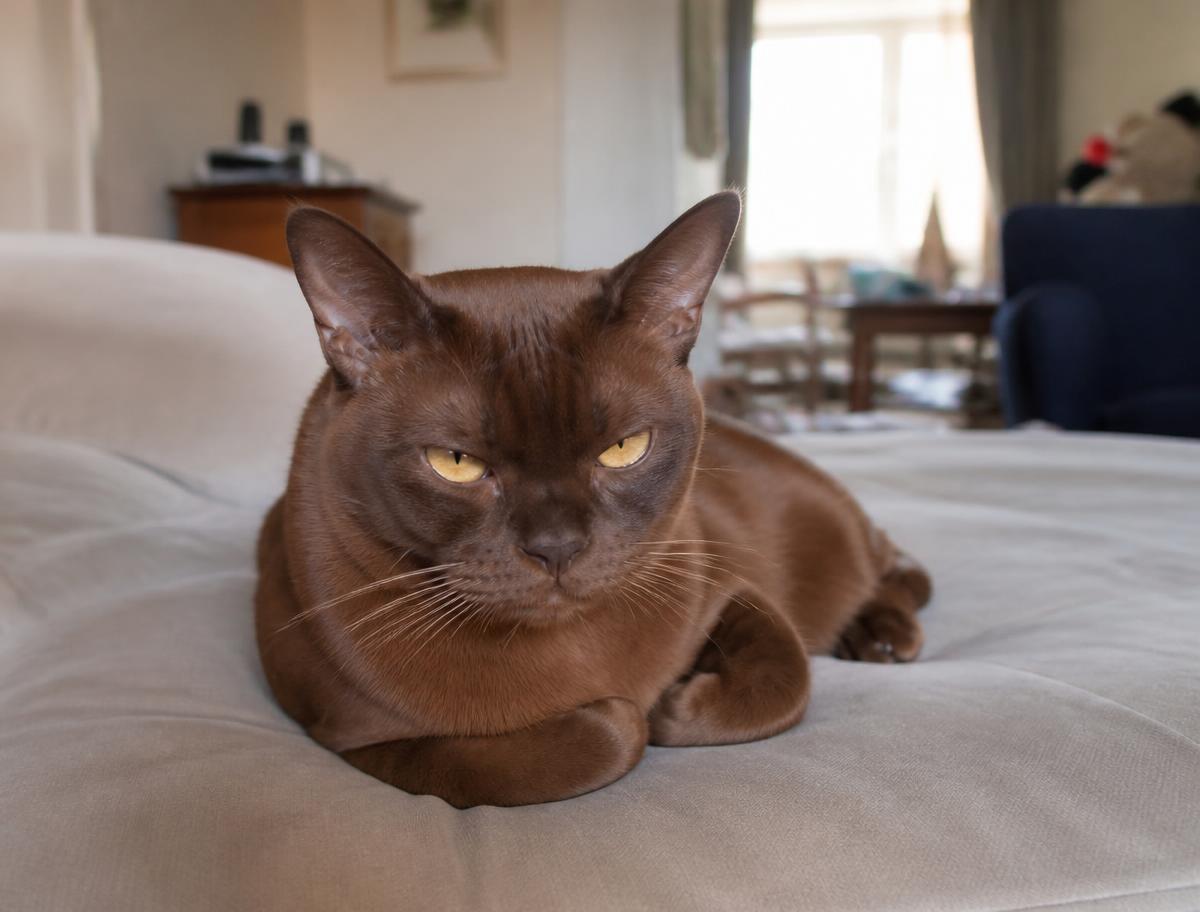
Burmese
History and background
Every modern Burmese traces back to Wong Mau, a brown cat brought from Burma to the United States in 1930 and bred to Siamese. British breeders later developed their own line, and the UK standard now recognises ten colours including blue, chocolate, lilac, red, cream and tortie. The British type keeps a more moderate, less rounded head than the American Burmese, and it is the type you will meet in nearly every UK household.
Temperament and family life
Burmese are among the most extrovert cats you can own. They greet visitors rather than hide from them, learn to fetch, ride on shoulders and hold conversations - quieter than a Siamese but every bit as opinionated. They are excellent with children and dogs, and genuinely poor at being left alone; boredom shows up as shredded furniture, over-eating or constant calling. Two Burmese, or a Burmese and another sociable cat, is a far kinder arrangement for a working household.
Common health issues
The breed has several well-documented inherited risks. Burmese diabetes mellitus is markedly more common than in other cats and is strongly linked to weight gain. Hypokalaemic polymyopathy (episodic weakness caused by low blood potassium) has a known genetic test, as does Burmese head defect, which responsible breeders screen out. Flat-chested kitten syndrome, gingivitis and corneal sequestration also appear. Ask any breeder for DNA test results, and keep adult cats lean - it is the single biggest thing you can do to reduce diabetes risk.
Costs of owning a Burmese in the UK
Expect £600-£1,200 for a registered kitten, more for less common colours. Day-to-day costs are unremarkable - the coat needs nothing and they are not huge eaters - but the health profile means insurance and monitoring matter. Most owners spend £75-£120 a month all in, with routine veterinary spend of £350-£700 a year. Diabetes management, if it develops, adds £40-£90 a month in insulin, monitoring and prescription food. Use our adult cat cost calculator to model this for your area.
Insurance considerations
Insurers know about Burmese diabetes, so premiums run above average and any weight-related note on the clinical history can invite exclusions later. Buy a lifetime policy early, before any diagnosis, and choose at least £5,000 of annual vet-fee cover - chronic conditions in this breed are managed for years rather than cured. Check specifically that ongoing medication, repeat blood glucose curves and prescription diets are covered rather than capped.
Frequently asked questions
Are Burmese cats prone to diabetes?
Can Burmese be left alone during the working day?
Do Burmese get on with dogs and children?
How much grooming does a Burmese need?
Related breeds
By The Vet Price Comparison Site editorial team · Last reviewed2 August 2026. Sources: RCVS, The Kennel Club, RVC VetCompass, ABI, and our live UK practice pricing dataset.