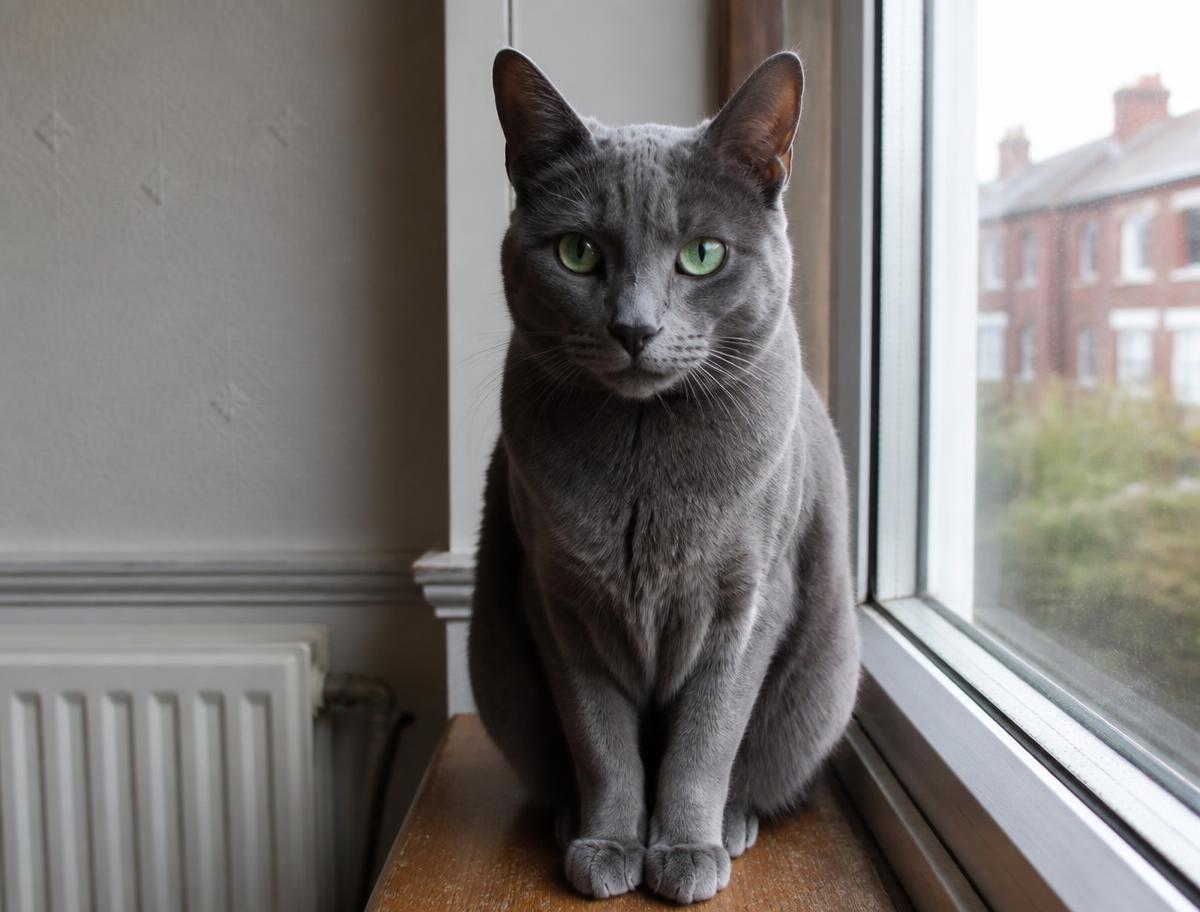
Russian Blue
History and background
The Russian Blue is a natural breed rather than a manufactured one, thought to have arrived in Britain from the port of Arkhangelsk in the 1860s and shown at Crystal Palace as the Archangel Cat. British and Scandinavian breeders rebuilt the bloodlines after the Second World War, which is why UK cats tend to be finer-boned than American lines. The distinctive shimmer comes from silver tipping on each hair of a genuine double coat.
Temperament and family life
Russian Blues are gentle, routine-loving and notably quiet - the polar opposite of a Siamese. They bond hard with one or two people, follow them around the house and dislike change, noisy households and unfamiliar visitors. They cope well with being left for a working day provided the routine is predictable, which makes them one of the better pedigree choices for flats and for owners in work. Families with very young children often find the cat simply retreats upstairs.
Common health issues
This is a robust breed with no widespread inherited disease, and insurers treat it accordingly. The main risks are lifestyle-related: obesity (they are enthusiastic eaters and low-key movers), bladder and urinary problems linked to stress and low water intake, and dental disease in later life. Occasional cases of polycystic kidney disease and hypertrophic cardiomyopathy appear, so ask breeders about screening. Given their long lives, annual blood pressure and kidney checks from age eight are money well spent.
Costs of owning a Russian Blue in the UK
Kittens from GCCF-registered breeders typically cost £400-£900, with waiting lists common. Running costs are low: a short coat that needs almost no professional grooming, a modest appetite and few breed-specific problems. Most owners budget £65-£100 a month across food, litter and insurance, with routine veterinary spend of £300-£550 a year covering vaccination, flea and worm cover and a health check. Our adult cat cost calculator will price this up for your own postcode.
Insurance considerations
Because the breed is long-lived and largely free of inherited conditions, premiums sit at the cheaper end of pedigree pricing. The trap is the same as for any long-lived cat: claims cluster in the final years, so a lifetime policy taken out as a kitten is far better value than an annual policy you renew and lose cover on. Look for at least £4,000 of annual vet-fee cover and check that dental treatment and prescription diets for urinary disease are included.
Frequently asked questions
Are Russian Blues hypoallergenic?
Are Russian Blues good for first-time cat owners?
Can a Russian Blue live indoors only?
How long do Russian Blues live?
Related breeds
By The Vet Price Comparison Site editorial team · Last reviewed2 August 2026. Sources: RCVS, The Kennel Club, RVC VetCompass, ABI, and our live UK practice pricing dataset.