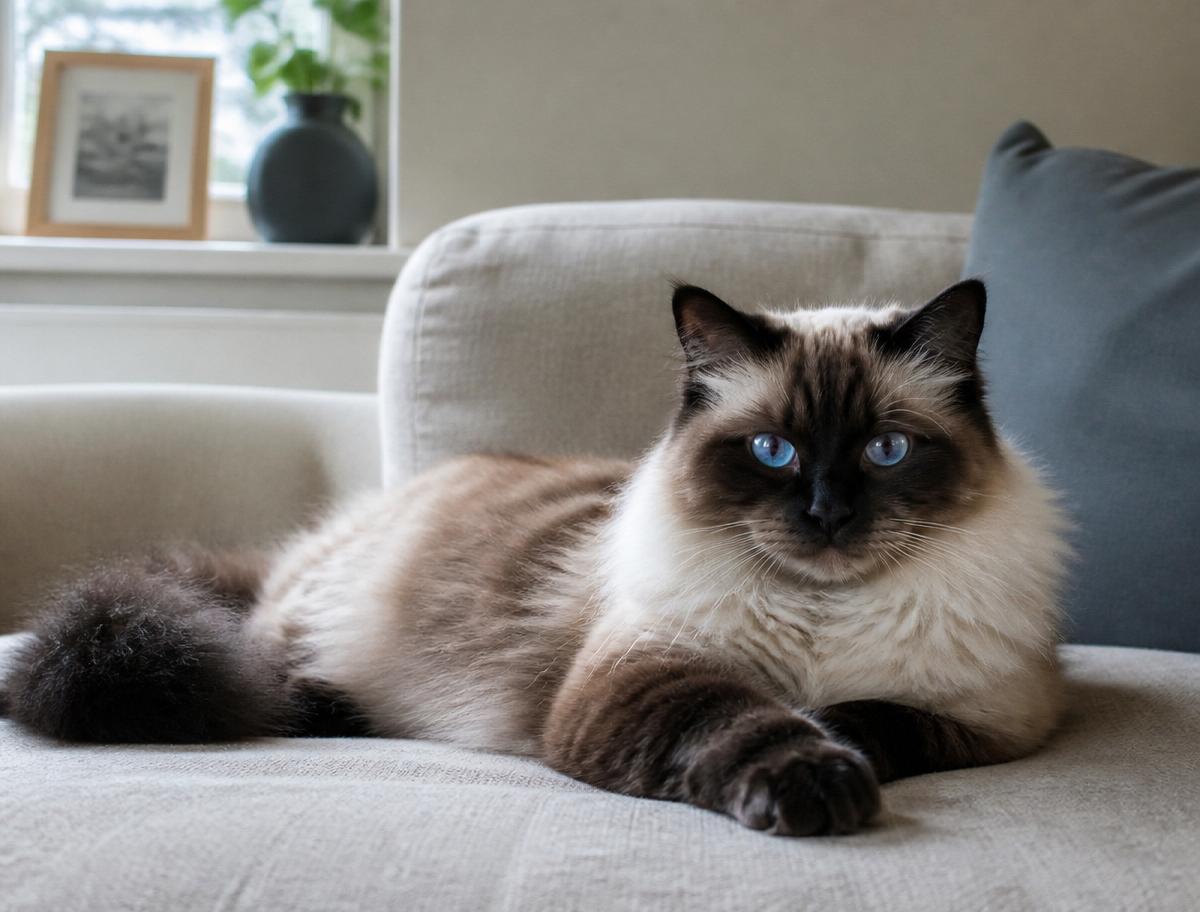
Ragdoll
History and background
The Ragdoll was created in the 1960s by Ann Baker in Riverside, California, from a white long-haired cat called Josephine and a series of Birman-type toms. The breed was recognised in the UK by the GCCF in 1990 and has climbed steadily since; it is now second only to the British Shorthair in UK pedigree registrations. The 'ragdoll' name refers to the breed's tendency to relax completely when lifted — a temperament trait, not a medical one.
Temperament and family life
Ragdolls are dog-like in their attachment to people. They will come when called, tolerate being carried, play fetch and sleep on the bed. They are gentle enough for young children and rarely use their claws in play. The trade-off is that they are not suited to being left alone all day — a second cat or a household where someone is usually in is a much better fit than a working single-owner household.
Common health issues
Hypertrophic cardiomyopathy (HCM) is the single biggest concern; a specific Ragdoll HCM mutation can be DNA-tested, and reputable breeders scan parents. Polycystic kidney disease and bladder stones also appear more often than in moggies. Because Ragdolls are large, slow-maturing cats, keep an eye on weight — an overweight Ragdoll strains joints and heart. Annual vet checks with a listen to the heart are worthwhile from around age five.
Costs of owning a Ragdoll in the UK
Kittens from GCCF or TICA-registered breeders typically cost £700–£1,400. Because of their size, Ragdolls eat more than an average cat — budget £45–£70 a month on food alone. Monthly running costs including insurance, litter and preventative care come in around £90–£130. See our neutering price guide for typical UK spay and castration fees.
Insurance considerations
HCM treatment and cardiology referrals can easily exceed £3,000 across a Ragdoll's life, and the breed's pedigree status pushes premiums higher than average. Choose a lifetime policy with at least £5,000 of annual vet-fee cover; check that the policy does not exclude heart disease and that the excess is fixed rather than percentage-based.
Frequently asked questions
Do Ragdolls really go limp when you pick them up?
Are Ragdolls indoor or outdoor cats?
How often should I brush a Ragdoll?
Are Ragdolls hypoallergenic?
Related breeds
By The Vet Price Comparison Site editorial team · Last reviewed23 September 2026. Sources: RCVS, The Kennel Club, RVC VetCompass, ABI, and our live UK practice pricing dataset.