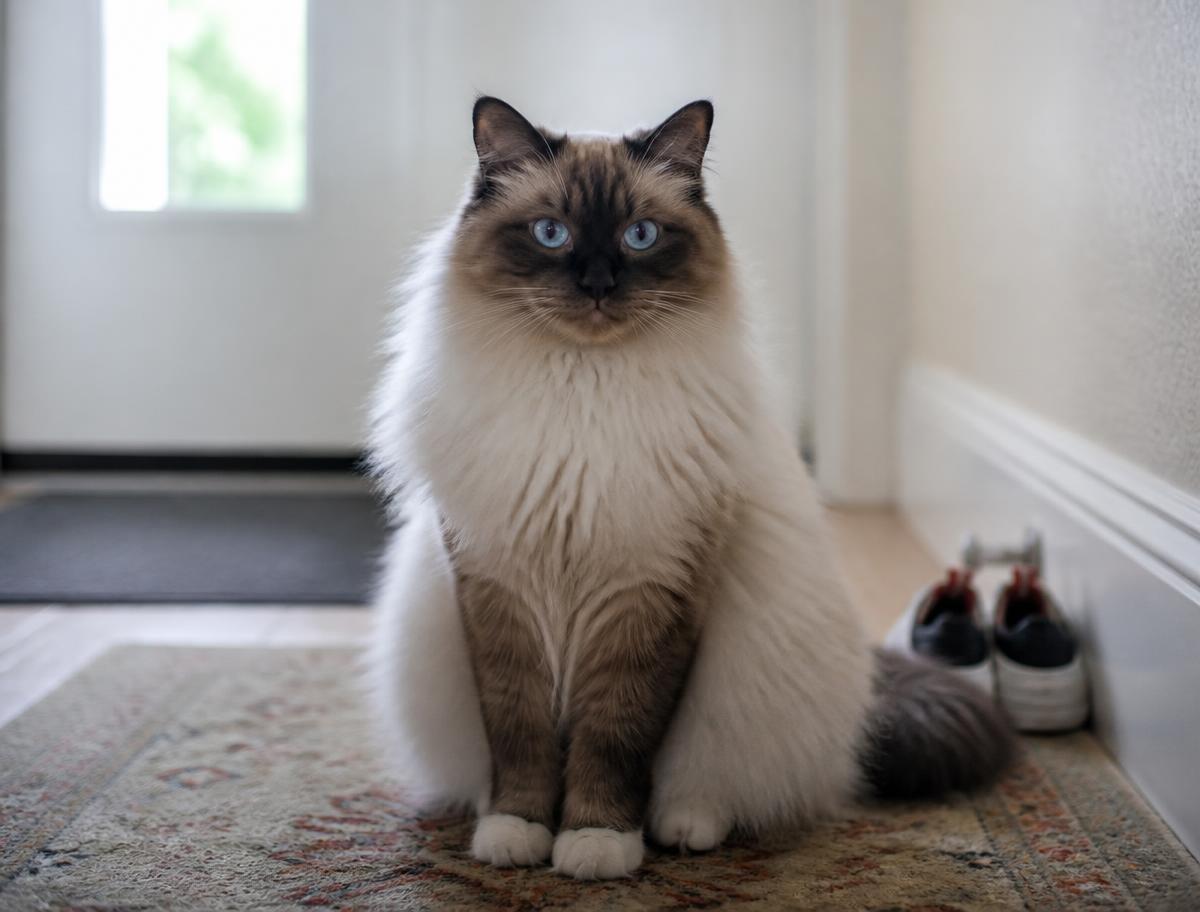
Birman
History and background
The Birman appeared in France in the 1920s, wrapped in a temple legend about Burmese priests and a golden goddess; the practical truth is probably a colourpoint longhair cross. The European population was nearly wiped out during the Second World War and rebuilt from a handful of cats, which explains a relatively narrow gene pool. The breed reached Britain in 1965 and has been a GCCF fixture ever since. The white gloves are controlled by a separate recessive gene and are required by the breed standard.
Temperament and family life
Birmans are the middle ground of pedigree cats: sociable without being clingy, chatty without being loud, playful without being frantic. They follow the household from room to room, tolerate handling well and are famously good with children, dogs and other cats. They are not natural loners - a Birman left alone all day is a bored Birman - but they settle more calmly than the oriental breeds. Their placid nature also makes them poor at defending territory, so many owners keep them indoors or in a catio.
Common health issues
The narrow post-war gene pool left its mark. Hypertrophic cardiomyopathy is the most important concern and warrants scanning of breeding cats. Feline infectious peritonitis risk is higher than average in Birman kittens from multi-cat catteries, and the breed is over-represented for chronic kidney disease, congenital hypotrichosis and a hereditary form of corneal dystrophy. Coat length also means occasional matting behind the ears and around the trousers rather than the whole-body matting a Persian suffers. Annual senior checks with kidney bloods from age eight are strongly advised.
Costs of owning a Birman in the UK
Registered kittens usually cost £700-£1,200. Grooming is manageable at home - there is no dense undercoat - so the recurring costs are food, litter, insurance and preventive care, typically £75-£120 a month. Routine annual veterinary spend lands between £350 and £700, and cardiac screening or a kidney work-up adds £150-£350 when needed. Our adult cat cost calculator gives a personalised figure using live prices from practices near you.
Insurance considerations
Heart and kidney disease are both long-term, expensive conditions, and both are over-represented here - which makes a lifetime policy with at least £5,000 of annual cover the sensible structure rather than a cheap annual product. Take the policy out as a kitten: a murmur picked up at the first vaccination appointment is enough for an insurer to exclude cardiac claims for life. Check that diagnostic imaging, including echocardiography, is covered rather than limited.
Frequently asked questions
What is the difference between a Birman and a Ragdoll?
Do Birmans need daily grooming?
Are Birmans good with children and dogs?
What health tests should a Birman breeder have done?
Related breeds
By The Vet Price Comparison Site editorial team · Last reviewed2 August 2026. Sources: RCVS, The Kennel Club, RVC VetCompass, ABI, and our live UK practice pricing dataset.