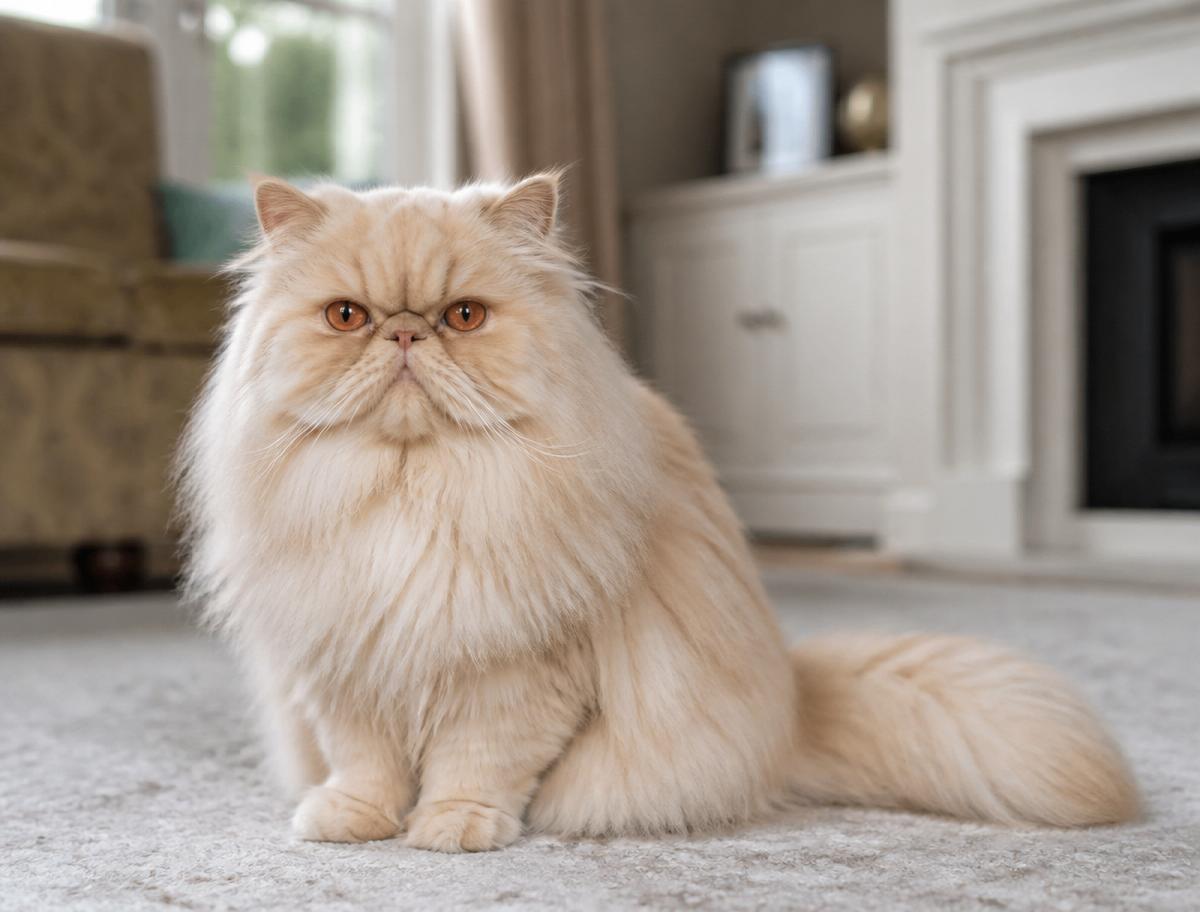
Persian
History and background
Persians are one of the oldest recognised cat breeds in the West, imported into Europe from Persia (modern Iran) in the 17th century and refined by British breeders through the Victorian era. Two types are commonly seen today: the modern 'ultra' or peke-face Persian, with a very flat face bred for the show ring, and the traditional or doll-face Persian, with a slightly longer muzzle. The doll-face type generally has fewer breathing and eye problems and is worth seeking out.
Temperament and family life
Persians are quiet, sedate cats. They rarely climb curtains or knock things off shelves, prefer sunny sofas to complex play, and are one of the best-suited breeds to a flat or an owner who is home a lot. They are affectionate but undemanding, and get on well with respectful children and other cats. Their coat and flat face mean they need an owner who is willing to groom daily and clean around the eyes — this is not a low-maintenance breed.
Common health issues
The flatter the face, the higher the risk of brachycephalic obstructive airway syndrome (BOAS), dental crowding and chronic tear-staining. Polycystic kidney disease (PKD) was widespread in the breed and is DNA-testable — any reputable breeder will test parents and only breed from PKD-negative cats. Hypertrophic cardiomyopathy and progressive retinal atrophy also appear more often than in moggies. Choose a doll-face kitten from a PKD-tested line and be prepared for annual dentals as the cat ages.
Costs of owning a Persian in the UK
Kittens from GCCF-registered breeders typically cost £600–£1,300. Grooming costs add up: a professional lion clip and bath every 3–4 months runs £45–£70 per visit. Monthly all-in costs including premium food, litter, insurance and preventative care sit around £95–£140. Budget an extra £250–£500 a year for dental and eye care.
Insurance considerations
Insurers price Persians high because of PKD, HCM and brachycephalic risk. A lifetime policy with at least £5,000 of annual vet-fee cover is sensible, and it is worth checking that the policy explicitly covers investigation and treatment of hereditary conditions — some cheaper policies exclude them.
Frequently asked questions
Do all Persians have breathing problems?
How often does a Persian need grooming?
Can Persians go outside?
Is a Persian a good first cat?
Related breeds
By The Vet Price Comparison Site editorial team · Last reviewed23 September 2026. Sources: RCVS, The Kennel Club, RVC VetCompass, ABI, and our live UK practice pricing dataset.