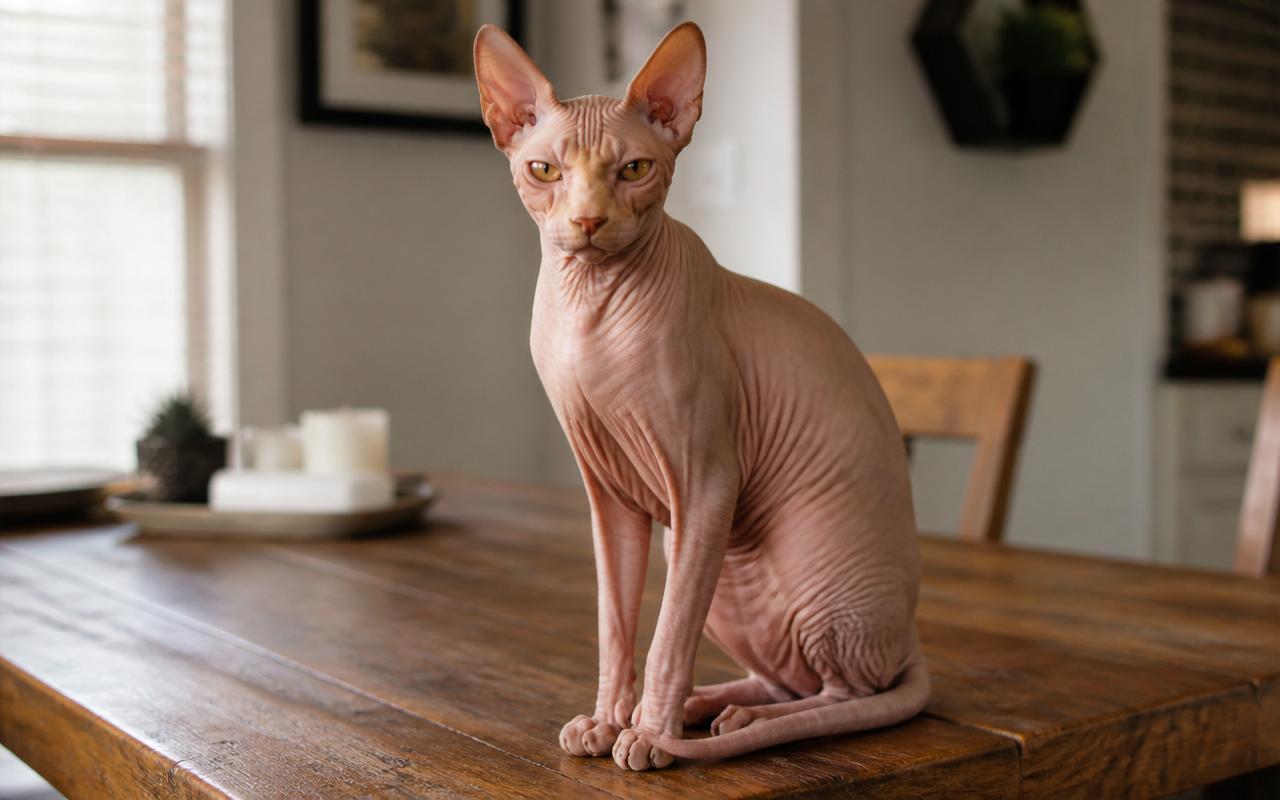
Sphynx
History and background
The modern Sphynx traces back to a hairless kitten called Prune, born in Toronto in 1966, and to further natural hairless kittens found in Minnesota and Toronto in the 1970s. Outcrossing to Devon Rex cats gave the breed the genetic diversity it needed. The GCCF and TICA both recognise the breed today, and UK registrations have risen sharply over the past decade as the look has become fashionable. Sphynx are not truly bald - most carry a fine down like warm peach skin.
Temperament and family life
Sphynx are relentlessly social. They follow their people from room to room, sleep under the covers for warmth, and are usually happy to be handled by children. They are also loud, opinionated and inventive - a bored Sphynx will open cupboards and knock things off shelves. They cope badly with being alone all day, so most UK breeders prefer to home them in pairs or into households where someone is usually in.
Common health issues
Hypertrophic cardiomyopathy (HCM) is the biggest concern in the breed and responsible breeders scan parents by echocardiogram. Skin problems are the day-to-day issue: without a coat to absorb oils, the skin gets greasy and needs bathing roughly weekly, and ears build up wax quickly. Sphynx are prone to sunburn and lose heat fast, so they should be kept indoors. Some lines also carry hereditary myopathy, and dental disease is common.
Costs of owning a Sphynx in the UK
Kittens from registered breeders typically cost £900-£1,800, among the highest of any UK cat breed. Running costs are higher than average too: extra heating, bathing products, more frequent ear cleaning and a higher food intake because of their fast metabolism. Budget roughly £100-£150 a month all-in. Annual vet spend commonly lands between £500 and £900 once dental checks and skin issues are counted.
Insurance considerations
Sphynx premiums are high because of the HCM risk and the breed's dermatological and dental claim history. Take a lifetime policy with at least £7,000 of annual vet-fee cover, insure from kittenhood before anything can be excluded as pre-existing, and check the wording does not exclude heart disease or skin conditions. Cardiology referrals for HCM can run to several thousand pounds.
Frequently asked questions
Are Sphynx cats hypoallergenic?
How often does a Sphynx need bathing?
Can a Sphynx go outside?
Why are Sphynx cats so expensive to keep?
Related breeds
By The Vet Price Comparison Site editorial team · Last reviewed23 September 2026. Sources: RCVS, The Kennel Club, RVC VetCompass, ABI, and our live UK practice pricing dataset.