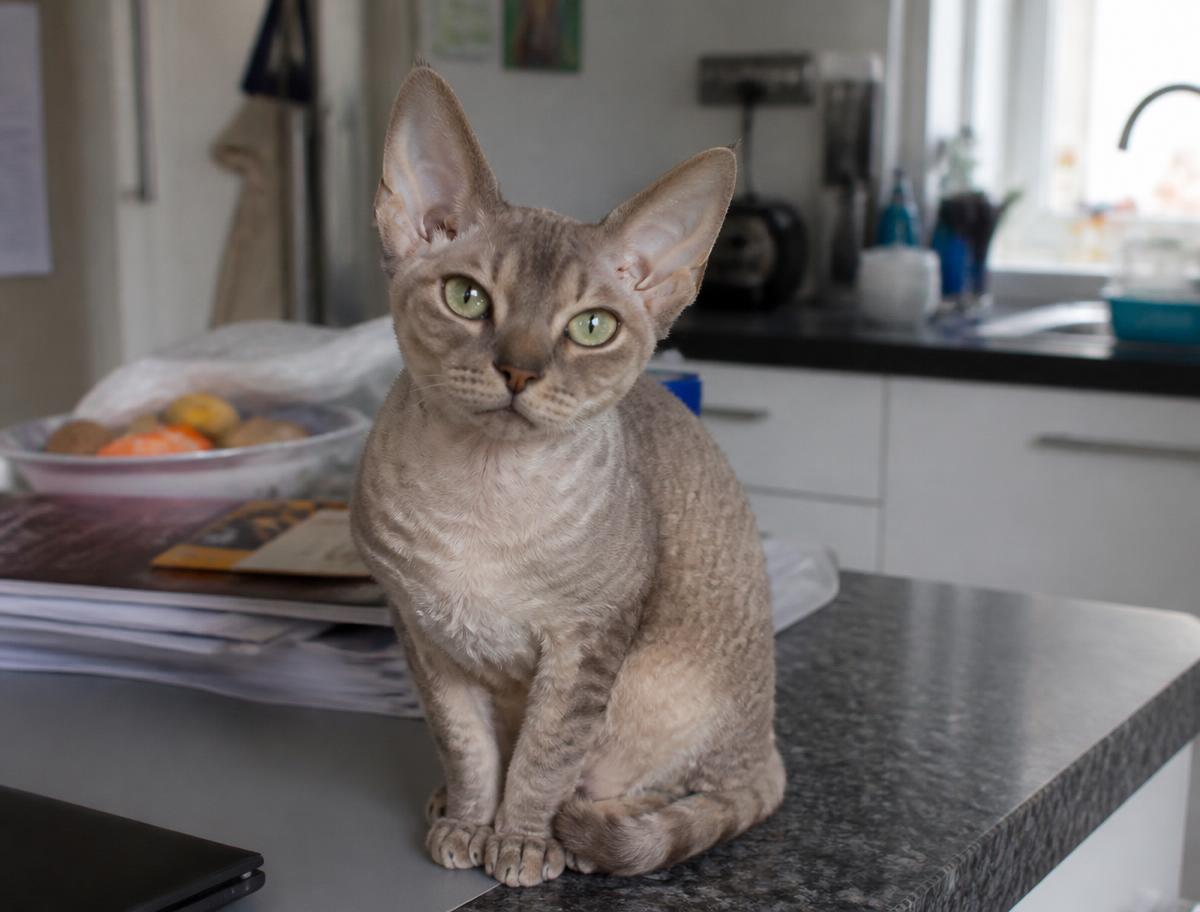
Devon Rex
History and background
The breed began with Kirlee, a curly-coated kitten found near a disused tin mine at Buckfastleigh in Devon in 1959. Breeders initially assumed he carried the same gene as the Cornish Rex discovered a decade earlier, but test matings proved the two mutations were separate and recessive. The GCCF recognised the Devon Rex in 1967. Because the founding population was tiny, UK breeders outcross carefully to keep genetic diversity in a breed that traces to a single cat.
Temperament and family life
Devons are relentlessly sociable and physically clingy - they seek out warmth, which usually means your neck, your lap or the airing cupboard. They are highly trainable, learn to fetch and open cupboards, and stay kitten-like well past middle age. They are excellent with children, dogs and other cats, and genuinely unsuited to a home where they would be alone all day. Their low body fat and thin coat also means they feel the cold, so most Devons are indoor cats with plenty of heated bedding.
Common health issues
The narrow founding gene pool left three important conditions. Devon Rex myopathy (hereditary spasticity) causes muscle weakness and swallowing difficulty in affected kittens and has a DNA test. Hypertrophic cardiomyopathy is over-represented and warrants echo screening of breeding cats. Patellar luxation and hip dysplasia appear more often than in most cats. The coat brings its own care: Devons produce more ear and skin oil than usual, so malassezia dermatitis and waxy ear infections are common and need routine cleaning rather than repeat courses of medication. Blood type B is also more frequent, which matters for transfusions and breeding.
Costs of owning a Devon Rex in the UK
Registered kittens typically cost £700-£1,300, and health-tested lines sit at the top of that range for good reason. Running costs are moderate: little grooming spend, but a high metabolism means they eat more than their size suggests, and skin and ear care adds up. Most owners spend £75-£125 a month including insurance, food and litter, with routine veterinary spend of £350-£700 a year. A cardiac scan costs roughly £200-£350 if your vet recommends one. Our adult cat cost calculator prices this using live data from practices near you.
Insurance considerations
Insurers price the Devon Rex above average because of the cardiac and orthopaedic history in the breed. Take out a lifetime policy as a kitten with at least £5,000 of annual vet-fee cover - HCM and recurrent skin disease are both managed for years, not weeks. Read the skin and ear wording carefully: some policies treat recurring dermatitis as a single ongoing condition and cap it, and any note of an early heart murmur can trigger a lifetime cardiac exclusion if cover is bought later.
Frequently asked questions
Are Devon Rex cats hypoallergenic?
Do Devon Rex cats need bathing?
Are Devon Rex cats cold in winter?
What health tests should a Devon Rex breeder have?
Related breeds
By The Vet Price Comparison Site editorial team · Last reviewed23 September 2026. Sources: RCVS, The Kennel Club, RVC VetCompass, ABI, and our live UK practice pricing dataset.