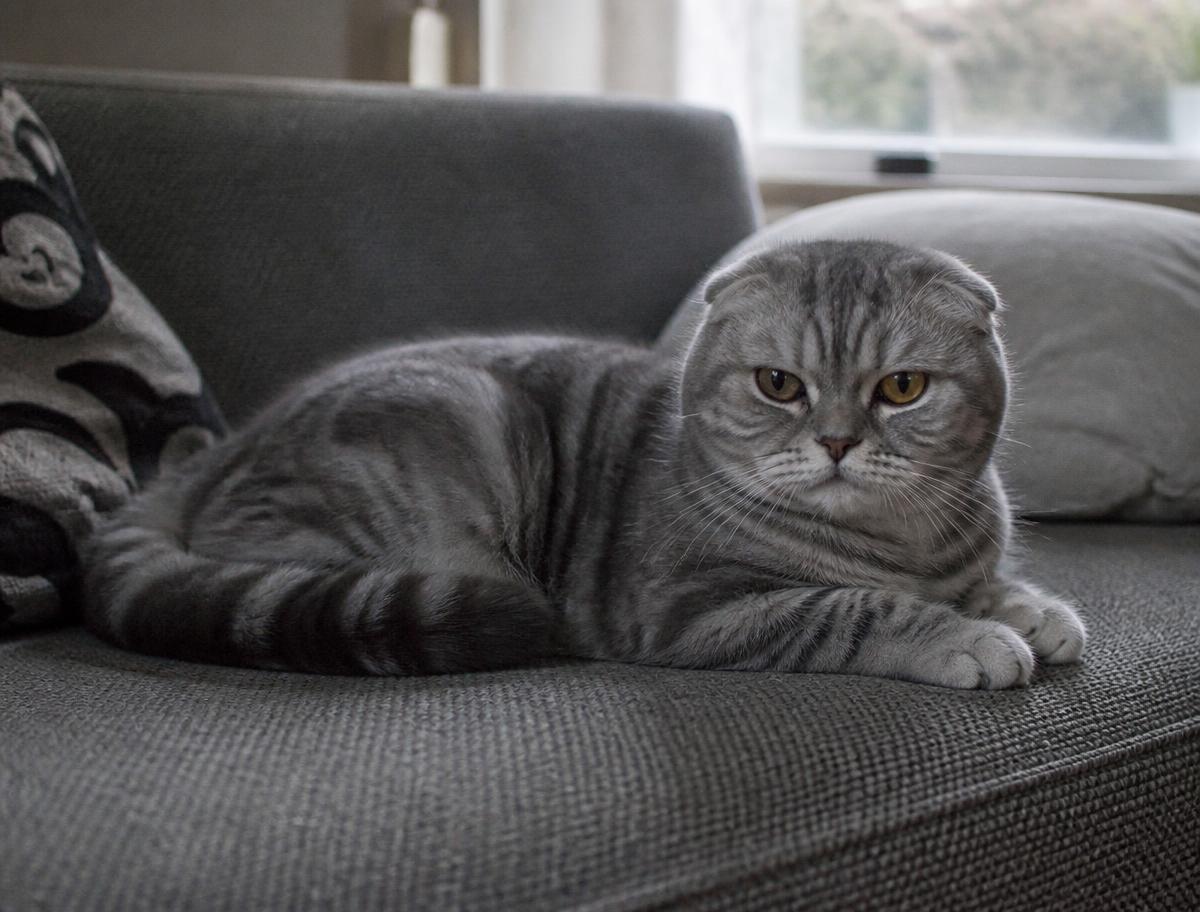
Scottish Fold
History and background
Every Scottish Fold traces to Susie, a white barn cat with folded ears found on a farm near Coupar Angus in Perthshire in 1961. British breeders developed the type quickly, but by 1971 the GCCF had withdrawn recognition after veterinary evidence linked the fold gene to crippling joint disease. The breed was exported to the United States, where it was developed further and remains popular. In Britain it is still unregisterable, and both the BVA and International Cat Care have called for breeding to stop.
Temperament and family life
Setting the health question aside, the temperament is genuinely lovely. Folds are placid, quiet, undemanding and deeply attached to their people - they follow you about, sit near you rather than on you, and rarely make a fuss. They tolerate children and dogs well and adapt easily to flats. They are not athletic cats and do not need much space, though they should not be allowed to become overweight, which loads already-compromised joints.
The welfare problem you need to understand
The folded ear is a visible symptom of osteochondrodysplasia - a defect in cartilage development that affects every joint in the body, not just the ear. Cats with two copies of the gene are severely affected and often crippled young. Cats with one copy were long assumed to be safe, but radiographic studies have found abnormal bone changes in the tail, ankles and knees of a large proportion of heterozygous Folds, including cats with no outward symptoms. Signs to watch for are a stiff, short-stepping gait, reluctance to jump, a thickened or inflexible tail, and swelling around the hocks. There is no cure; treatment is lifelong pain management. Anyone considering the breed should read International Cat Care's position statement first, and anyone who already owns one should have a baseline joint assessment and X-rays discussed with their vet.
Costs of owning a Scottish Fold in the UK
Because the breed cannot be registered here, kittens are usually sold through unregistered breeders or imported, at £800-£2,000. The running costs are where this breed differs from any other on our site: lifelong arthritis management is common, and long-term pain relief, joint supplements, repeat imaging and mobility-focused physiotherapy can push routine annual spend to £450-£900 even before a flare-up. Radiographs typically cost £200-£400 a set. Our adult cat cost calculator gives a realistic monthly figure using live prices from practices near you.
Insurance considerations
This is the one breed where insurance wording deserves proper scrutiny before you buy. Several UK insurers exclude osteochondrodysplasia and related joint disease in Scottish Folds outright, and others will exclude it the moment it is noted on a clinical record. Insure from the day you get the kitten, choose a lifetime policy with £7,000-£10,000 of annual cover, and ask the insurer in writing whether hereditary joint conditions in this breed are covered. If they are not, budget for the cost yourself.
Frequently asked questions
Are Scottish Folds banned in the UK?
Do all Scottish Folds get arthritis?
How can I tell if my Scottish Fold is in pain?
What is a Scottish Straight?
Related breeds
By The Vet Price Comparison Site editorial team · Last reviewed12 October 2026. Sources: RCVS, The Kennel Club, RVC VetCompass, ABI, and our live UK vet pricing index.