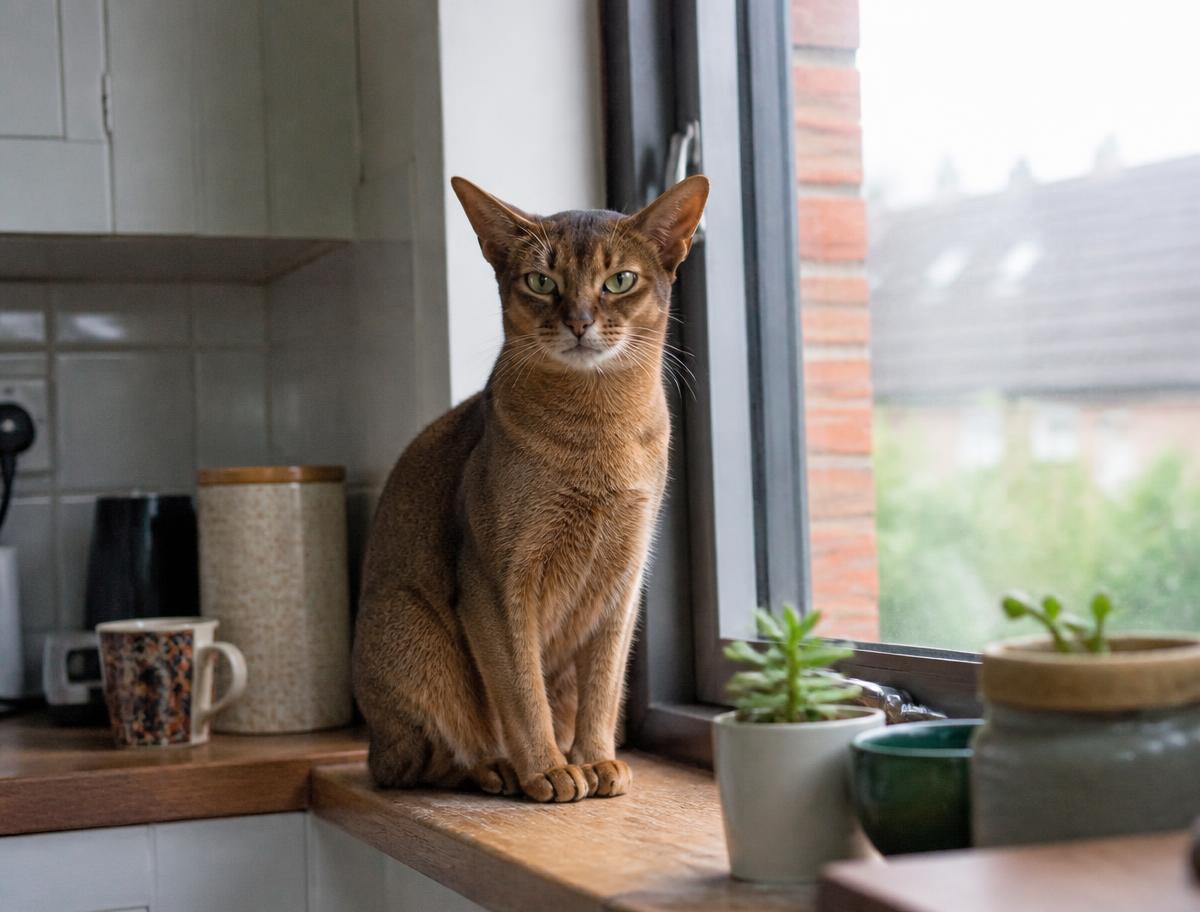
Abyssinian
History and background
Despite the name, the Abyssinian almost certainly has no meaningful link to Ethiopia. The founding cat, Zula, was said to have arrived in Britain in 1868 with troops returning from the Abyssinian campaign, but genetic work points to a coastal Indian Ocean origin and a good deal of British breeding behind the modern type. Abyssinians were exhibited in England by the 1870s and were among the first breeds recognised by the GCCF. The UK population nearly collapsed twice - once to feline leukaemia in the 1960s and again through wartime losses - so today's cats descend from a small number of carefully rebuilt lines.
Temperament and family life
Abyssinians are relentlessly curious and need a job. They learn to fetch, walk on a harness and work out cupboard catches, and they get bored destructively if left with nothing to do. They bond strongly with people but are usually shoulder-perchers rather than lap-sitters. Most do best with a companion cat and a home with vertical space - shelves, cat trees, a safe window perch. They are good with older children who understand a cat that does not want to be carried, and they are far too active for a household that is out twelve hours a day.
Common health issues
Three inherited conditions matter in this breed. Pyruvate kinase deficiency causes intermittent anaemia and has a reliable DNA test - every breeding cat should be tested. Progressive retinal atrophy (rdAc) leads to gradual blindness from middle age and also has a DNA test. Renal amyloidosis appears in some lines and causes early kidney failure, so ask about kidney health in the parents and grandparents. Beyond genetics, Abyssinians are prone to gingivitis and periodontal disease more than most shorthairs, and their busy outdoor habits mean road traffic injury is a genuine risk in urban homes. Annual dental checks are worth booking as a matter of routine rather than waiting for bad breath.
Costs of owning an Abyssinian in the UK
Registered kittens usually cost £600-£1,200, with health-tested lines at the upper end. Ongoing costs are moderate - grooming spend is close to zero, but dental work is the single most likely large bill, with a scale and polish typically £180-£350 and extractions pushing that past £600. Most owners budget £60-£100 a month across food, litter and insurance, and £300-£600 a year in routine veterinary care including vaccinations, flea and worm cover and a health check. Our adult cat cost calculator prices all of this using live data from practices near your postcode.
Insurance considerations
Abyssinians sit slightly above average on premium because of the renal and eye history in the breed. Buy a lifetime policy as a kitten with at least £4,000-£5,000 of annual vet-fee cover; kidney disease is managed for years and quickly exhausts a capped or per-condition policy. Check the dental wording specifically - many insurers only pay dental claims if the cat has had an annual check-up on record, which is easy to fall foul of.
Frequently asked questions
Are Abyssinian cats good for first-time owners?
Do Abyssinians need another cat for company?
How much does an Abyssinian kitten cost in the UK?
What health tests should an Abyssinian breeder have?
Related breeds
By The Vet Price Comparison Site editorial team · Last reviewed12 October 2026. Sources: RCVS, The Kennel Club, RVC VetCompass, ABI, and our live UK vet pricing index.