81% of UK dogs receive regular booster vaccinations, but costs vary widely by region, so knowing your local fees is essential. Your dog's booster may not be an annual injection for every disease, and understanding the timetable can help you protect your pet without paying for the wrong service at the wrong time.
A dog vaccination booster is a follow-up dose that helps maintain protection after the initial puppy course. The important detail is that different vaccines provide protection for different lengths of time. That's why one dog may need an annual appointment for some components, while other core vaccines are scheduled less often.
Table of Contents
- Why Dog Vaccination Boosters Matter
- Understanding Core and Non-Core Vaccines
- Typical Booster Schedules Explained
- How Much Do Dog Vaccination Boosters Cost
- Balancing Protection with Practical Costs
- Your Action Plan for Dog Vaccination Boosters
Why Dog Vaccination Boosters Matter
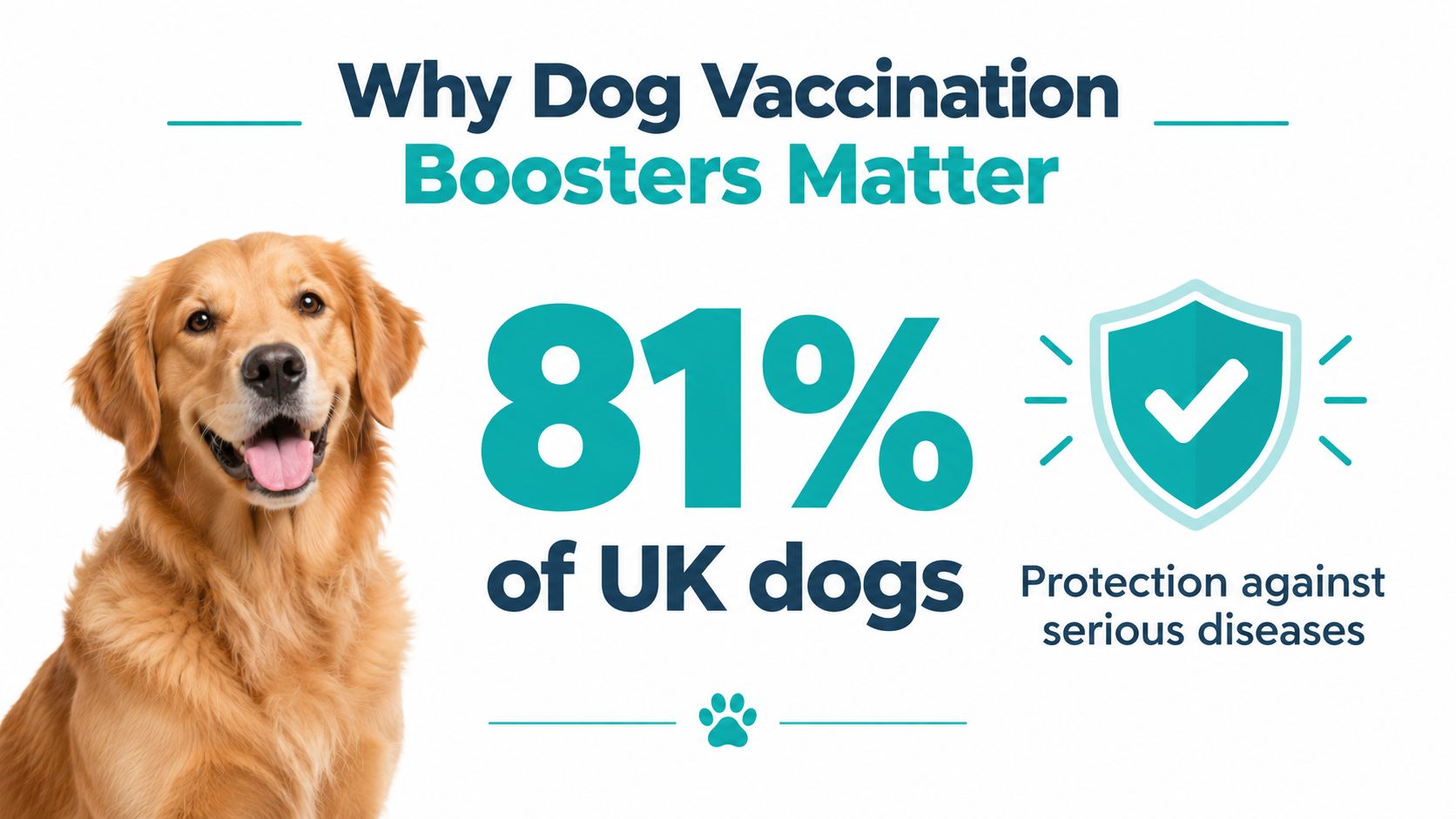
The PDSA Animal Wellbeing Report found that 81% of UK dogs received regular booster vaccinations in 2023. That figure was unchanged from 2022 and higher than the 77% recorded in 2021. Regular boosters are common, but they aren't universal. Among owners whose dogs didn't receive regular boosters, 14% said cost was the reason, according to the same report.
Think of the initial puppy course as building a wall of protection, brick by brick. A booster checks and strengthens that wall after time, illness, lifestyle changes or exposure risk may have reduced its reliability. It doesn't mean your dog has become unprotected the moment a due date passes, but staying close to the recommended schedule helps avoid unnecessary gaps.
What boosters do
Vaccines prepare the immune system to recognise particular infections. If a vaccinated dog later encounters one of those pathogens, its immune defences can respond more quickly and effectively. That can reduce the chance of serious illness, complications and transmission to other dogs.
Core diseases such as distemper, parvovirus and canine hepatitis can be severe, especially in puppies, older dogs and animals with other health problems. A booster is maintenance rather than a completely new start, although the exact response depends on the vaccine, the dog's history and the veterinary practice's protocol.
Practical rule: Don't treat “booster” as one universal product. Ask which vaccine components are being given and when each one will be due again.
Vaccination also helps protect dogs that can't safely receive every vaccine because of an individual medical concern. When more dogs remain protected, preventable infections have fewer opportunities to spread through parks, training groups, boarding facilities and households. That wider benefit is one reason consistent vaccination matters beyond a single appointment.
For a plain-language overview of the services and timing involved, see this guide to what your pet's vaccinations cover. If cost is making you hesitate, tell the practice before the appointment rather than letting the date pass. The team may be able to explain the essential components, separate risk-based recommendations from routine ones, and discuss available payment arrangements.
Understanding Core and Non-Core Vaccines
UK vaccination schedules make more sense once you separate core vaccines from vaccines recommended according to lifestyle and exposure risk. “Non-core” doesn't mean unimportant. It means the veterinary recommendation depends more heavily on where your dog goes, what it does and which animals or environments it encounters.
The core group protects against canine distemper, parvovirus and canine hepatitis, also called adenovirus. These diseases can cause serious illness, so core vaccination is generally relevant to dogs across the UK, including dogs that spend most of their time at home. The UK Government's vaccination guidance distinguishes these core vaccines from leptospirosis and kennel cough, which commonly follow different booster patterns.
| Vaccine type | Diseases covered | Booster frequency |
|---|---|---|
| Core | Canine distemper, parvovirus and canine hepatitis | Generally at least every three years after the initial course |
| Non-core or risk-based | Leptospirosis | Typically annually |
| Non-core or risk-based | Kennel cough | Typically annually, depending on the vaccine and risk |
The British Small Animal Veterinary Association says most UK-authorised dog vaccines use a core re-vaccination interval of at least every three years, aligned with BSAVA vaccination guidance. The same guidance states that leptospirosis and kennel cough require annual boosters.
Why the labels can confuse owners
A practice may describe an appointment as an “annual booster” even when the injection doesn't contain every vaccine component every year. The appointment may be annual because leptospirosis or kennel cough is due, while distemper, parvovirus and hepatitis are on a longer cycle.
Your dog's lifestyle also changes the recommendation. A dog attending boarding, daycare, group training or regular grooming may face more contact with other dogs than a dog that stays at home. A dog that swims, explores muddy areas or spends time around wildlife may also have a different risk assessment from a pavement-only companion.
Kennel cough vaccination deserves a separate conversation because vaccination may be requested by a boarding or daycare provider, and protection depends on the vaccine product and the exposure setting. The guide to kennel cough symptoms, treatment and costs can help you understand why an apparently healthy dog may still be advised to receive it.
Bring your dog's vaccination record to the appointment. If the record is incomplete, the veterinary team may recommend a cautious catch-up plan rather than assuming that an old label or verbal recollection proves current protection.
Typical Booster Schedules Explained
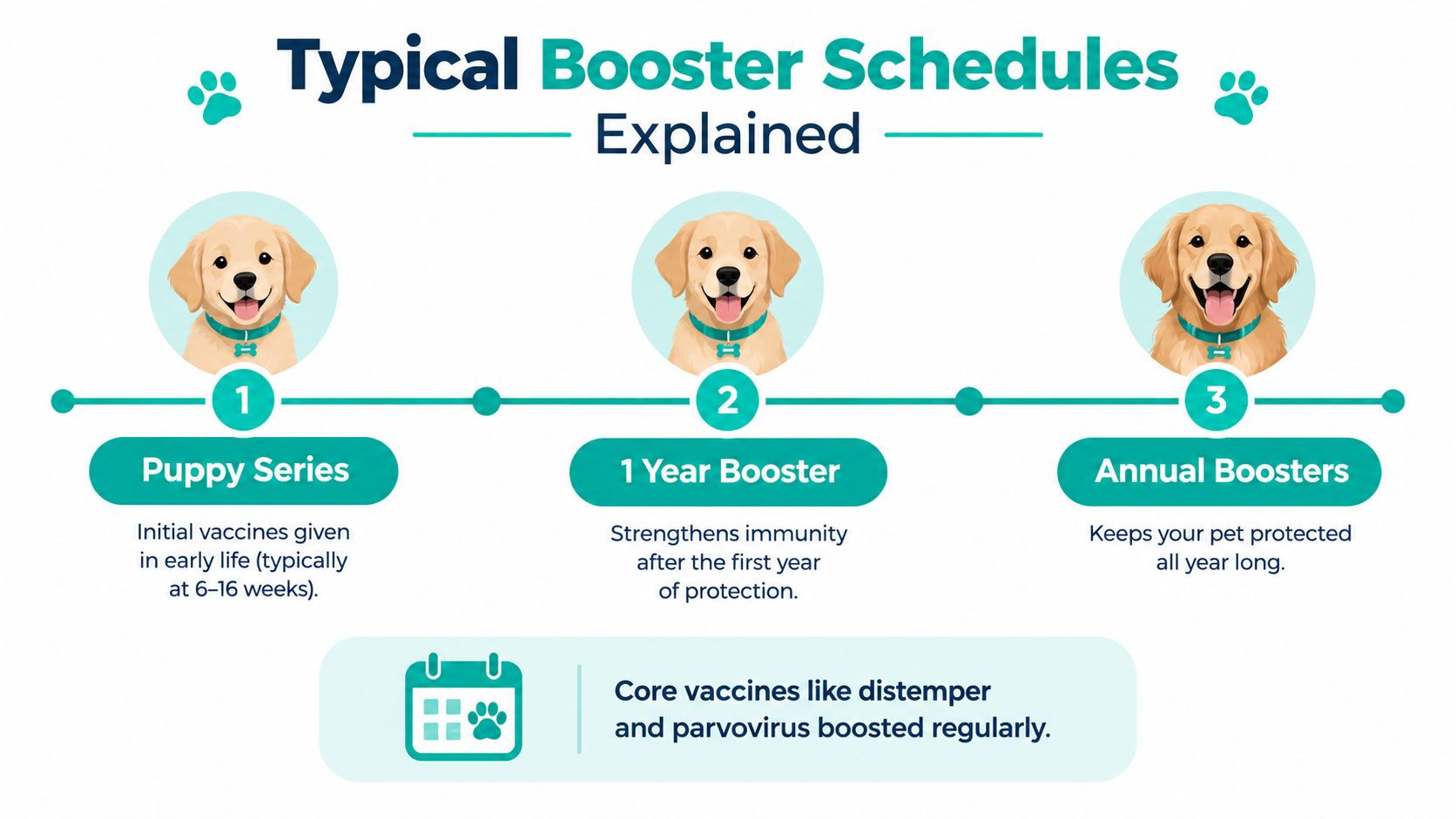
The booster plan usually has three stages: the puppy course, the first follow-up booster, and then ongoing maintenance. For what the initial puppy course and first booster typically cost, see our guide to puppy vaccination costs in the UK. Your vet sets the exact timing, because the vaccine used, your dog's history, and current health all affect the schedule.
After the puppy course, dogs usually receive a first booster. Core vaccines such as distemper, parvovirus and canine hepatitis then commonly move to an interval of at least every three years, while leptospirosis and kennel cough usually stay annual. That is why an appointment called an “annual vaccination” does not always mean every component is repeated every year.
What to do if a date is missed
Start with which vaccine is overdue and how late it is. A generic “booster” booking can be the wrong choice, because the catch-up plan may differ for DHP, leptospirosis, and rabies vaccination used for travel.
The Royal Veterinary College explains that DHP can be given every three years after the first course. If a booster is late, there is a catch-up window of up to six months after the due date. If that window is missed, the course should be restarted with two vaccinations one month apart, according to the RVC vaccination guidance.
The same RVC guidance says leptospirosis is given yearly and has the same six-month catch-up window. GOV.UK gives a slightly different practical note for DHP, saying a delay of up to about three months may be handled with a single booster, while a longer delay may need two repeat injections, as set out in the GOV.UK guidance on rabies vaccination and boosters. Sources differ slightly on the catch-up window, so ask your practice which rule applies to your dog's record rather than assuming either figure.
A missed appointment does not automatically mean your dog must start again. It does mean you should contact the practice promptly, before guessing what is or is not required.
Rabies vaccination has its own travel rules. The GOV.UK guidance says owners must keep boosters up to date for the relevant travel requirements, and a missed booster can mean restarting the vaccinations. That sits apart from the routine UK schedule for distemper, parvovirus, hepatitis and leptospirosis.
If your dog is already overdue, keep it away from higher-risk group settings until your veterinary team has advised you. Boarding facilities, daycares and groomers may also ask for current vaccination evidence before they accept a dog.
How Much Do Dog Vaccination Boosters Cost
There isn't one UK-wide fee for a dog vaccination booster. Practices set their own prices, and the total can vary with location, the vaccine components included, the consultation arrangement and whether your dog needs a catch-up course rather than one routine appointment.

A low headline fee may not represent the same service as another practice's price. One quote may cover a consultation and a combined vaccine, while another may list the examination separately or include a different set of components. Compare like with like before deciding that one practice is cheaper.
Compare the details, not just the headline
Use a postcode search or county pricing map to check nearby practices and look for an itemised description. Before booking, ask:
- Vaccine components: Does the fee cover core vaccines, leptospirosis, kennel cough or a combination?
- Consultation arrangement: Is a veterinary consultation included, charged separately or subject to a specific appointment type?
- Catch-up requirements: Could a late booster require two visits and two injections?
- Record requirements: Will the practice need to assess incomplete or missing vaccination history?
- Additional charges: Are prescription, administration or travel-related documents separate?
A local comparison service can reduce the time spent phoning practices individually. The UK vet pricing data report provides wider context for reading published veterinary fees, while a postcode search can help you focus on practices within a practical travelling distance.
Price shouldn't be the only factor. Check that the practice treats dogs, can accommodate your dog's needs and provides a clear explanation of what the appointment includes. A transparent quote helps you budget accurately and prevents an avoidable surprise when a late booster changes a one-visit plan into a restart course.
The following video offers another way to think about planning and comparing routine veterinary expenses:
Balancing Protection with Practical Costs
The most useful budget plan treats boosters as different types of expenditure rather than one identical yearly bill. Annual protection for leptospirosis or kennel cough needs regular allowance, while core vaccine costs may fall on a longer cycle after the initial course. A late appointment can disrupt that plan if the practice decides that two injections are needed to rebuild protection.
Start by recording the due month for each vaccine component. Put the annual items into your regular pet-care budget, then flag the less frequent core appointment separately. This avoids the common mistake of thinking a quiet year means no vaccination planning is needed.
Make the appointment easier to budget
Ask the practice for an itemised estimate before the visit. Explain whether your dog has a complete record, whether it needs kennel cough protection for boarding, and whether it has missed a due date. Those details allow the team to give more useful guidance than a request for “the cheapest booster”.
You can also compare published local fees, then discuss your preferred option with the practice. Some owners may find that a nearby practice offers a clearer like-for-like quote, while others may value continuity with a familiar veterinary team. The decision should balance clinical suitability, travel, records and total expected cost.
Skipping a booster because the price is unclear creates more uncertainty. Asking what's included gives you a chance to plan before the appointment is due.
If you're considering a wider budgeting arrangement, read about whether pet care plans are worth it. A plan may or may not suit your circumstances, so check exactly which vaccines, consultations and additional services it includes. It shouldn't replace a conversation about the vaccine schedule your individual dog needs.
Your Action Plan for Dog Vaccination Boosters
Keep your dog's vaccination record in one accessible place, whether that's a paper card, practice email or digital file. Check the last appointment date, identify which components were given and confirm the next due date with the veterinary practice.
Use this short checklist:
- Check the schedule: Separate annual vaccines from core vaccines on the longer re-vaccination interval.
- Check for delays: Contact the practice if your dog is overdue, especially if the gap may affect travel or boarding.
- Request an itemised quote: Confirm the consultation, vaccine components and whether one or more visits may be needed.
- Compare local fees: Review nearby published prices using your postcode and compare equivalent services.
- Keep evidence: Save invoices, vaccination certificates and reminders after every appointment.
A dog vaccination booster is both a health decision and a planning decision. Staying organised helps you avoid preventable gaps, understand what you're paying for and give your vet the information needed to choose the right catch-up approach.
The Vet Price Comparison Site lets UK owners search veterinary fees by postcode, compare published prices for dog booster vaccinations and review local practice information. Visit The Vet Price Comparison Site before your dog's next appointment to check nearby fees and plan your vaccination budget with clearer, like-for-like information.