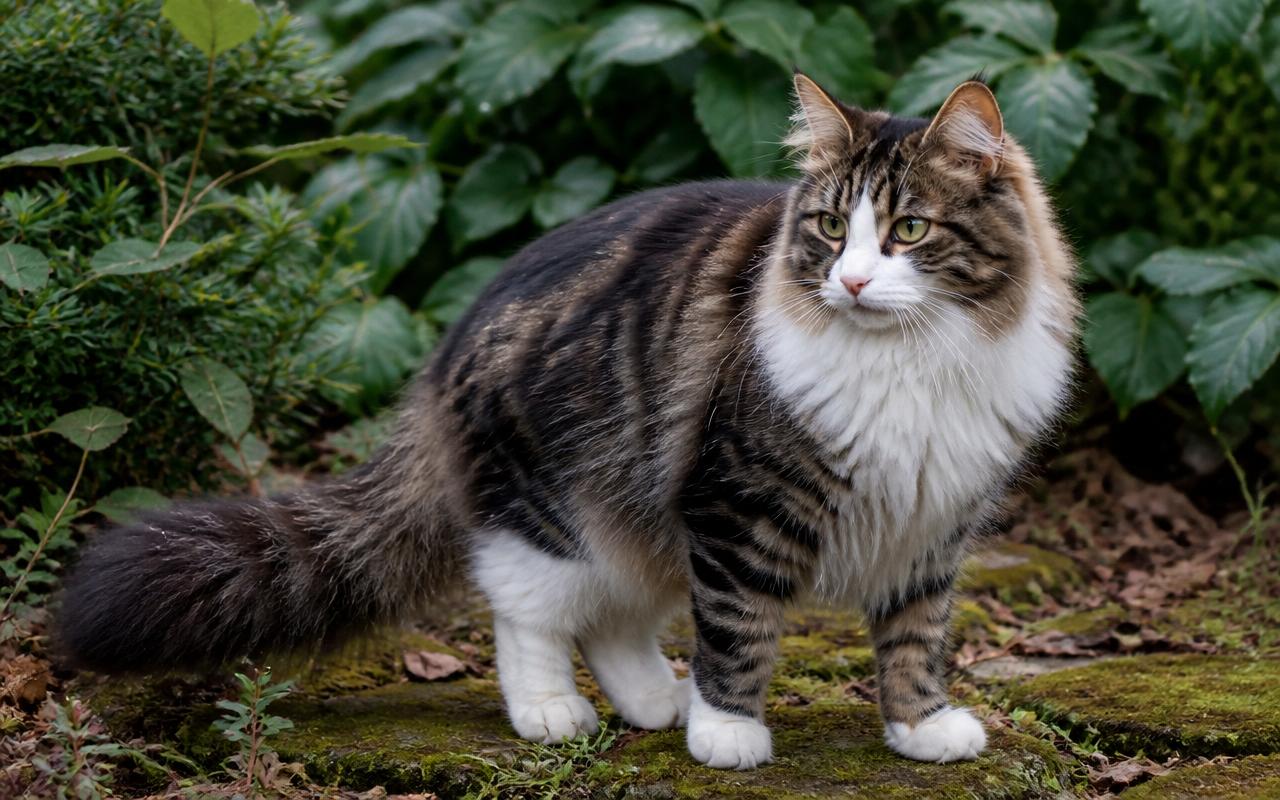
Norwegian Forest Cat
History and background
The breed is a natural landrace from Norway, present in Norse folklore long before any formal registry existed. Numbers collapsed during the Second World War and a deliberate breeding programme in the 1970s rebuilt the population; FIFe recognised the breed in 1977. UK registrations have grown steadily as owners look for a Maine Coon alternative - the two are often confused, but Wegies have a straighter profile, a triangular head and a slightly lighter build.
Temperament and family life
Norwegian Forest Cats are calm, confident and undemanding compared with Oriental breeds. They enjoy company but are not clingy, tolerate children and dogs well, and are strong, athletic climbers - expect them on top of the wardrobe. They are one of the breeds most suited to supervised outdoor access, and a cat-secure garden or catio is close to ideal for them.
Common health issues
Hypertrophic cardiomyopathy (HCM) occurs, and breeders should scan. The breed also carries two specific inherited conditions worth DNA-testing for: glycogen storage disease type IV and pyruvate kinase deficiency. Hip dysplasia appears more often than in most cats because of their size, and the dense double coat means matting and hairballs are routine management issues rather than emergencies.
Costs of owning a Norwegian Forest Cat in the UK
Kittens from registered breeders generally cost £600-£1,200. They are big cats with an appetite to match - expect £45-£70 a month on food alone - and grooming tools or occasional professional de-matting add to the bill. Total monthly running costs typically land at £90-£130. Neutering a large male or spaying a female sits at the upper end of published UK prices; compare local fees with our neutering cost calculator.
Insurance considerations
Because the main risks are cardiac and orthopaedic - both potentially long-running - a lifetime policy with £5,000 or more of annual vet-fee cover is the sensible choice. Ask specifically whether hereditary and congenital conditions are covered, since some cheaper policies exclude them outright, and take the policy out before a vet visit flags anything that could later be called pre-existing.
Frequently asked questions
What is the difference between a Norwegian Forest Cat and a Maine Coon?
Do Norwegian Forest Cats need to go outside?
How much grooming do they need?
Are Norwegian Forest Cats good with children and dogs?
Related breeds
By The Vet Price Comparison Site editorial team · Last reviewed27 August 2026. Sources: RCVS, The Kennel Club, RVC VetCompass, ABI, and our live UK practice pricing dataset.