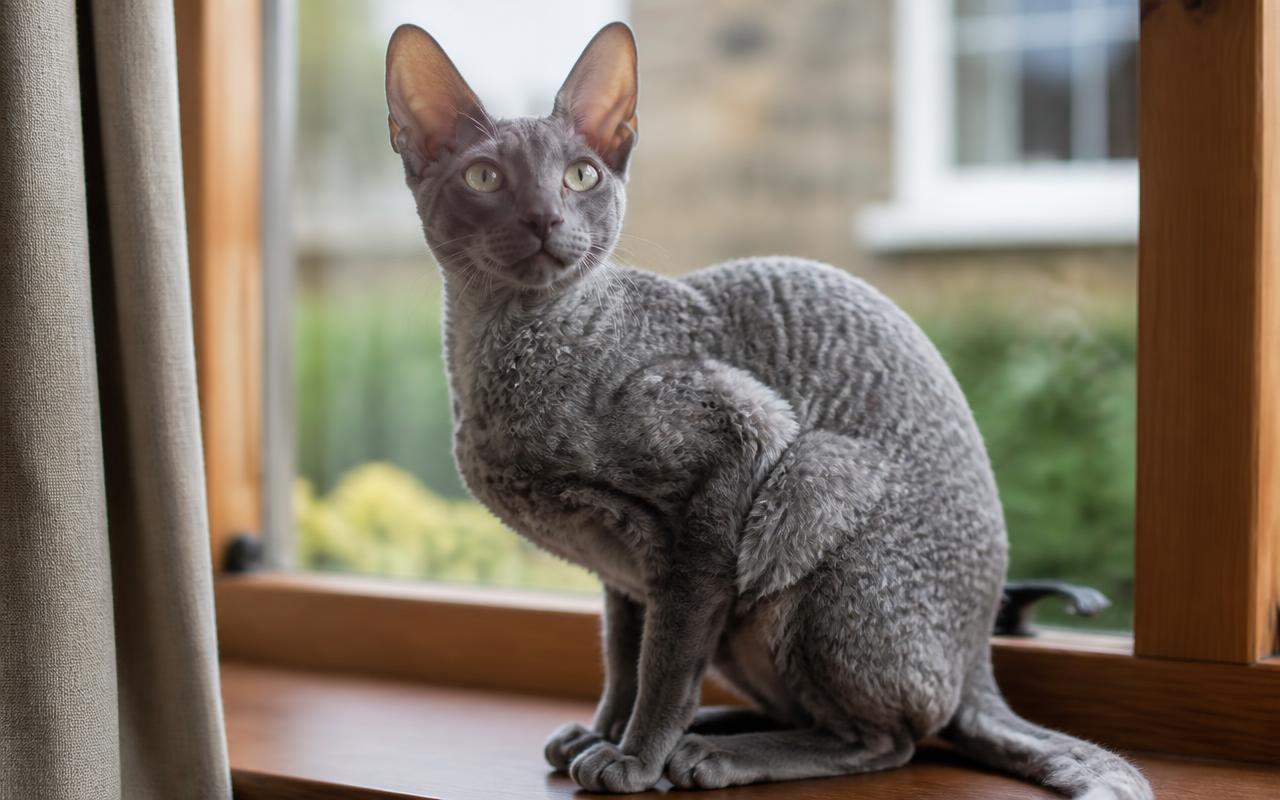
Cornish Rex
The Cornish Rex is a genuinely British breed, tracing back to a single curly-coated kitten named Kallibunker born on a Bodmin Moor farm in 1950. That spontaneous mutation produced a cat unlike any other: a fine, wavy, exceptionally soft coat made up only of the undercoat, set on a whippet-like body with an arched back, long legs, huge ears and prominent cheekbones. Every Cornish Rex in the world descends from that Cornish farm cat.
About the Cornish Rex
History & background
The breed began in July 1950 at Bodmin Moor, when a farm cat produced a curly-coated male kitten. On veterinary advice the owner bred him back to his mother, establishing the recessive gene that defines the breed. British breeders later outcrossed to Siamese and Burmese to widen the gene pool, which is where the Cornish Rex's elongated body type and talkative nature come from. The breed was recognised by the GCCF and has been a small but devoted presence in the UK ever since.
Temperament & personality
Cornish Rex are among the most interactive of all pedigree cats. They are dog-like in their attachment, frequently following owners from room to room, learning to fetch, and responding to their name. They stay kitten-like well into adulthood and remain physically busy into old age. They are also chatty, though generally in a softer voice than a Siamese.
Personality traits
- Extremely people-oriented — dislikes being left alone all day
- Athletic and vertical — will be on top of the wardrobe within a week
- Highly trainable, including clicker training and harness walking
- Warmth-seeking — the sparse coat means they gravitate to radiators, laps and duvets
- Very low shedding, though not hypoallergenic
Cornish Rex health — common conditions and vet costs
Top 6 conditions
- Hypertrophic cardiomyopathy (HCM) — the most serious concern in the breed. Screening by echocardiogram costs £250-£500; managing diagnosed disease means lifelong medication and repeat scans.
- Patellar luxation — slipping kneecaps are recognised in the breed; surgical correction typically costs £1,500-£3,000 per knee.
- Hereditary hypotrichosis (baldness) — a small number of lines carry a gene causing progressive hair loss, leaving skin very vulnerable.
- Excess ear wax and otitis — the large open ears produce a great deal of wax and need routine cleaning; an infection means a £60.23 consultation plus medicated drops.
- Skin sensitivity and sunburn — sparse coat over thin skin means real risk on sunny windowsills, particularly on the ears.
- Anaesthetic and cold sensitivity — very low body fat means they lose heat fast; tell your practice the breed before any procedure.
Breed-specific screening tests
Ask any breeder for a recent cardiac ultrasound (echocardiogram) screening for HCM on both parents, ideally repeated annually. PKDef (pyruvate kinase deficiency) DNA testing is available and widely used in Rex lines. Knee examination for patellar luxation is worth requesting, as is confirmation that the line is free of hereditary hypotrichosis.
When to see a vet — red flags
Contact a vet urgently for open-mouth breathing, rapid or laboured breathing at rest, or sudden hind-leg weakness or paralysis — these can indicate heart disease or a clot and are emergencies. Also seek prompt advice for a cat straining in the litter tray, persistent head shaking or a foul-smelling ear, or any sore, red or flaking patch of skin.
Living with a Cornish Rex
With children
Very good. They are robust in personality if not in build, enjoy games and rarely scratch in play if handled properly. Because they are slight and fine-boned, children should be shown how to support the body when lifting rather than scooping under the front legs.
With other pets
Sociable and adaptable. Cornish Rex typically live happily with other cats and with cat-savvy dogs, and many owners deliberately keep two so the cat has company while they are out. They will chase small caged pets, so keep those securely out of reach.
Home environment
An indoor life suits this breed best — the thin coat offers little protection from British weather, and their trusting nature makes them vulnerable outdoors. In exchange they need a stimulating indoor environment: tall cat trees, shelves, window perches, puzzle feeders and a warm spot to retreat to. Keep the house comfortably heated; a Cornish Rex will genuinely feel a cold room.
Play, enrichment & training
Enrichment needs
Plan on at least two dedicated interactive play sessions a day with wand toys, plus rotating puzzle feeders and climbing opportunities. A bored Cornish Rex opens doors, empties shelves and shouts about it. Vertical space is not optional for this breed — they use height constantly.
Training & handling
One of the easiest cats to train. Clicker training, fetch, harness walking and simple cued behaviours all come readily, and training is an excellent outlet for their intelligence. Get them used to ear cleaning and nail trimming as kittens, since both are lifelong routine tasks in this breed.
Grooming & coat care
Coat & routine
The wavy coat needs almost no brushing — in fact vigorous brushing can damage the delicate hairs. A gentle stroke with a soft cloth or your hand once a week is enough. They shed very little, which is why they are often suggested to allergy sufferers, though they still produce the Fel d 1 protein and are not hypoallergenic.
Skin, ears, nails & teeth
Because there is so little coat to absorb it, natural skin oil builds up and can leave a Cornish Rex feeling slightly greasy; an occasional bath with a mild veterinary shampoo helps. Ears need cleaning roughly weekly with a vet-approved solution — wax build-up in this breed is considerable. Trim nails fortnightly and brush teeth daily, as with any pedigree cat, to head off the dental disease that leads to expensive extractions later.
Diet & nutrition
Feeding a Cornish Rex
These cats run hot and burn a lot of energy, and many need noticeably more food per kilo than a placid domestic shorthair. Feed a high-protein complete diet, split across several small meals or offered through puzzle feeders to combine feeding with enrichment. Keep fresh water available and monitor weight monthly — the sparse coat means changes in condition are visible early, which is a genuine advantage.
How much does a Cornish Rex cost at the vet?
UK average prices
Current UK averages from our live database of veterinary practices:
| Treatment | UK average |
|---|---|
| Routine consultation | £60.23 |
| Annual booster vaccination | £72.92 |
| Microchipping | £28.55 |
| Castration (male) | £107.90 |
| Spay (female) | £151.67 |
Compare local practices before you register — the spread on identical treatments is wide.
Routine annual budget
Routine care runs at roughly £200-£400 a year: an annual booster at £72.92, a health-check consultation at £60.23 and regular parasite treatment. Add an annual cardiac screening echocardiogram at £250-£500 if you want to stay ahead of HCM, which many Cornish Rex owners choose to do from middle age onwards.
Pet insurance for a Cornish Rex
Why insurance matters
Routine care is predictable; illness is not. Hypertrophic cardiomyopathy and patellar luxation are the two conditions most likely to generate a large claim, with cardiology workups and orthopaedic surgery both running well into the thousands. A single referral-level workup can run into four figures before treatment even begins, which is why lifetime cover is the sensible default for this breed rather than an accident-only or annual policy.
What to look for
Insure from the day you bring your Cornish Rex home, before any condition can be recorded as pre-existing. Choose a lifetime policy with a per-condition limit you would actually be comfortable with — £7,000 or more is a realistic benchmark in 2026. Check the excess structure carefully, confirm that dental cover and behavioural treatment are included, and read the exclusions for breed-specific conditions, which some insurers list explicitly.
Choosing a vet for your Cornish Rex
What to look for
Not every practice charges the same, and the gap is far wider than most owners realise. Published price lists show routine consultation fees across UK practices ranging from under £30 to well over £90 for the same fifteen-minute appointment, so it genuinely pays to compare before you register.
For this breed, ask whether the practice offers or can refer for cardiac ultrasound, and whether they run cat-friendly appointments or a separate feline waiting area — Cornish Rex are sensitive to stress and to cold, and a practice that warms its consulting rooms and handles cats gently makes a real difference.
- Compare published prices for consultations, boosters and neutering using our directory rather than ringing round one practice at a time.
- Ask about health plans. Monthly plans covering vaccinations, flea and worm treatment and a discount on other services often work out cheaper for a Cornish Rex.
- Check out-of-hours arrangements. Find out whether emergencies are handled in-house or referred to a separate provider, and what that costs.
- Look at independence. Independent and corporate-owned practices price very differently — our listings show who owns each one.
Frequently asked questions
How much does a Cornish Rex cost at the vet in the UK?
Routine feline care for a Cornish Rex sits close to the national average: our UK data shows a consultation at £60.23, an annual booster at £72.92, microchipping at £28.55, castration at £107.90 and spaying at £151.67. Expect £200-£400 a year in routine costs. The breed-specific extra worth budgeting for is cardiac screening by echocardiogram at £250-£500, since hypertrophic cardiomyopathy is the main hereditary concern.
Are Cornish Rex cats hypoallergenic?
No. This is the most persistent myth about the breed. Cornish Rex have only the soft undercoat rather than the usual three hair types, so they shed far less and leave less hair around the home, but they still produce Fel d 1 — the salivary protein that actually causes most cat allergies. Some allergy sufferers do tolerate them better in practice, but if your reaction is severe you should spend real time with an individual cat before committing.
What health problems do Cornish Rex cats have?
The most serious is hypertrophic cardiomyopathy, a thickening of the heart muscle that can cause sudden deterioration and should be screened for by echocardiogram in breeding cats. Patellar luxation (slipping kneecaps) is also recognised, as is pyruvate kinase deficiency, which is DNA testable. Day to day, the sparse coat brings skin sensitivity, sunburn risk on the ears, greasy skin needing occasional bathing, and heavy ear wax that requires weekly cleaning. They also lose heat quickly, so tell your vet the breed before any anaesthetic.
Are Cornish Rex cats high maintenance?
In terms of the coat, no — brushing is barely needed and they shed very little. In terms of attention, absolutely yes. This is one of the most active, intelligent and people-dependent cat breeds there is. They need two or more interactive play sessions a day, plenty of vertical climbing space, puzzle feeders and company. Left alone for long working days without a companion animal, a Cornish Rex will become bored, vocal and destructive.
Do Cornish Rex cats get cold?
Yes, noticeably. With only a thin, wavy undercoat and very little body fat, they lose heat much faster than other cats, which is why they seek out radiators, sunny spots, laps and the inside of your jumper. Keep the house comfortably warm, provide heated or well-insulated beds, and be cautious about outdoor access in British weather. Their heat loss is also why anaesthetic procedures need extra warming — worth flagging to your practice.
How much does a Cornish Rex kitten cost in the UK?
Expect £700 to £1,500 from a registered GCCF breeder in 2026, with health-tested parents at the upper end. The purchase price is a small part of the picture: over a 12 to 16 year lifespan, food, litter, enrichment, insurance and veterinary care typically add £60 to £100 a month. Prioritise a breeder who provides evidence of cardiac screening on both parents over one offering a lower price.
Related breeds
By The Vet Price Comparison Site editorial team · Last reviewed12 October 2026. Sources: RCVS, The Kennel Club, RVC VetCompass, ABI, and our live UK vet pricing index.