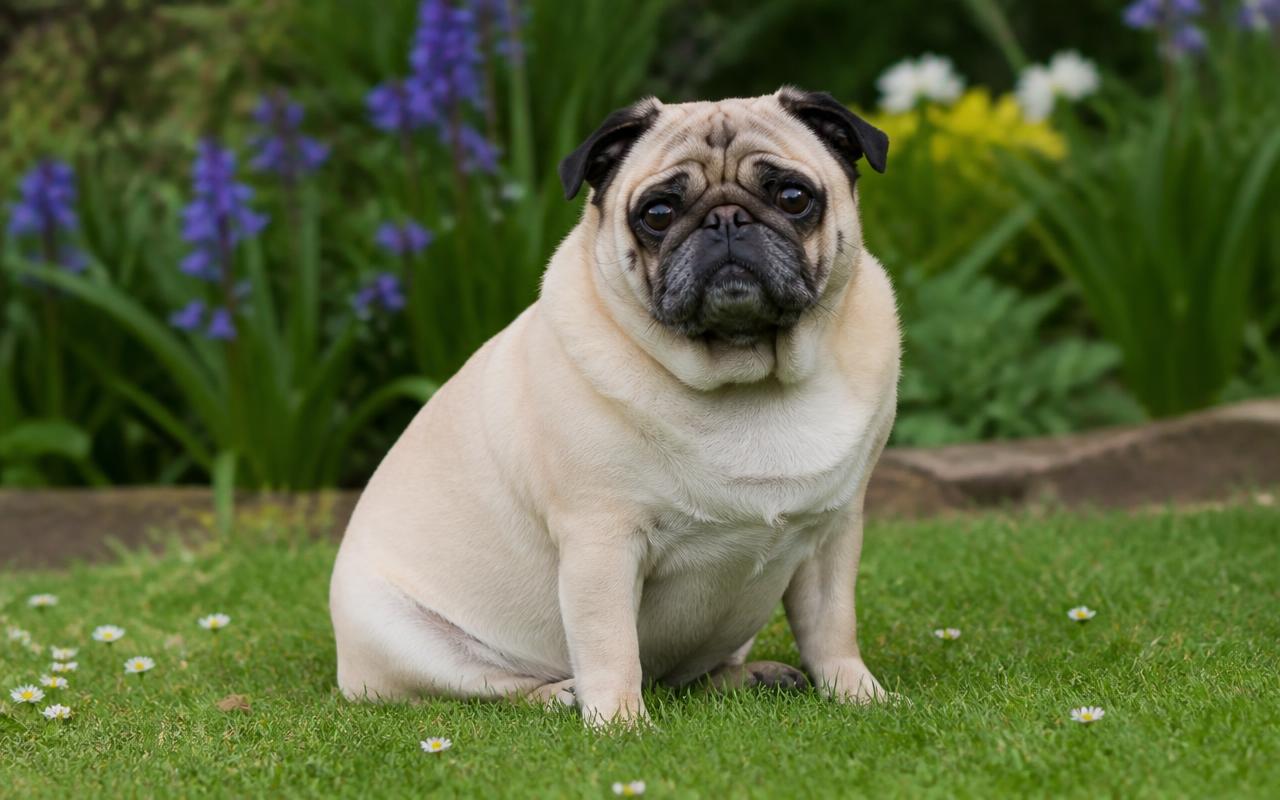
Pug
The Pug is one of Britain's most instantly recognisable companion dogs — a small, stocky, deeply wrinkled charmer with an outsized personality and an unshakeable devotion to its people. Bred for centuries as a lapdog for Chinese nobility and later adopted enthusiastically by European royalty, the Pug has never had a working job beyond keeping human company, and it shows in the temperament. They are sociable, comedic, food-motivated and almost entirely without aggression, which makes them a popular choice for families, flat-dwellers and older owners alike.
About the Pug
History & background
Pugs originated in China well over two thousand years ago, kept as prized companions in imperial households where they were guarded and pampered. Dutch traders brought them to Europe in the sixteenth century, and the breed became a fixture of the House of Orange before spreading across the continent. Queen Victoria's enthusiasm for Pugs in the nineteenth century cemented their place in British life and led directly to the founding of the Kennel Club breed standard. The modern Pug's face is noticeably flatter than the Victorian dog's, a change driven by show-ring fashion rather than function.
Temperament & personality
Pugs are people dogs first and foremost. They want to be in the room with you, ideally on you, and they cope poorly with long periods alone — separation-related behaviour is common in the breed. They are playful without being frantic, tolerant of handling, and rarely reactive towards other dogs. The flip side is stubbornness: a Pug will happily ignore a recall if something more interesting is happening, and they are famously motivated almost exclusively by food.
Personality traits
- Affectionate and clownish — genuinely entertaining company
- Low exercise demand — suits flats and less mobile owners
- Very sociable with children, strangers and other pets
- Prone to separation anxiety — not a dog for long working days
- Food obsessed, which makes weight management a constant task
Pug health — common conditions and vet costs
Top 6 conditions
- Brachycephalic Obstructive Airway Syndrome (BOAS) — narrowed nostrils, an elongated soft palate and a small windpipe cause noisy, laboured breathing. Corrective airway surgery commonly costs £1,500-£3,500 in the UK.
- Corneal ulcers and eye trauma — prominent, shallow-set eyes are easily scratched. Medical management may be £150-£400; a grafting procedure can exceed £1,500.
- Skin-fold dermatitis — the facial and tail folds trap moisture and bacteria. Recurrent flare-ups typically mean a £60.23 consultation plus medicated washes several times a year.
- Obesity — hugely common and the single biggest multiplier of every other Pug health problem.
- Pug Dog Encephalitis (PDE) — a breed-specific inflammatory brain disease, usually fatal, with diagnostics (MRI and CSF sampling) running to £2,000-£3,000.
- Hemivertebrae and spinal disease — the screw tail is a marker for malformed vertebrae; severe cases may need neurosurgery costing £4,000-£7,000.
Breed-specific screening tests
Ask any breeder for evidence of the Kennel Club and University of Cambridge Respiratory Function Grading Scheme assessment on both parents — grade 0 or 1 dogs are far less likely to produce puppies with significant BOAS. A DNA test for PDE risk is available and widely used, as is hip scoring. Eye testing under the BVA/KC/ISDS scheme is also worth asking about.
When to see a vet — red flags
Seek same-day veterinary advice if your Pug is breathing with obvious effort, has blue or grey gums, is overheating and cannot settle, is pawing at or squinting one eye, or shows sudden weakness or dragging of the hind legs. Heatstroke in a Pug can become fatal within minutes, and eye ulcers deteriorate rapidly — neither is a wait-and-see situation.
Living with a Pug
With children
Pugs are excellent with children, being sturdy enough to cope with normal family life and almost unfailingly good-natured. The main caution runs the other way: their eyes are vulnerable, so children need to be taught not to poke, grab or carry the dog around the face.
With other pets
Rarely a problem. Pugs generally get on well with other dogs and with cats, having very little prey drive and no guarding instinct. They are often happier in a household with a second dog for company.
Home environment
One of the few breeds genuinely well suited to a flat. They need little space and few stairs. What they cannot tolerate is heat — a UK summer above roughly 22°C is a real risk, so shade, cool floors, fans and early-morning walks are essential from May to September.
Exercise, play & training
Exercise needs
Around 30 minutes a day, ideally split into two short, gentle walks on a harness rather than a collar — collar pressure worsens an already compromised airway. Avoid strenuous exercise, long runs and anything at all in warm weather. Mental enrichment through scentwork and puzzle feeders is a far better outlet for a Pug than distance walking.
Training & handling
Pugs learn quickly when food is involved and switch off entirely when it is not. Keep sessions short and reward-based; harsh correction achieves nothing with this breed. Prioritise gradual alone-time training from puppyhood to head off separation anxiety, and get them used to having their face, folds and feet handled early, because you will be doing it for the next decade.
Grooming & coat care
Coat & routine
The short double coat sheds far more than newcomers expect — a weekly brush with a rubber curry or grooming mitt keeps it manageable, rising to twice weekly during the spring and autumn moults. Fawn Pugs in particular leave hair on everything.
Folds, ears, nails & teeth
The facial wrinkles need wiping daily with a damp cloth or veterinary fold wipe and — critically — drying afterwards, since trapped moisture is what causes infection. Do not forget the fold beneath the tail. Check ears weekly, trim nails monthly, and brush teeth daily: the Pug's crowded jaw makes dental disease near-universal, and a scale and polish under anaesthetic typically costs £250-£500.
Diet & nutrition
Feeding a Pug
Weight control is the most valuable thing you can do for a Pug's health and lifespan. Every extra kilo directly worsens breathing, joint strain and heat tolerance. Weigh the food rather than eyeballing it, count treats as part of the daily allowance, and use a slow feeder — flat-faced dogs gulp air as they eat. Ask your vet to body-condition score your dog at each visit and act early if the score is creeping up.
How much does a Pug cost at the vet?
UK average prices
Current UK averages from published vet price lists:
| Treatment | UK average |
|---|---|
| Routine consultation | £60.23 |
| Annual booster vaccination | £70.70 |
| Kennel cough vaccination | £63.71 |
| Microchipping | £28.55 |
| Castration (male) | £268.54 |
| Spay (female) | £361.91 |
Neutering is priced by size at many practices. For a small dog under about 10kg, the typical castration is around £250 (most £199–£335) and a spay around £331 (most £265–£446).
Prices vary substantially by region and by practice ownership — compare local practices before registering.
Routine annual budget
A healthy adult Pug's routine care — one booster at £70.70, a health check consultation at £60.23, plus year-round flea and worm treatment — lands at roughly £300-£450 a year. Realistically, most Pug owners should budget higher than that: fold care products, repeat skin and eye consultations and dental work push the practical figure closer to £600 annually, before any of the major breed conditions come into play.
Pet insurance for a Pug
Why insurance matters
Routine care is predictable; illness is not. BOAS surgery, corneal grafting, spinal imaging and PDE diagnostics are all realistic possibilities for this breed, and each sits comfortably in the low-to-mid thousands. A single referral-level workup can run into four figures before treatment even begins, which is why lifetime cover is the sensible default for this breed rather than an accident-only or annual policy.
What to look for
Insure from the day you bring your Pug home, before any condition can be recorded as pre-existing. Choose a lifetime policy with a per-condition limit you would actually be comfortable with — £7,000 or more is a realistic benchmark in 2026. Check the excess structure carefully, confirm that dental cover and behavioural treatment are included, and read the exclusions for breed-specific conditions, which some insurers list explicitly.
Choosing a vet for your Pug
What to look for
Not every practice charges the same, and the gap is far wider than most owners realise. Published consultation fees across UK practices range from under £30 to well over £90 for the same fifteen-minute appointment, so it genuinely pays to compare before you register.
For a brachycephalic breed it matters that the practice sees a lot of them. Ask whether the vets are comfortable assessing airway function, whether they have experience of BOAS surgery or a referral route for it, and whether they carry the equipment to manage a flat-faced dog under anaesthetic, which carries higher risk than in other breeds.
- Compare published prices for consultations, boosters and neutering using our directory rather than ringing round one practice at a time.
- Ask about health plans. Monthly plans covering vaccinations, flea and worm treatment and a discount on other services often work out cheaper for a Pug.
- Check out-of-hours arrangements. Find out whether emergencies are handled in-house or referred to a separate provider, and what that costs.
- Look at independence. Independent and corporate-owned practices price very differently — our listings show who owns each one.
Frequently asked questions
How much does a Pug cost at the vet in the UK?
Routine care is broadly in line with other small dogs: our UK data puts an average consultation at £60.23, an annual booster at £70.70, microchipping at £28.55, castration at £268.54 and spaying at £361.91. Where Pugs differ is the frequency of extra visits. Skin folds, eyes, teeth and breathing all tend to need attention, so most owners spend closer to £600 a year overall, and breed-specific surgery such as BOAS correction can add £1,500-£3,500 in a single event.
Are Pugs healthy dogs?
Honestly, no — Pugs are one of the more medically demanding breeds you can own. Their flat face predisposes them to Brachycephalic Obstructive Airway Syndrome, corneal ulcers, skin-fold infections, dental crowding and severe heat intolerance, and the breed also carries risks of Pug Dog Encephalitis and spinal malformation. Many Pugs live happy 12-15 year lives, but that usually depends on buying from a breeder who has used the Respiratory Function Grading Scheme, keeping the dog genuinely lean, and having good insurance in place.
Do Pugs need a lot of exercise?
No. Around 30 minutes a day, split into two short and gentle walks, is right for an adult Pug. They should always be walked on a harness rather than a collar to avoid pressure on the airway, and exercise should be avoided entirely in warm weather. Because their physical exercise is limited, mental enrichment through puzzle feeders, scentwork and short training games matters more for this breed than for most.
Are Pugs good with children and other pets?
Yes, on both counts. Pugs are among the most tolerant and least aggressive of the toy breeds, sturdy enough for family life and generally delighted by visitors, children, other dogs and cats alike. The one real caution is their prominent eyes, which are easily injured, so children should be taught to stroke the body rather than the face and never to carry the dog around.
How long do Pugs live?
A typical Pug lives 12 to 15 years, which is respectable for any breed. Lifespan is heavily influenced by weight — an overweight Pug's breathing, joints and heat tolerance all deteriorate together — and by whether the dog inherited a functional airway. Keeping your Pug lean, protecting it from heat and staying on top of dental and skin care are the three things most likely to add years.
Why do Pugs snore and breathe so noisily?
The noise comes from a shortened skull compressing normal soft tissue into a smaller space, leaving narrowed nostrils, an over-long soft palate and often a narrowed windpipe. It is easy to treat as a breed quirk, but persistent snorting, snoring and struggling after mild activity are clinical signs of Brachycephalic Obstructive Airway Syndrome, not a personality trait. If your Pug is noisy at rest, tires quickly, or has ever collapsed or turned blue at the gums, book a veterinary airway assessment — surgery to widen the nostrils and shorten the palate can transform quality of life.
Related breeds
By The Vet Price Comparison Site editorial team · Last reviewed12 October 2026. Sources: RCVS, The Kennel Club, RVC VetCompass, ABI, and our live UK vet pricing index.