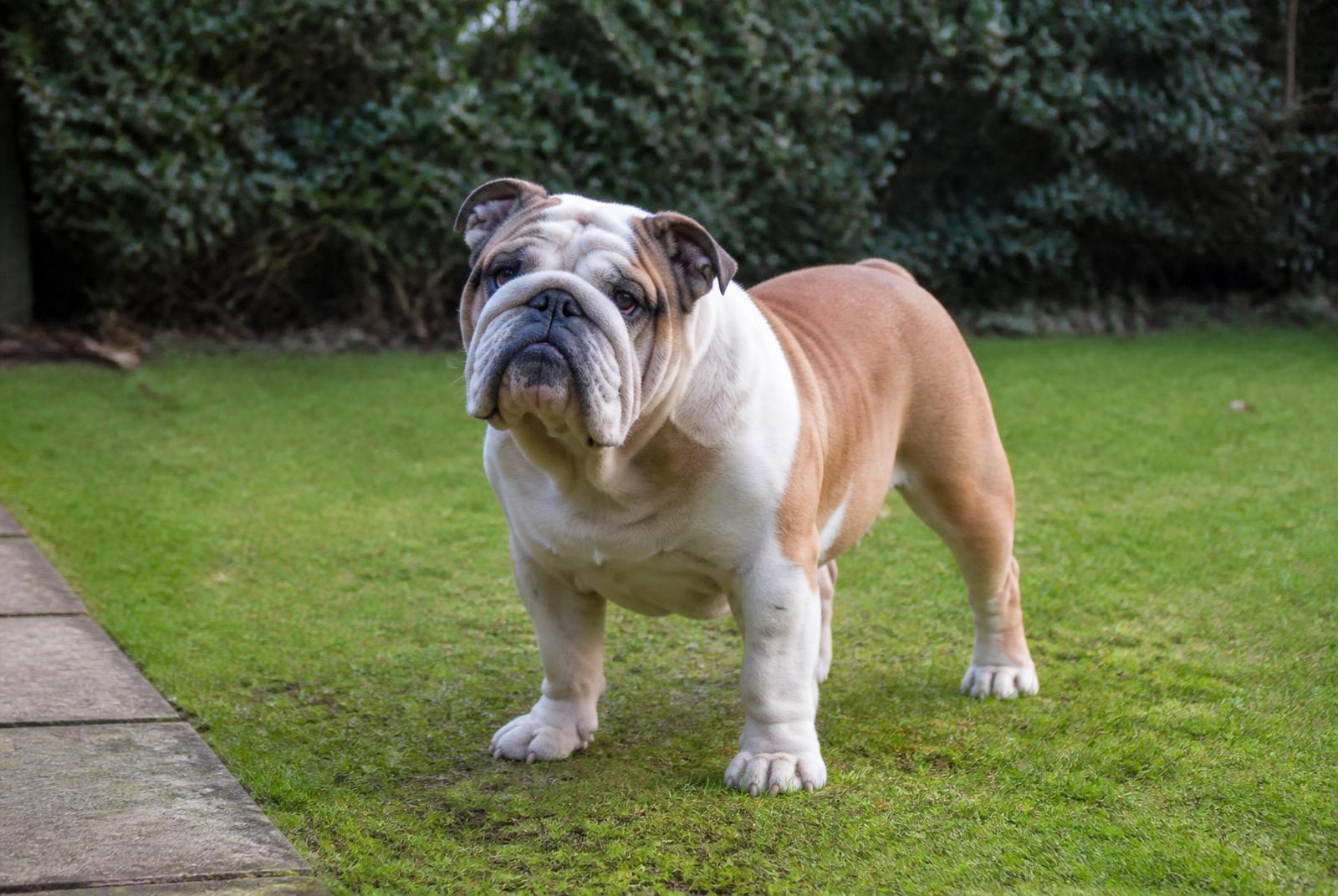
Bulldog
The Bulldog, often called the English or British Bulldog, is a short-faced, heavy-set companion known for its calm manner, broad shoulders and unmistakable wrinkled expression. Most are gentle, affectionate and content with a quiet home routine, which is a large part of their appeal. The same physical features that define the breed also bring real health considerations, particularly around breathing, skin, joints and heat tolerance. Owning one well means choosing a puppy carefully, keeping weight under control and building a close working relationship with a vet who knows flat-faced breeds.
About the Bulldog
History & background
The Bulldog descends from dogs used in the sport of bull-baiting, which was banned in Britain in 1835. Enthusiasts then reshaped the breed into a companion, selecting for a calmer temperament and a heavier, lower-slung frame. Over the following century the head became broader and the muzzle shorter, and the dog most people picture today is largely a Victorian and twentieth-century creation rather than a working animal.
The Bulldog now sits in the Utility group and is closely tied to British national imagery. Its short, smooth coat comes in colours including red, fawn, brindle, white and pied. Breed health has become a prominent welfare topic in the UK, and reputable breeders increasingly select for wider nostrils, a longer muzzle, a fitter body shape and dogs that can exercise, breathe and sleep comfortably. Buyers have real influence here: choosing a moderate, functional dog rewards the breeders doing that work.
Temperament & personality
Bulldogs are typically affectionate, placid and people-focused. Many are patient with household noise and happy to spend much of the day resting near their owners, which suits people who want a companion rather than a sporting dog. They often have a comic streak and a stubborn sense of humour, and they tend to prefer persuasion to pressure.
Training is best approached as a series of short, motivating sessions rather than long drills. Bulldogs are not unintelligent, but they can be deliberate and are quick to disengage if a session is repetitive or uncomfortable. They can be less tolerant of unfamiliar dogs than their easy-going reputation suggests, so early, calm socialisation matters. Because heavy panting, snorting and heat sensitivity are common, training and play should always be paced with the dog’s breathing in mind.
Personality traits
Common Bulldog characteristics include:
- Affectionate: usually devoted to family and content with close company.
- Calm: often happy with a predictable, low-intensity routine.
- Low-energy: short walks and gentle play generally suit the breed.
- Determined: may resist repetitive training or being moved when settled.
- Heat-sensitive: struggles in warm, humid or stuffy conditions.
- Quiet: tends to bark less than many breeds, though snoring is common.
- Food-motivated: responds well to treats but gains weight easily.
- Sociable with people: often confident with visitors when well socialised.
Bulldog health — common conditions and vet costs
Top 6 conditions
The Bulldog is one of the breeds most affected by conformation-related disease, and prospective owners should plan for that honestly. Costs depend on severity, location, diagnostics, medication, referral and whether emergency care is needed, so the bands below are qualitative rather than quotations. Ask your vet for a written estimate.
- Brachycephalic obstructive airway syndrome (BOAS): narrowed nostrils, a long soft palate and a crowded airway can cause noisy breathing, snoring, exercise intolerance, gagging and collapse in heat. Assessment may involve examination, grading, imaging and surgery to widen the nostrils and shorten the soft palate. Typical cost band: moderate for assessment, high for corrective surgery and hospital care.
- Skin-fold dermatitis: facial, tail-base and body folds trap moisture and can become sore, inflamed or infected. Signs include odour, redness, discharge and rubbing. Treatment ranges from cleaning routines and medication to surgery for severely affected folds. Typical cost band: low to moderate, higher when recurrent or surgical.
- Eye conditions: cherry eye (prolapsed third-eyelid gland), entropion, dry eye and corneal ulcers are all seen. Squinting, discharge, redness, cloudiness or pawing at the face needs prompt attention because ulcers can deteriorate quickly. Typical cost band: moderate, rising to high with surgery or referral.
- Hip and elbow dysplasia and other joint disease: the breed’s build predisposes it to abnormal joint development, stiffness and arthritis. Investigation may involve imaging, with treatment from weight control, physiotherapy and pain relief to surgery. Typical cost band: moderate for long-term management, high for surgery.
- Spinal abnormalities: screw tails and malformed vertebrae are common and can, in some dogs, cause pain, weakness, wobbliness or incontinence. Advanced imaging and specialist assessment are sometimes needed. Typical cost band: high when referral imaging or surgery is involved.
- Heat stroke and obesity: Bulldogs cool themselves poorly and are very vulnerable in warm weather, in cars and after exertion. Heat stroke is an emergency with a genuine risk to life. Excess weight compounds breathing and joint problems. Typical cost band: low for weight support, very high for emergency hospitalisation.
Breed-specific screening tests
Ask any breeder which current health schemes are recommended for Bulldogs under recognised UK breed-health guidance, and verify the latest position with the Royal Kennel Club and the breed clubs, as schemes evolve. Assessment commonly covers respiratory function grading for flat-faced breeds, hip scoring, eye examination and a heart check, alongside relevant DNA tests for the breeding line. Ask about the litter’s delivery too: many Bulldog litters are born by caesarean section, and repeated surgical whelping raises welfare questions for the mother.
Insist on original, verifiable certificates for both parents rather than a general assurance that they have been checked. Meet the mother, watch how she breathes at rest and after moving, and be cautious about extremely short muzzles, pinched nostrils, heavy wrinkling and very wide, low bodies. Rescue dogs may arrive with no paperwork, but a reputable rescue should share known medical history. Your vet can assess breathing, eyes, skin, joints and weight and advise on what to prioritise for the individual dog.
When to see a vet — red flags
Seek urgent veterinary advice if a Bulldog shows laboured or distressed breathing, blue or grey gums, collapse, an inability to settle in heat, repeated retching, a swollen abdomen, seizures, sudden weakness or paralysis, uncontrolled bleeding, severe pain or a painful, cloudy or rapidly worsening eye. Suspected heat stroke is an emergency: move the dog to shade, start active cooling with cool water and airflow, and contact a practice immediately. Ring ahead so the team can prepare.
Book a routine appointment for persistent snoring that is worsening, snorting or gagging after mild activity, reduced exercise tolerance, sore or smelly skin folds, recurrent ear problems, itching, lameness or stiffness, dental discomfort, unexplained weight change or new lumps. Many Bulldogs tolerate discomfort quietly, and owners sometimes accept noisy breathing as normal for the breed when it actually indicates a treatable airway problem worth assessing.
Family life with a Bulldog
With children
Bulldogs are often gentle and tolerant with children, and their sturdy build and low energy can suit family homes. They are still strong for their size, and a friendly dog may become uncomfortable if disturbed while sleeping, eating or struggling to cool down. Adults should supervise every interaction, teach gentle handling and provide a quiet, cool retreat that children never enter. Explain that a panting Bulldog may be finding things hard rather than smiling, and that lying on or riding the dog is never acceptable. Puppies need long periods of undisturbed sleep, so constant attention can quickly become too much.
With other pets
Many Bulldogs live happily with a familiar cat or dog, especially when raised together, but the breed can be less tolerant of unfamiliar dogs than its placid reputation suggests. Some are slow to read the signals of bouncier dogs, partly because a short face, tight ears and a short tail limit their body language. Introduce new animals gradually, use leads and barriers at first and feed separately, since guarding food is not unusual. Give cats high resting places and escape routes, and keep small mammals and birds housed securely in a dog-free room. Play with other dogs should be paced so the Bulldog does not overheat.
Home environment
Bulldogs adapt well to flats and smaller homes because their exercise needs are modest and they are usually quiet. Temperature control matters far more than square footage: provide shade, good ventilation, cool flooring and fresh water, and consider a fan or cooling mat in summer. Avoid stairs and jumping on and off furniture where possible to protect the joints and spine, and use a ramp for the car. Most Bulldogs cannot swim safely, so ponds and pools should be fenced or supervised. A supportive orthopaedic bed in a cool, draught-free spot helps an older or heavier dog rest properly.
Exercise & training
Exercise needs
A healthy adult Bulldog usually does well on roughly 20 to 40 minutes of activity a day, split into two or three short, steady walks with sniffing and gentle play. The goal is consistent, low-impact movement that maintains muscle and a healthy weight without pushing the dog’s breathing. Walk in the cool of the morning or evening in warm weather, and use a well-fitted harness rather than a collar to avoid pressure on the throat.
Watch for early warning signs: increasingly loud breathing, wide-open mouth panting, a bright or dark tongue, slowing down, refusing to move or wanting to lie on cool ground. Stop, cool the dog and rest before recovery becomes a problem. Puppies should not be pushed through repetitive high-impact exercise while growing, and older dogs may need shorter, gentler outings. Ask your vet for individual guidance if your dog has breathing, joint, heart or weight concerns, and remember that UK microchipping and identification rules apply.
Training approach
Keep sessions short, upbeat and reward-based, using small food rewards taken from the daily allowance to avoid weight gain. Prioritise calm lead walking, settling, coming when called, and above all comfortable handling of the face, folds, ears, eyes, feet and mouth, since a Bulldog will need regular home care and frequent veterinary examination. Teaching a dog to accept a harness, gentle restraint and having eyes and skin checked pays back many times over.
Bulldogs can be resistant to repetition and will simply stop if they are bored, sore or too warm, so read the dog rather than pushing on. Avoid punishment, which damages trust without improving motivation. Practise in cool, quiet settings first and build distractions gradually. If you see guarding, reactivity towards other dogs, or increasing reluctance to walk, speak to your vet first to rule out pain or breathing difficulty, then work with a suitably qualified, reward-based trainer or clinical animal behaviourist.
Grooming & coat care
Coat & routine
The short, smooth coat is easy to maintain but sheds year-round, so a weekly brush with a rubber mitt or soft brush keeps loose hair down and gives you a regular chance to check the skin. Fold care is the real commitment: wipe facial wrinkles, the nose rope and any tail-pocket folds regularly with a vet-approved product, then dry them thoroughly, because damp folds are what become sore and infected. Check between the toes and around the tail base too. Redness, odour, discharge, thickened skin or persistent scratching should be discussed with a vet rather than managed indefinitely at home.
Bathing, ears, nails & teeth
Bathe when dirty with a dog-appropriate shampoo, drying folds and ears carefully afterwards; frequent washing without veterinary advice can irritate the skin. Check ears for redness, discharge, odour or discomfort, and never use cotton buds or unprescribed cleaners. Nails often need regular trimming because low-impact exercise wears them slowly. Dental care is particularly important: crowded, rotated teeth in a short jaw trap plaque, so brush daily with canine toothpaste, never human toothpaste, and expect professional dental assessment to feature in the dog’s care. Ask your practice to demonstrate fold cleaning, ear care, nail trimming and toothbrushing.
Diet & nutrition
Feeding a Bulldog
Choose a complete, balanced food suited to the dog’s life stage and follow the manufacturer’s guidance, adjusting with veterinary advice according to body condition. Weigh meals rather than guessing, count training treats within the daily total and avoid free feeding. Keeping a Bulldog lean is one of the single most valuable things an owner can do, because excess weight worsens breathing, joints and heat tolerance at the same time.
Feed smaller, more frequent meals in a calm setting, allow rest after eating and use a shallow, wide bowl or a slow feeder, since many Bulldogs eat fast and swallow air. Monitor body shape: the ribs should be easy to feel under a light covering, with a waist visible from above. Introduce any new food gradually unless your vet advises otherwise, and keep bins, human food and toxic items out of reach. Speak to your vet about persistent digestive signs, flatulence that worsens, rapid weight change or diets for puppies, older dogs and those with medical conditions.
How much does a Bulldog cost at the vet?
UK average prices
Based on our dataset of ~5,000 UK vet practices, the UK average consultation is £60.60. For a dog the typical booster vaccination averages £70.56, castration averages £257.13 and spaying averages £348.88. Microchipping averages £26.49. Individual practice charges vary regionally and by ownership (corporate vs independent). Always request a written estimate.
Routine annual budget
Routine annual veterinary costs for a Bulldog tend to sit at the higher end for a medium-sized dog, because skin, ear, eye, dental and breathing checks often need more attention than average. Preventive care can include health examinations, booster vaccinations when due, parasite control based on lifestyle and local risk, dental assessment and prescribed medication. Airway surgery, eye surgery or a caesarean section would sit well outside routine budgeting, and anaesthesia in flat-faced breeds usually requires extra monitoring, which is reflected in cost. Ask your practice for a written preventive-care estimate, and clarify what a practice health plan includes, as a plan is not the same as pet insurance.
Pet insurance for a Bulldog
Why insurance matters
Unexpected illness or injury can require diagnostic imaging, hospitalisation, surgery, referral or long-term medication, creating a high cost even in a generally healthy dog. Insurance may help owners make treatment decisions with less financial pressure, subject to the policy’s terms. Buy cover before problems arise where possible, because pre-existing conditions are commonly excluded. Insurance does not remove the need for an emergency fund: owners may need to pay the vet first, cover an excess or pay for items the policy excludes. Disclose medical history accurately and tell the insurer about relevant changes.
What to look for
Compare the type and duration of cover, veterinary-fee limit, excess, any percentage contribution, exclusions, waiting periods and rules for ongoing conditions. Lifetime policies can replenish eligible limits when renewed, but only while cover remains continuous and subject to policy conditions. Check whether dental illness, hereditary conditions, complementary therapies, diagnostic work, emergency care abroad and behavioural treatment are included. Review how premiums and owner contributions may change as the dog ages. Read the full wording rather than relying on the summary.
Read the wording carefully for flat-faced breeds. Some policies exclude, limit or apply extra conditions to problems linked to conformation, including airway surgery, skin folds, entropion and cherry eye, and premiums for the breed are often higher than average. Check that the veterinary-fee limit would still be useful if your dog needed referral airway surgery or lifelong skin and joint management.
Choosing a vet for your Bulldog
What to look for
Look for a practice with genuine experience of flat-faced breeds. Useful questions include how they assess and grade breathing, what monitoring and airway management they use during anaesthesia and recovery, whether they offer BOAS assessment or a clear referral pathway, and how they support weight, skin and dental care. Ask about out-of-hours arrangements and how quickly they can see an urgent eye or breathing case, since both can deteriorate fast in this breed.
Compare what is included in the fee rather than the headline price alone, and ask for written estimates for planned procedures such as dental treatment or airway surgery. Use our vet price comparison tool to compare practices near you.
Frequently asked questions
Is a Bulldog a good family dog?
Bulldogs are often affectionate, calm and tolerant, which suits many family homes, and their modest exercise needs make them manageable for busy households. They do need close supervision around children, a quiet cool place to rest and an owner who is realistic about breathing, skin and joint care. Families should also budget for above-average veterinary attention and be prepared for a shorter average lifespan than many similar-sized breeds.
How much exercise does a Bulldog need?
Most healthy adult Bulldogs do well on around 20 to 40 minutes a day, split into short, steady walks in cool conditions with gentle play and sniffing. The aim is regular low-impact movement that keeps them lean without straining their breathing. Walk early or late in warm weather, use a harness rather than a collar, and stop at the first sign of laboured breathing, heavy panting or reluctance to continue. Ask your vet for tailored advice if your dog has airway, joint or weight concerns.
Why do Bulldogs snore and breathe so noisily?
The breed’s short muzzle means the soft tissues of the nose and throat are compressed into a smaller space, which can narrow the airway. Snoring, snorting and noisy breathing are common but should not be dismissed as simply normal, as they can indicate brachycephalic obstructive airway syndrome. Ask your vet to assess breathing at rest and after gentle activity. Weight control and avoiding heat help, and surgery to widen the nostrils and shorten the soft palate can significantly improve comfort in affected dogs.
How do I keep a Bulldog cool in summer?
Bulldogs cool themselves poorly and are at real risk of heat stroke. Walk in the early morning or late evening, avoid hot pavements, and never leave the dog in a car, conservatory or unventilated room. Provide shade, airflow, cool flooring, fresh water and a cooling mat, and keep play sessions short in warm weather. If your dog becomes distressed, very red or very pale in the gums, or collapses, start cooling with cool water and airflow and contact a vet immediately as an emergency.
How much does a Bulldog cost at the vet in the UK?
Costs depend on the practice, region and treatment required. In our dataset of ~5,000 UK practices, an average consultation is £60.60, a dog booster vaccination £70.56, dog castration £257.13, dog spaying £348.88 and microchipping £26.49. Bulldogs often need more frequent skin, ear, eye and dental care than average, and airway or eye surgery can be a substantial one-off cost. Request a written estimate and consider insurance alongside an emergency fund.
How long do Bulldogs live?
Bulldogs commonly live around 8 to 10 years, which is shorter than many breeds of similar size. Lifespan depends on breeding, body shape, weight and how promptly health problems are treated. Choosing a puppy from a breeder who selects for more moderate features and better breathing, keeping the dog lean, protecting it from heat and addressing airway, skin, eye and joint problems early all give an individual dog the best chance of a comfortable life.
Related breeds
By The Vet Price Comparison Site editorial team · Last reviewed10 August 2026. Sources: RCVS, The Kennel Club, RVC VetCompass, ABI, and our live UK practice pricing dataset.