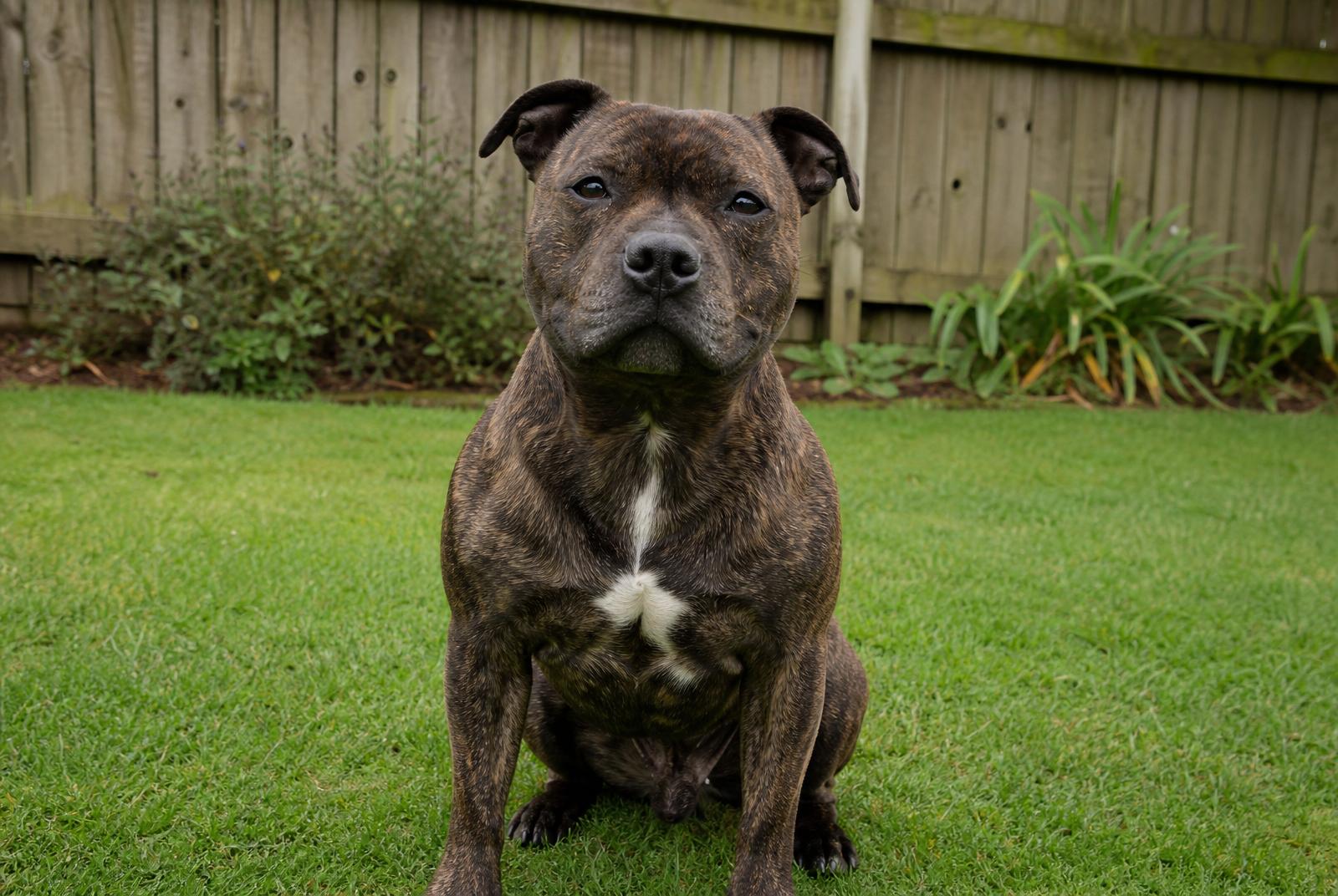
Staffordshire Bull Terrier
The Staffordshire Bull Terrier, often affectionately called the Staffie, is a compact, muscular British terrier known for its enthusiasm, loyalty and strong attachment to people. Beneath the breed's powerful appearance is usually an affectionate, playful companion that thrives on involvement in family life. Staffies are intelligent and energetic, requiring daily exercise, consistent reward-based training and plenty of mental stimulation. Their short coat is easy to maintain, although it offers limited protection in cold or wet weather.
About the Staffordshire Bull Terrier
History & background
The Staffordshire Bull Terrier developed in Britain, particularly in the Midlands, from crosses between old-style terriers and bulldog-type dogs. Its early history is linked with blood sports that were outlawed in the nineteenth century. Breed enthusiasts subsequently selected dogs for companionship, sound temperament and a distinctive combination of athleticism, courage and affection towards people. The breed was formally recognised by The Kennel Club in the twentieth century.
Modern Staffies are companion dogs rather than working fighting dogs. They retain a strong, agile build, broad head and determined terrier character, but responsible breeding places considerable emphasis on stability and sociability. Their historical background does mean that interactions with unfamiliar dogs should be assessed individually rather than assumed to be trouble-free. Early socialisation, considerate handling and responsible control in public help a Staffie become a well-adjusted member of the community.
Temperament & personality
Most Staffordshire Bull Terriers are people-focused, affectionate and keen to participate in whatever their household is doing. Many are comical, playful dogs that maintain puppy-like enthusiasm into adulthood. They can be physically demonstrative, leaning against people or seeking close contact, and may struggle if expected to spend much of each day alone. Their confidence and resilience should never be confused with an inability to feel stress; Staffies benefit from calm routines and gentle, predictable handling.
The breed combines intelligence with terrier persistence. A Staffie may learn quickly but lose interest in repetitive exercises, so short, enjoyable sessions usually work best. Excitement can lead to pulling, jumping up or rough play unless owners teach alternative behaviours early. Temperament differs between individuals and is influenced by genetics, socialisation, training, health and experience. Responsible ownership means recognising the dog in front of you rather than relying on breed stereotypes.
Personality traits
Common Staffordshire Bull Terrier characteristics include:
- Affectionate: Staffies commonly seek frequent contact with their families and enjoy being included in daily activities.
- Energetic: They need purposeful walks, play and enrichment rather than access to a garden alone.
- Playful: Many enjoy games throughout adulthood, although overexcitement should be managed.
- Strong: Their compact body is powerful, making loose-lead walking and reliable handling important.
- Intelligent: They often learn rapidly when training is rewarding, clear and varied.
- Persistent: Terrier determination can appear as stubbornness if motivation or communication is poor.
- People-oriented: Prolonged isolation may contribute to distress or destructive behaviour.
- Individually variable with dogs: Some are sociable, while others require distance and careful introductions.
Staffordshire Bull Terrier health — common conditions and vet costs
Top 6 conditions
Staffies can live healthy lives, but owners should recognise conditions reported in the breed. Cost depends on severity, diagnostic work, treatment, location and whether referral care is required. The bands below are qualitative only; ask your vet for a written estimate before planned investigations or treatment.
- Skin disease and allergies: Itching, recurrent ear trouble, inflamed paws, hair loss or repeated skin infections may be associated with allergies, parasites or other dermatological disease. Diagnosis can require elimination diets, skin tests or referral, and long-term management may be needed. Typical cost band: moderate, potentially high for recurrent or lifelong disease.
- Hereditary cataracts: Cataracts cause opacity within the lens and may impair vision. Staffordshire Bull Terriers can inherit an early-onset form, which is why DNA testing of breeding dogs is important. Eye examination and specialist assessment guide management; suitable cases may undergo surgery. Typical cost band: moderate for assessment and monitoring, high if specialist surgery is required.
- L-2-hydroxyglutaric aciduria: This inherited metabolic disorder affects the nervous system and may cause seizures, tremors, poor coordination, altered behaviour or muscle stiffness. A DNA test can identify clear, carrier and genetically affected dogs. Symptomatic dogs require veterinary assessment and ongoing care. Typical cost band: moderate to high, depending on investigations and long-term management.
- Joint and mobility problems: Staffies may experience conditions affecting the hips, knees or other joints, as well as injuries linked with vigorous activity. Signs include stiffness, lameness, reluctance to jump or reduced exercise tolerance. Treatment can involve weight control, physiotherapy, medication or surgery. Typical cost band: moderate for investigation and medical care, high where advanced imaging or surgery is needed.
- Brachycephalic obstructive airway syndrome: Although not as extremely short-faced as some breeds, individual Staffies can have airway restriction associated with their head shape. Noisy breathing at rest, exercise intolerance, disturbed sleep, gagging or overheating warrant assessment. Severely affected dogs may need referral and surgery. Typical cost band: moderate for investigation, high for specialist treatment.
- Demodicosis: Overgrowth of Demodex mites can cause patchy hair loss, redness and secondary skin infection, particularly in young or immunocompromised dogs. Localised cases may resolve, whereas widespread disease needs investigation and treatment. Typical cost band: moderate, potentially high if disease is generalised, recurrent or complicated by infection.
Breed-specific screening tests
Anyone buying a puppy should ask for verifiable health results for both parents rather than accepting statements that they have merely been vet checked. Relevant breeding considerations include DNA testing for hereditary cataracts and L-2-hydroxyglutaric aciduria. DNA results help breeders avoid producing affected puppies, but carrier status does not itself mean that a dog is ill. Eye examination under an appropriate recognised scheme may also be recommended because a DNA test cannot detect every possible eye condition.
Ask the breeder to explain the results, provide original documentation and discuss any additional current recommendations from The Kennel Club or the relevant breed club. Screening reduces avoidable risk but cannot guarantee lifelong health. Puppies should still receive a veterinary examination soon after arriving home, and owners should maintain routine health reviews, parasite control tailored to individual risk, vaccination and dental care.
When to see a vet — red flags
Contact a vet promptly for persistent itching, sore skin, repeated ear infections, lameness, sudden reluctance to exercise, unexplained weight change or any noticeable deterioration in vision. Neurological signs such as seizures, tremors, collapse, disorientation, weakness or poor coordination require urgent advice. A dog that cannot settle, is repeatedly vomiting, has a swollen abdomen or appears severely painful also needs immediate assessment.
Breathing difficulty is an emergency. Seek urgent help if your Staffie has laboured or unusually noisy breathing, blue or pale gums, collapse, marked overheating or difficulty recovering after exercise. Do not wait to see whether severe symptoms improve overnight. Ring the practice before travelling so the team can prepare, and never force food, water or medication into a distressed dog unless a veterinary professional has instructed you to do so.
Family life with a Staffordshire Bull Terrier
With children
A well-socialised Staffie can be affectionate and playful with considerate children, but no breed is automatically safe or suitable for every family. Their strength and enthusiasm can accidentally knock over a young child, and rough games may become overexciting. An adult should actively supervise every interaction, teach children not to disturb a dog while sleeping or eating, and provide the dog with a quiet retreat. Watch for turning away, lip licking, stiffness, hiding or other signs that the dog needs space. Children should never climb on, hug tightly, tease or take items from a dog. Families adopting an adult should discuss the dog's assessed history and needs with the rescue.
With other pets
Staffies vary considerably in their response to other animals. Some live comfortably with compatible dogs or cats, particularly after careful early introductions, while others have a strong chase drive or are selective around dogs. Introduce animals gradually in controlled circumstances, manage food and valued items, and supervise until their relationship is reliably calm. Never allow a dog to rehearse chasing a cat or smaller pet, and keep small animals securely separated. Dog-to-dog sociability can change at maturity, so owners should continue observing body language. If there is growling, freezing, lunging or conflict, create distance and seek help from a qualified, reward-based behaviour professional.
Home environment
A Staffie can adapt to a flat or smaller home if daily exercise, toilet access and enrichment are reliably provided. Secure outdoor space is useful but does not replace walks, sniffing and social contact. Fencing should be robust, and gates should be kept secure because a determined terrier may exploit weaknesses. Their short coat and close attachment to people make outdoor living inappropriate. Provide warm bedding away from draughts and consider a well-fitting coat in cold conditions. Staffies often find prolonged solitude difficult, so build alone time gradually and arrange suitable care if working hours regularly exceed what the individual dog can comfortably manage.
Exercise & training
Exercise needs
A healthy adult commonly benefits from around 60 to 90 minutes of daily activity, divided into manageable outings and adjusted for age, health, weather and individual fitness. Combine walking with sniffing, controlled play and training rather than relying only on intense ball chasing. Staffies can be powerful athletes, but repetitive jumping, abrupt turns and prolonged high-impact exercise may increase injury risk. In warm weather, walk during cooler periods, carry water and stop if breathing becomes strained.
Puppies need shorter, age-appropriate activity with plenty of sleep and opportunities to explore at their own pace. Avoid forced running, excessive stair use and repetitive high-impact work while they are developing. Older dogs may prefer shorter, more frequent walks and low-impact enrichment. Food-search games, safe chews, puzzle feeders and scent exercises can provide valuable mental activity. Any sudden reduction in stamina, stiffness or reluctance to move should prompt veterinary advice rather than being attributed solely to age.
Training approach
Begin reward-based training immediately, concentrating on name response, recall, loose-lead walking, settling and exchanging objects willingly. Use food, toys or access to enjoyable activities as rewards, and keep sessions brief enough to maintain concentration. Staffies are physically strong, so polite lead skills and calm behaviour around doorways, visitors and other dogs are particularly valuable. A comfortable, well-fitted harness can support safe management, although equipment does not replace training.
Early socialisation should involve controlled, positive exposure to people, sounds, surfaces, handling and suitable vaccinated dogs without overwhelming the puppy. Socialisation means learning to remain calm, not greeting everyone. Avoid punishment, lead jerks and confrontational handling, which can increase fear, frustration or defensive behaviour. For persistent pulling, separation distress, guarding, reactivity or aggression, first ask a vet to exclude pain or illness, then seek a suitably qualified clinical animal behaviourist or accredited reward-based trainer.
Grooming & coat care
Coat & routine
The Staffie's smooth, short coat is relatively low maintenance. Brush once a week with a soft rubber grooming tool or suitable bristle brush to remove loose hair, distribute natural oils and check the skin. Shedding occurs throughout the year and may increase seasonally. Inspect for redness, dandruff, lumps, sore patches, parasites and thinning hair, paying particular attention to the paws, belly and skin folds around the face. Frequent scratching, licking, odour or recurrent rashes need veterinary assessment; changing shampoos or foods repeatedly without guidance can delay diagnosis.
Bathing, ears, nails & teeth
Bathe when dirty using a gentle dog shampoo, rinsing and drying thoroughly. Clean ears only when needed with a vet-recommended product, and never insert cotton buds into the canal. Redness, discharge, head shaking or an unpleasant smell can indicate disease. Check nails regularly and trim small amounts before they become overgrown; ask the veterinary team or groomer for help if the quick is difficult to see. Brush teeth daily where possible with dog toothpaste, introducing the process gradually. Dental chews may supplement brushing but should be appropriately sized, supervised and included in the dog's daily food allowance.
Diet & nutrition
Feeding a Staffordshire Bull Terrier
Choose a complete food appropriate for the dog's life stage and feed measured portions according to body condition, activity, neuter status and veterinary advice. Manufacturer guides are starting points rather than exact prescriptions. You should be able to feel the ribs beneath a light covering and see a waist from above. Staffies can be persuasive around food, but excess weight places additional strain on joints, worsens heat tolerance and may complicate other health problems. Count treats within the daily ration and use part of regular food for training.
Puppies need a complete growth diet and regular meals; avoid adding vitamin or mineral supplements unless your vet recommends them. Change food gradually to reduce digestive upset and keep fresh water continuously available. Recurrent itching is not proof of a food allergy, and restrictive home-prepared diets can become nutritionally unbalanced. If food allergy is suspected, a vet may recommend a properly controlled elimination trial. Seek advice for persistent diarrhoea, vomiting, appetite changes, difficulty eating, excessive thirst or unexpected weight loss or gain.
How much does a Staffordshire Bull Terrier cost at the vet?
UK average prices
Across published UK vet price lists, the UK average consultation is £60.60. For a dog the typical booster vaccination averages £70.56, castration averages £257.13 and spaying averages £348.88. Neutering is priced by size at many practices. For a medium dog of roughly 10–25kg, the typical castration is around £280 (most £212–£375) and a spay around £368 (most £300–£510). Microchipping averages £26.49. Individual practice charges vary regionally and by ownership (corporate vs independent). Always request a written estimate.
Routine annual budget
Routine veterinary spending is generally moderate and may include a health examination, vaccination where advised, parasite prevention based on lifestyle, and dental monitoring. Costs rise when diagnostic tests, prescription medicines, treatment for recurrent skin disease or emergency care are required. Neutering and microchipping are usually one-off rather than annual items. Preventive-care plans can spread selected routine charges but are not the same as insurance and commonly exclude illness, injury and emergency treatment. Ask what is included, compare practices on clinical provision as well as fees, and request written estimates for planned work. Keep a separate contingency fund because even insured owners must usually pay an excess and may need to settle the practice bill before reimbursement.
Pet insurance for a Staffordshire Bull Terrier
Why insurance matters
Insurance can help protect against the high cost of unexpected illness or injury, including diagnostic imaging, surgery, hospitalisation and specialist referral. This is relevant for a breed that may develop chronic skin disease, eye problems or orthopaedic conditions. Policies normally exclude pre-existing conditions, so arranging cover while a dog is young and healthy may preserve more options. Insurance does not replace preventive care or an emergency fund, and routine vaccination, neutering, dental maintenance and parasite treatment are commonly excluded. Read the policy rather than assuming all veterinary treatment is covered.
What to look for
Compare the veterinary-fee limit, whether it renews each year, time limits for each condition, excess arrangements and any percentage contribution required as the dog ages. Lifetime cover can continue funding an eligible ongoing condition if the policy remains active, premiums are paid and renewal limits are observed; other policy types may stop paying after a set period or limit. Check provisions for dental illness, complementary treatment, behavioural treatment, referral care, emergency boarding and travel if relevant. Ask how bilateral conditions, hereditary disease and previous clinical signs are treated, and disclose the dog's full medical history accurately. Premiums and terms can change at renewal.
Choosing a vet for your Staffordshire Bull Terrier
What to look for
Choose a practice where you feel comfortable discussing skin, mobility, breathing, behaviour and weight, and where the team handles strong or anxious dogs with patience. Consider appointment availability, out-of-hours arrangements, continuity of care, accessibility, diagnostic facilities and referral pathways. Ask how the practice provides written estimates, processes insurance claims and supports dogs that find visits stressful. A convenient practice with clear emergency provision can be more valuable than choosing on a single headline fee.
Use our vet price comparison tool to compare practices near you.
Frequently asked questions
Are Staffordshire Bull Terriers good family dogs?
They can be affectionate, entertaining family companions when responsibly bred or assessed, socialised and trained. Their strength and exuberance mean interactions with children require active adult supervision, and every dog needs a quiet place where it will not be disturbed. Suitability depends on the individual dog's temperament, history and needs as well as the family's experience, routine and ability to provide exercise and companionship. A breed label alone cannot guarantee behaviour.
How much exercise does a Staffordshire Bull Terrier need?
A healthy adult generally needs around 60 to 90 minutes of daily activity, adjusted for fitness, health and weather. Divide this between walks, sniffing, play and training rather than providing only high-intensity exercise. Puppies and older dogs need individually adapted routines. Staffies can overheat or injure themselves during vigorous activity, so monitor breathing and movement, provide rest and water, and seek veterinary advice if stamina declines unexpectedly.
Can a Staffordshire Bull Terrier live with cats or other dogs?
Some Staffies live successfully with compatible dogs or cats, while others are dog-selective or have a strong chase response. Early experience helps but does not guarantee compatibility. Use gradual introductions, supervise carefully, separate animals around valued resources and prevent access to small pets. If adopting, ask the rescue about formal assessments and known history. Seek qualified behavioural support if you see freezing, hard staring, stalking, lunging or conflict.
Are Staffordshire Bull Terriers easy to train?
Staffies are intelligent and often highly motivated by food, toys and social interaction. They generally respond well to short, varied reward-based sessions, although terrier persistence and excitement can make consistency important. Prioritise recall, settling, loose-lead walking and calm greetings. Avoid aversive equipment and punishment. If behaviour changes suddenly or training becomes unusually difficult, arrange a veterinary check because pain and illness can influence behaviour.
How much does a Staffordshire Bull Terrier cost at the vet in the UK?
Across published UK vet price lists, an average consultation is £60.60, a dog booster vaccination is £70.56, dog castration is £257.13, dog spaying is £348.88 and microchipping is £26.49. Routine annual veterinary expenditure is usually moderate, but illness, injury and referral treatment can make it high. Charges vary by practice and region, so request a written estimate and clarify what it includes.
What health tests should a Staffordshire Bull Terrier breeder provide?
Ask for verifiable parental DNA results for hereditary cataracts and L-2-hydroxyglutaric aciduria, together with evidence of appropriate eye examination and any other screening currently recommended by The Kennel Club or breed clubs. Ask the breeder to explain clear, carrier and affected results rather than simply saying the parents are health tested. Screening reduces risk but cannot guarantee health, and a new puppy should still be examined by your own vet.
Related breeds
By The Vet Price Comparison Site editorial team · Last reviewed12 October 2026. Sources: RCVS, The Kennel Club, RVC VetCompass, ABI, and our live UK vet pricing index.