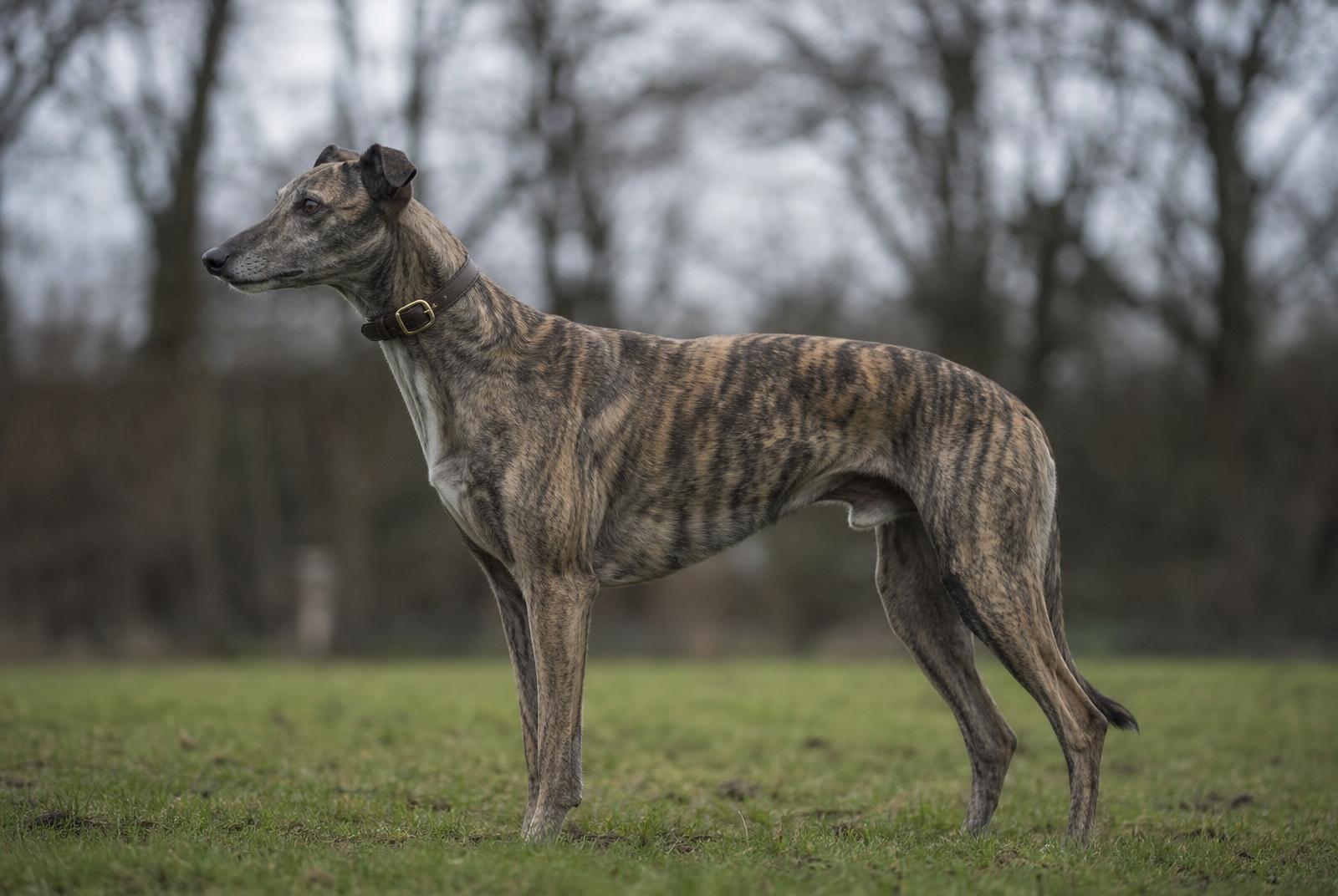
Greyhound
The Greyhound is an elegant sighthound known for exceptional speed, but life at home is usually much quieter than its athletic build suggests. Many UK Greyhounds are gentle retired racers seeking comfortable homes after their working careers. They commonly enjoy short bursts of activity followed by long periods of sleep, earning a reputation as calm, affectionate companions. Their sensitive nature responds best to patient handling, predictable routines and reward-based training.
About the Greyhound
History & background
Greyhounds are among the oldest recognisable types of dog. Sighthounds were developed to locate and pursue prey using keen eyesight, rapid acceleration and an efficient galloping stride. Over centuries, Greyhounds were used for coursing and later for organised racing. Their deep chest, long limbs, flexible spine and lean physique reflect this highly specialised athletic history.
In the UK, many household Greyhounds are retired racing dogs placed through specialist charities and rehoming organisations. A racing background does not define an individual dog's future temperament, but it may mean that ordinary domestic experiences are unfamiliar at first. Stairs, glass doors, household appliances, slippery floors and being left alone may all require gradual introduction. A reputable rescue should explain the dog's known history, conduct behavioural assessments and offer support while the dog settles into home life.
Temperament & personality
Adult Greyhounds are generally calm, gentle and fond of comfort. Although they can run at remarkable speed, they are not usually relentlessly energetic indoors. Many are content to snooze for much of the day after suitable walks and opportunities to sniff. They often form close bonds without being constantly demanding, though some experience separation-related distress and need careful help learning to spend time alone.
The breed can be sensitive to harsh voices, physical corrections and chaotic environments. Reward-based methods, quiet consistency and clear routines are far more effective. Individual personalities vary: some dogs are outgoing and playful, while others are reserved around unfamiliar people or situations. Retired racers may initially freeze rather than investigate when worried, so owners should recognise subtle stress signals and allow the dog space and time.
Personality traits
Common Greyhound characteristics include:
- Gentle, affectionate behaviour with trusted people
- A relaxed and sleepy manner around the home
- Sudden bursts of speed during appropriate exercise
- A potentially strong instinct to chase moving animals
- Sensitivity to noise, pressure and abrupt handling
- Enthusiasm for soft beds, warmth and predictable routines
- Relatively little barking compared with many breeds
- Individual differences in confidence, sociability and prey drive
Greyhound health — common conditions and vet costs
Top 6 conditions
Greyhounds can lead healthy lives, but their build and background are associated with several concerns. Treatment costs depend on severity, investigation, location and whether emergency or specialist care is required. The following bands are qualitative; request a written estimate before planned treatment whenever possible.
- Dental disease: Plaque, inflamed gums, loose teeth and painful periodontal disease are common concerns, particularly in some retired racers. Treatment may involve examination, dental imaging, cleaning and extractions under anaesthesia. Typical cost band: moderate to high.
- Osteosarcoma: This aggressive bone cancer often causes persistent lameness, swelling or pain, especially in a limb. Investigation may include imaging and biopsy, with treatment options such as pain management, surgery, chemotherapy or palliative care. Typical cost band: high.
- Bloat and gastric dilatation-volvulus: The deep chest may increase susceptibility to stomach distension and twisting. Unproductive retching, abdominal swelling, restlessness or collapse require immediate emergency attention. Surgery and intensive monitoring may be necessary. Typical cost band: high.
- Musculoskeletal injuries: Greyhounds may develop cuts, sprains, fractures, toe injuries or painful corns on the paw pads. Their thin skin and athletic limbs warrant prompt assessment of wounds and persistent lameness. Management ranges from rest and foot care to imaging or surgery. Typical cost band: moderate to high.
- Heart disease: Murmurs or rhythm abnormalities may be detected during examination, although some findings can be influenced by a Greyhound's athletic physiology. Assessment may involve blood pressure measurement, an electrocardiogram, chest imaging or an echocardiogram. Typical cost band: moderate to high.
- Eye disease: Greyhounds may experience age-related or inherited eye problems, including conditions affecting the lens or retina. Cloudiness, redness, discharge, discomfort or altered vision should be examined promptly, with referral where necessary. Typical cost band: moderate to high.
Breed-specific screening tests
Before acquiring a puppy, ask the breeder which health assessments were completed for both parents and request verifiable results rather than relying on verbal reassurance. A vet can advise on current screening relevant to the family line, including eye assessment and any DNA tests appropriate to known hereditary risks. Screening reduces risk but cannot guarantee that a dog will remain free from disease.
For a retired racer, obtain available vaccination, injury, dental and treatment records from the rescue. A post-adoption veterinary examination can establish a baseline for teeth, heart, eyes, joints, skin and body condition. Greyhounds can have physiological and laboratory values that differ from those of many other breeds, so tell the practice that your dog is a Greyhound. This can help the vet interpret blood results and plan anaesthesia appropriately.
When to see a vet — red flags
Contact a vet promptly for persistent lameness, limb swelling, unexplained pain, reduced appetite, weight loss, coughing, fainting, breathing changes, eye pain, dental discomfort or a wound that is deep, gaping or slow to heal. Greyhounds can be stoical, so a subtle change in gait, sleep, willingness to exercise or interaction may be important.
Seek emergency care immediately for repeated unproductive retching, a swollen or painful abdomen, severe restlessness, pale gums, collapse, breathing difficulty, uncontrolled bleeding, suspected poisoning, major trauma or sudden inability to use a limb. Do not wait for routine opening hours when bloat is suspected. Telephone the practice on the way so the team can prepare.
Family life with a Greyhound
With children
Many Greyhounds live happily with considerate children, particularly when the rescue or breeder has matched the dog carefully to the household. Adults should supervise every interaction and teach children not to climb on the dog, disturb sleep, take food or crowd the dog's bed. A Greyhound needs a quiet retreat that everyone respects. Because their skin is thin and their limbs are long, rough play can cause accidental injury. Children should also understand that a newly adopted dog may need time before seeking physical affection.
With other pets
Greyhounds vary considerably in their response to other animals. Many are sociable with dogs, while others need careful introductions or prefer particular companions. A strong chase instinct can make life with cats, rabbits or other small pets unsafe. Some individually assessed Greyhounds can live with cats, but this should never be assumed from calm behaviour indoors. Use rescue-led assessments, secure separation and gradual introductions, and do not leave animals together unsupervised until qualified professionals consider it safe. Outdoor prey drive may remain even in a dog that accepts a familiar household cat.
Home environment
A large garden is not essential if the dog receives suitable walks, toilet breaks and enrichment. Greyhounds may adapt well to flats because they are often quiet indoors, but access, stairs, communal areas and lift use should be considered. A secure garden is valuable, with fencing sufficient to prevent escape and gates that close reliably. Provide thick, supportive bedding, non-slip rugs and a warm coat in cold or wet weather. Never leave a Greyhound unattended in a garden simply because it is fenced, and make changes gradually when bringing a retired racer into an unfamiliar domestic environment.
Exercise & training
Exercise needs
Most healthy adult Greyhounds benefit from around an hour of daily exercise, divided into manageable walks and adjusted for age, health, weather and individual fitness. They enjoy sniffing and exploring as well as opportunities to stretch their legs. Despite their racing heritage, they do not generally require prolonged high-intensity activity. Increase exercise gradually for a newly retired racer because track fitness does not necessarily prepare a dog for long road walks or uneven terrain.
Only allow off-lead exercise in a genuinely secure enclosed area after assessing recall and chase behaviour. A moving animal can trigger pursuit before an owner has time to react. A well-fitted sighthound collar, harness or suitable combination can reduce escape risk; ask a rescue or qualified professional about fit. Avoid strenuous exercise around meals, particularly because deep-chested dogs can be vulnerable to bloat. Older dogs and those with painful joints need shorter, gentler outings planned with veterinary guidance.
Training approach
Use short, positive sessions built around food, toys, praise and access to activities the dog enjoys. Begin with name recognition, settling, handling, recall foundations, loose-lead walking and a reliable response to being called away from distractions. Greyhounds may not repeat tasks simply to please their owner, but this does not mean they lack intelligence. Clear rewards and realistic expectations make training more productive.
Retired racers may need help with stairs, house training, reflective surfaces, traffic, other breeds of dog and short periods alone. Introduce one challenge at a time and avoid forcing a worried dog. Muzzle training is useful and should be positive; a muzzle may be recommended during early introductions or by a rescue, but it does not replace a lead, supervision or distance from prey. Seek support from a vet and an accredited reward-based behaviour professional if fear, aggression, separation distress or persistent chasing creates concern.
Grooming & coat care
Coat & routine
The short, close coat is generally low maintenance. Brush weekly with a soft grooming mitt or gentle brush to remove loose hair and check the skin. Greyhounds have little protection over bony areas and can develop scrapes, pressure sores or cuts, so examine elbows, feet, thighs and the tip of the tail regularly. Their low body fat and fine coat make many individuals sensitive to cold. Use a correctly fitted coat in chilly or wet conditions, while avoiding overheating indoors or during activity.
Bathing, ears, nails & teeth
Bathe only when needed using a dog-appropriate product, then dry the coat thoroughly. Check the ears weekly for redness, odour, pain or discharge, and use only cleaners recommended by a vet. Nails require regular trimming because long nails alter footing and may contribute to discomfort; Greyhound nails are often dark, so ask a veterinary nurse or groomer for help if the quick is difficult to see. Dental care is especially important. Brush daily where possible with canine toothpaste, build up handling gradually, and arrange veterinary checks for bad breath, bleeding gums, difficulty eating or loose teeth.
Diet & nutrition
Feeding a Greyhound
Feed a complete, balanced diet appropriate to the dog's life stage, activity, body condition and any medical needs. Use the manufacturer's guide as a starting point, weigh portions and adjust them with veterinary advice. Greyhounds are naturally lean, but ribs should not become progressively more prominent and weight loss should not be dismissed as normal for the breed. Monitor body condition regularly, particularly after adoption, neutering or a change in exercise.
Divide the daily ration into more than one meal and avoid vigorous exercise immediately before or after eating. No feeding practice can completely prevent bloat, so owners must also know the warning signs. Introduce dietary changes gradually to reduce digestive upset and keep fresh water available. Treats should form a small part of the overall ration. Ask your vet before giving supplements or changing to a specialist diet, especially if the dog has kidney, dental, digestive, heart or musculoskeletal disease.
How much does a Greyhound cost at the vet?
UK average prices
Across published UK vet price lists, the UK average consultation is £60.60. For a dog the typical booster vaccination averages £70.56, castration averages £257.13 and spaying averages £348.88. Neutering is priced by size at many practices. For a large dog of roughly 25–40kg, the typical castration is around £310 (most £227–£450) and a spay around £415 (most £315–£586). Microchipping averages £26.49. Individual practice charges vary regionally and by ownership (corporate vs independent). Always request a written estimate.
Routine annual budget
A Greyhound's routine annual veterinary budget is generally moderate and should allow for a health examination, vaccination according to the vet's risk-based advice, parasite control, dental assessment and occasional minor illness. Prescription parasite treatment varies with weight, lifestyle and travel history. Dental procedures, diagnostic imaging, emergency care and long-term medication can move costs into a high band. Ask what is included in any practice health plan, note that it is not the same as insurance, and request a written estimate for tests or procedures.
Pet insurance for a Greyhound
Why insurance matters
Greyhounds can require expensive investigation or treatment for cancer, fractures, bloat, heart concerns and chronic dental or musculoskeletal problems. Insurance may make unexpected decisions easier, but policies differ substantially. Cover usually excludes pre-existing conditions, and an issue noted before the policy begins may remain excluded even if no treatment was given. Arrange suitable cover promptly and disclose the dog's complete medical history accurately. An adopted Greyhound may come with temporary cover, but owners should check when it ends and what conditions apply.
What to look for
Compare lifetime, maximum-benefit and time-limited policies carefully. Review the veterinary fee limit, excess, any percentage contribution required for older pets, dental illness conditions, complementary treatment, behavioural cover, referral fees and rules for emergency care. Check whether the limit renews each policy year and whether it applies per condition or across all claims. Read exclusions for racing history, previous injuries and bilateral conditions. Premium alone does not show the value of a policy, so examine the full wording and consider how you would fund treatment above the limit.
Choosing a vet for your Greyhound
What to look for
Choose a practice where the team is comfortable with Greyhound physiology, gentle handling, dental care and anaesthetic planning for sighthounds. Ask how emergencies are covered outside normal hours, where hospitalised patients stay, whether dental imaging is available and how referrals are arranged. A calm waiting option may help a newly adopted or worried dog. Transparent estimates, clear communication and accessible follow-up are as important as the initial consultation charge.
Use our vet price comparison tool to compare practices near you.
Frequently asked questions
Are Greyhounds good pets after racing?
Yes, many retired racers become gentle, affectionate pets. They may initially be unfamiliar with stairs, household noises, other dog breeds, being alone and ordinary street walks. A reputable rescue will assess temperament, discuss prey drive and match the dog to an appropriate home. Patient introductions, a consistent routine and reward-based training help most dogs adjust.
How much exercise does a Greyhound need?
A healthy adult often needs around an hour each day, usually divided between walks, sniffing and suitable opportunities to move freely in a secure area. Needs vary with age, medical history and fitness. Build activity gradually for a newly retired racer and avoid assuming that racing fitness makes the dog ready for long-distance walking.
Can a Greyhound live with a cat?
Some individually assessed Greyhounds can live with cats, but others have prey drive that makes this unsafe. Use a reputable rescue's assessment and follow a structured introduction plan with physical separation, leads and close supervision. A dog accepting a familiar cat indoors may still chase cats or wildlife outside, so secure handling remains essential.
Can Greyhounds be let off the lead?
Greyhounds can accelerate rapidly and may pursue wildlife despite previous recall. Off-lead activity is safest in a genuinely secure enclosed space with suitable fencing and gates. Recall training remains worthwhile but cannot remove instinctive chase behaviour. Use properly fitted walking equipment and follow any handling advice provided by the rescue.
Do Greyhounds need to wear a coat?
Many do in cold, wet or windy conditions because their coat is fine and they carry little insulating body fat. Choose a coat that covers the back without restricting shoulders, toileting or movement. Remove it indoors if the dog becomes warm, and provide soft bedding away from draughts.
How much does Greyhound veterinary care cost in the UK?
Routine costs are usually moderate, while dental work, diagnostic imaging, emergency treatment or long-term disease can create high costs. Across published UK vet price lists, an average consultation is £60.60 and a dog booster vaccination averages £70.56. Charges vary by practice and region, so request a written estimate and consider insurance for unexpected illness or injury.
Related breeds
By The Vet Price Comparison Site editorial team · Last reviewed12 October 2026. Sources: RCVS, The Kennel Club, RVC VetCompass, ABI, and our live UK vet pricing index.