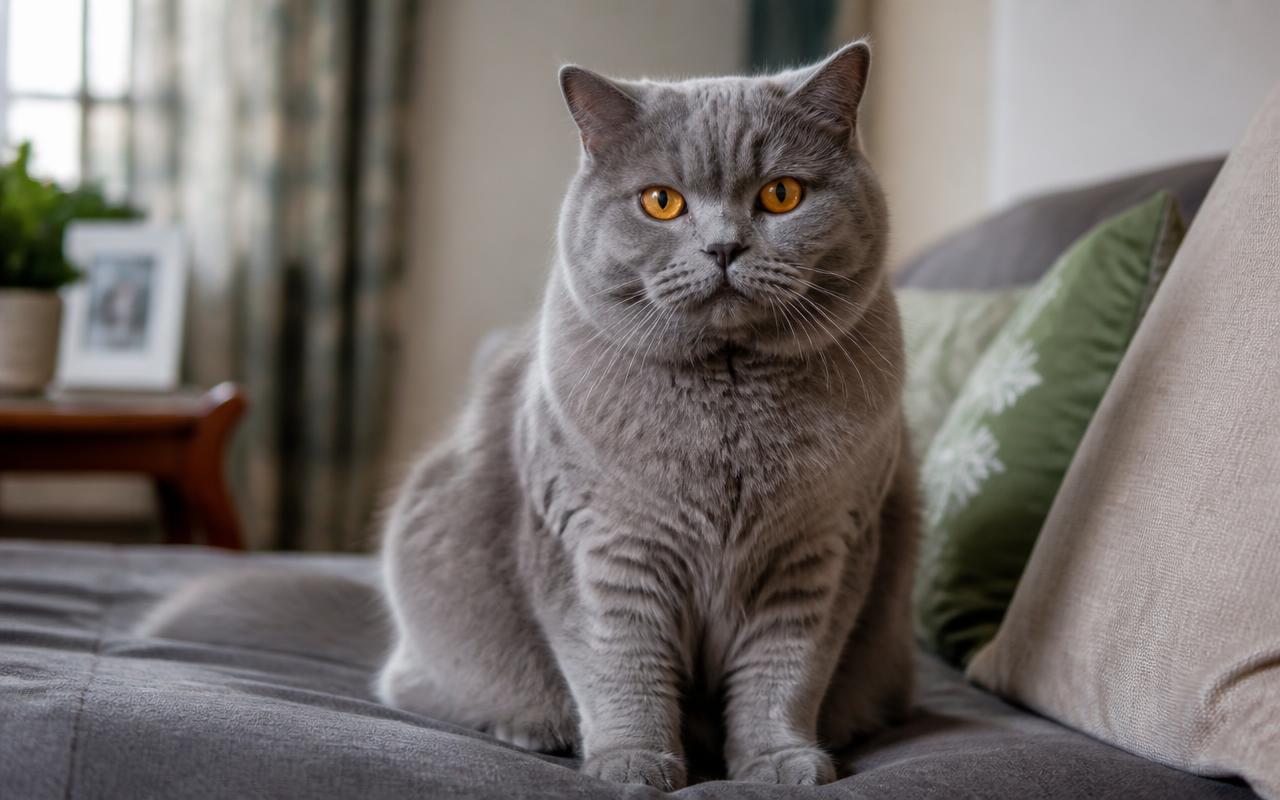
British Longhair
The British Longhair is, in essence, a British Shorthair in a plush semi-long coat — the same broad chest, rounded face, heavy bone structure and famously placid temperament, wrapped in a dense, soft coat that stands away from the body. The breed exists because Persians were used in the twentieth century to rebuild British Shorthair numbers after the war, leaving a recessive longhair gene that occasionally produces longhaired kittens in shorthair litters. Those cats are now recognised as a breed in their own right.
About the British Longhair
History & background
British Shorthair numbers collapsed during the Second World War, and breeders rebuilt the population using Persians among other breeds. That outcrossing introduced the recessive long-coat gene, and for decades the longhaired kittens that appeared in British Shorthair litters were quietly rehomed as pets. Registries gradually recognised them as a separate breed — the British Longhair — and the GCCF now records them in their own right. Genetically and temperamentally, they remain very close to their shorthaired siblings.
Temperament & personality
Calm, even-tempered and notably undemanding. British Longhairs are affectionate but reserved about it: they prefer to sit beside you rather than on you, and many actively dislike being picked up and carried. They tolerate handling well, rarely scratch, and adapt easily to changes in household routine. They are quiet cats — you will hear a soft chirp far more often than a proper meow.
Personality traits
- Placid and steady — one of the calmest pedigree breeds
- Independent — copes better than most with being alone during the day
- Not a lap cat for the most part; prefers proximity to contact
- Quiet — very little vocalisation
- Prone to weight gain, which is the main welfare risk in the breed
British Longhair health — common conditions and vet costs
Top 6 conditions
- Hypertrophic cardiomyopathy (HCM) — inherited via British Shorthair lines and the most significant concern. Echocardiogram screening costs £250-£500.
- Polycystic kidney disease (PKD) — inherited from the Persian ancestry and DNA testable; affected cats develop kidney failure, with lifelong management running several hundred pounds a year.
- Obesity — extremely common in this breed and the gateway to diabetes, arthritis and urinary disease.
- Hairballs and gastrointestinal obstruction — a direct consequence of the dense coat; severe cases needing surgery cost £1,500-£3,000.
- Dental disease — the shortened muzzle crowds teeth; a scale and polish typically costs £250-£500 and extractions considerably more.
- Feline lower urinary tract disease (FLUTD) — more likely in overweight, indoor, male cats, and a blockage is a genuine emergency costing £800-£2,000.
Breed-specific screening tests
Insist on two things from a breeder: a PKD DNA test showing both parents are clear, and a recent cardiac ultrasound screening for HCM on both parents. A responsible GCCF-registered breeder will produce these without hesitation. Also ask about blood group testing, since neonatal isoerythrolysis is a risk in breeds with a high proportion of type B blood.
When to see a vet — red flags
Treat rapid or open-mouth breathing at rest, sudden hind-limb weakness, or a male cat straining unproductively in the litter tray as same-day emergencies. Also seek advice promptly for increased thirst and urination, which can be the first sign of kidney disease or diabetes, and for repeated retching that does not produce a hairball.
Living with a British Longhair
With children
Excellent. Their sturdy build and unflappable nature make them one of the better breeds for families with young children. The one rule worth teaching is that this cat likes to be stroked where it sits and does not enjoy being picked up and carried around.
With other pets
Very tolerant. They generally accept other cats and calm dogs without fuss, and their low prey drive and low energy mean they rarely provoke conflict. Introductions still need to be gradual, but British Longhairs tend to settle faster than most.
Home environment
Well suited to flats and to indoor life, being neither adventurous nor especially athletic. Provide a scratching post, a couple of low perches — they are not natural high climbers — and easy-access litter trays. Because they are heavy-coated, keep the home from overheating in summer, and give them a cool tiled or wooden surface to lie on.
Play, enrichment & training
Enrichment needs
Ten to fifteen minutes of wand-toy play twice a day is plenty, but it genuinely matters: left entirely to their own devices, British Longhairs simply sleep and eat, and the weight follows. Puzzle feeders are the single most useful piece of kit for this breed, slowing eating and providing mental work at the same time.
Training & handling
They are intelligent but not eager to please, so training works best when it is short, food-motivated and low-pressure. The most valuable thing you can train is grooming tolerance — start brushing from kittenhood, in short pleasant sessions, and you avoid a lifetime of struggles and the occasional sedated de-matting appointment.
Grooming & coat care
Coat & routine
The dense double coat needs brushing every day or two, and daily during the spring and autumn moults. Work in sections with a wide-toothed comb first and a slicker second, paying particular attention to the armpits, behind the ears, the trousers and the base of the tail, where mats form first. A neglected coat mats close to the skin and often ends in a sedated clip-off costing £150-£400.
Ears, nails, teeth & hygiene
Check ears fortnightly, trim nails every two to three weeks, and brush teeth daily — dental disease is common and expensive in this breed. Because of the long coat and heavy build, some British Longhairs struggle to keep the area under the tail clean; a trim there prevents both matting and soiling. A grooming-aware routine also reduces hairball formation, which is one of the more common reasons this breed ends up at the vet.
Diet & nutrition
Feeding a British Longhair
Portion control is the defining nutritional issue for this breed. They are food-motivated, sedentary and slow-metabolising, and free-feeding almost always leads to obesity. Weigh out a measured daily allowance of a high-protein complete diet, use puzzle feeders to slow intake, and weigh the cat monthly. Wet food helps with hydration and urinary health, and a diet formulated to help with hairball control is worth considering given the coat.
How much does a British Longhair cost at the vet?
UK average prices
Current UK averages from our live database of veterinary practices:
| Treatment | UK average |
|---|---|
| Routine consultation | £60.23 |
| Annual booster vaccination | £72.92 |
| Microchipping | £28.55 |
| Castration (male) | £107.90 |
| Spay (female) | £151.67 |
Prices vary widely by region and by who owns the practice — it is worth comparing before registering.
Routine annual budget
Budget roughly £200-£400 a year for routine care: an annual booster at £72.92, a health-check consultation at £60.23 and year-round parasite treatment. Add professional grooming if you would rather not manage the coat yourself, typically £40-£70 per session, and factor in dental work from middle age, which is the most predictable large routine cost in this breed.
Pet insurance for a British Longhair
Why insurance matters
Routine care is predictable; illness is not. Hypertrophic cardiomyopathy and polycystic kidney disease are both inherited risks in this breed, and both mean lifelong monitoring and medication rather than a one-off bill; a urinary blockage or hairball obstruction can also arrive without warning at £1,500 or more. A single referral-level workup can run into four figures before treatment even begins, which is why lifetime cover is the sensible default for this breed rather than an accident-only or annual policy.
What to look for
Insure from the day you bring your British Longhair home, before any condition can be recorded as pre-existing. Choose a lifetime policy with a per-condition limit you would actually be comfortable with — £7,000 or more is a realistic benchmark in 2026. Check the excess structure carefully, confirm that dental cover and behavioural treatment are included, and read the exclusions for breed-specific conditions, which some insurers list explicitly.
Choosing a vet for your British Longhair
What to look for
Not every practice charges the same, and the gap is far wider than most owners realise. Published price lists show routine consultation fees across UK practices ranging from under £30 to well over £90 for the same fifteen-minute appointment, so it genuinely pays to compare before you register.
Look for a practice that runs cat-only or cat-friendly clinics, since a calm environment suits this breed's temperament, and ask whether they offer weight-management clinics — for a British Longhair, a nurse-led weight programme is one of the most cost-effective preventive services a practice can provide. Confirming access to cardiac ultrasound and in-house blood testing is also sensible given the hereditary risks.
- Compare published prices for consultations, boosters and neutering using our directory rather than ringing round one practice at a time.
- Ask about health plans. Monthly plans covering vaccinations, flea and worm treatment and a discount on other services often work out cheaper for a British Longhair.
- Check out-of-hours arrangements. Find out whether emergencies are handled in-house or referred to a separate provider, and what that costs.
- Look at independence. Independent and corporate-owned practices price very differently — our listings show who owns each one.
Frequently asked questions
How much does a British Longhair cost at the vet in the UK?
Our UK data puts an average consultation at £60.23, an annual booster vaccination at £72.92, microchipping at £28.55, castration at £107.90 and spaying at £151.67. Routine care therefore comes to about £200-£400 a year. The breed-specific costs to plan for are dental treatment from middle age at £250-£500 a time, occasional professional grooming at £40-£70, and cardiac or kidney monitoring if screening suggests it is warranted.
What is the difference between a British Longhair and a British Shorthair?
Almost nothing except the coat. The British Longhair carries two copies of a recessive long-coat gene inherited from Persians used to rebuild British Shorthair bloodlines after the Second World War. Body type, head shape, bone structure and temperament are effectively identical — both are calm, sturdy, undemanding cats. The practical difference is grooming: a British Longhair needs brushing every day or two and is prone to matting and hairballs, whereas a Shorthair needs a weekly once-over.
What health problems do British Longhairs have?
Two inherited conditions matter most: hypertrophic cardiomyopathy, a thickening of the heart muscle, and polycystic kidney disease inherited from the Persian ancestry. Both can be screened for — HCM by cardiac ultrasound and PKD by DNA test — so always ask a breeder for evidence on both parents. Beyond that, obesity is by far the most common problem and drives diabetes, arthritis and urinary disease; hairball obstruction and dental disease round out the list.
How much grooming does a British Longhair need?
Brushing every day or two, and daily during the spring and autumn moults. The coat is a dense double coat that mats readily behind the ears, in the armpits, on the hind legs and around the base of the tail. Use a wide-toothed comb first and a slicker brush second, and start the habit in kittenhood. A coat allowed to mat down to the skin usually needs a sedated clip-off at the vet, costing £150-£400 and causing the cat real distress.
Are British Longhairs good for families and flats?
Yes to both. They are placid, sturdy, quiet and remarkably tolerant of children and other pets, and their low energy and lack of climbing ambition make them very well suited to flats and indoor life. They are more independent than most breeds, coping reasonably with a working day alone. The one caveat is that many dislike being picked up and carried — they prefer to be stroked where they are sitting.
Do British Longhairs get fat?
They are one of the breeds most likely to. A combination of a strong appetite, a low activity level and a slow metabolism means free-feeding almost always results in an overweight cat, and the plush coat hides the change until it is significant. Weigh out a measured daily portion rather than topping up a bowl, use puzzle feeders, keep up two short play sessions a day, and weigh your cat monthly. Ask your vet for a body condition score at every visit and act as soon as it starts climbing.
Related breeds
By The Vet Price Comparison Site editorial team · Last reviewed12 October 2026. Sources: RCVS, The Kennel Club, RVC VetCompass, ABI, and our live UK vet pricing index.