The most popular advice about the Jack Russell Dachshund mix is to treat it as a healthier Dachshund that needs plenty of exercise. That's too reassuring. A lively terrier attitude doesn't tell you whether the dog underneath has a vulnerable spine, unstable kneecaps or the physical capacity for relentless fetch.
Start with the individual dog's proportions, movement and health history. Those observations are more useful than the Jackshund label when you're deciding how to exercise, feed and care for one.
Table of Contents
- Jack Russell Dachshund Mix at a Glance
- Body Shape Decides Back Risk More Than Breed
- Temperament and Daily Behaviour
- Health Conditions to Screen For
- Buyer Checks, Microchipping and Records
- Exercise and Weight Control Without Back Strain
- Yearly Ownership Costs
- Find a Local Vet Before You Need One
Jack Russell Dachshund Mix at a Glance
A Jack Russell Dachshund mix can look like a small, active terrier stretched over a Dachshund-length back. There's no fixed breed standard, so littermates needn't grow into matching adults.
Jack Russell Dachshund mix profile at a glance
| Trait | Typical range | What it means for owners |
|---|---|---|
| Height at the shoulder | Small dog, with leg length shaped by parentage | Assess proportions rather than expecting a standard height |
| Adult weight | Establish an individual target with your vet | Excess weight adds avoidable strain |
| Lifespan | No established cross-specific range | Plan for long-term preventive care |
| Coat | Smooth, broken or rough | Brush rough coats carefully; smooth coats still shed |
| Energy | Moderate to high | Allow time for walks, training and mental work |
| Main health flag | Spinal disease, including IVDD, and joint problems | Arrange an early physical examination |
Exact height, weight and lifespan ranges can suggest a predictability this cross doesn't have. A puppy from a miniature Dachshund parent may develop differently from one with a larger Dachshund behind it, and the terrier parent's build matters too.
Look at the parents, not just the puppy
Ask the breeder or rescue for the parents' adult weights and, where possible, meet them standing and moving. A photograph of a curled-up puppy tells you very little about its eventual proportions.
Check the puppy's existing weight record rather than asking the seller to promise an adult size. Your veterinary practice can follow growth and help distinguish normal development from excess body fat.
Coat care also needs an individual approach. Run a comb through a rough coat, particularly around the legs and chest, and check whether it catches in tangles. Ask a groomer whether the coat needs trimming or hand-stripping rather than assuming every wiry dog needs the same treatment.
Home-fit check: A small footprint doesn't mean a small commitment. Make room in your routine for outdoor activity, calm training and preventive veterinary appointments.
This mix can suit a smaller home, provided you can meet those needs. Floor space matters less than whether the household can offer companionship, secure exercise and consistent handling.
Body Shape Decides Back Risk More Than Breed
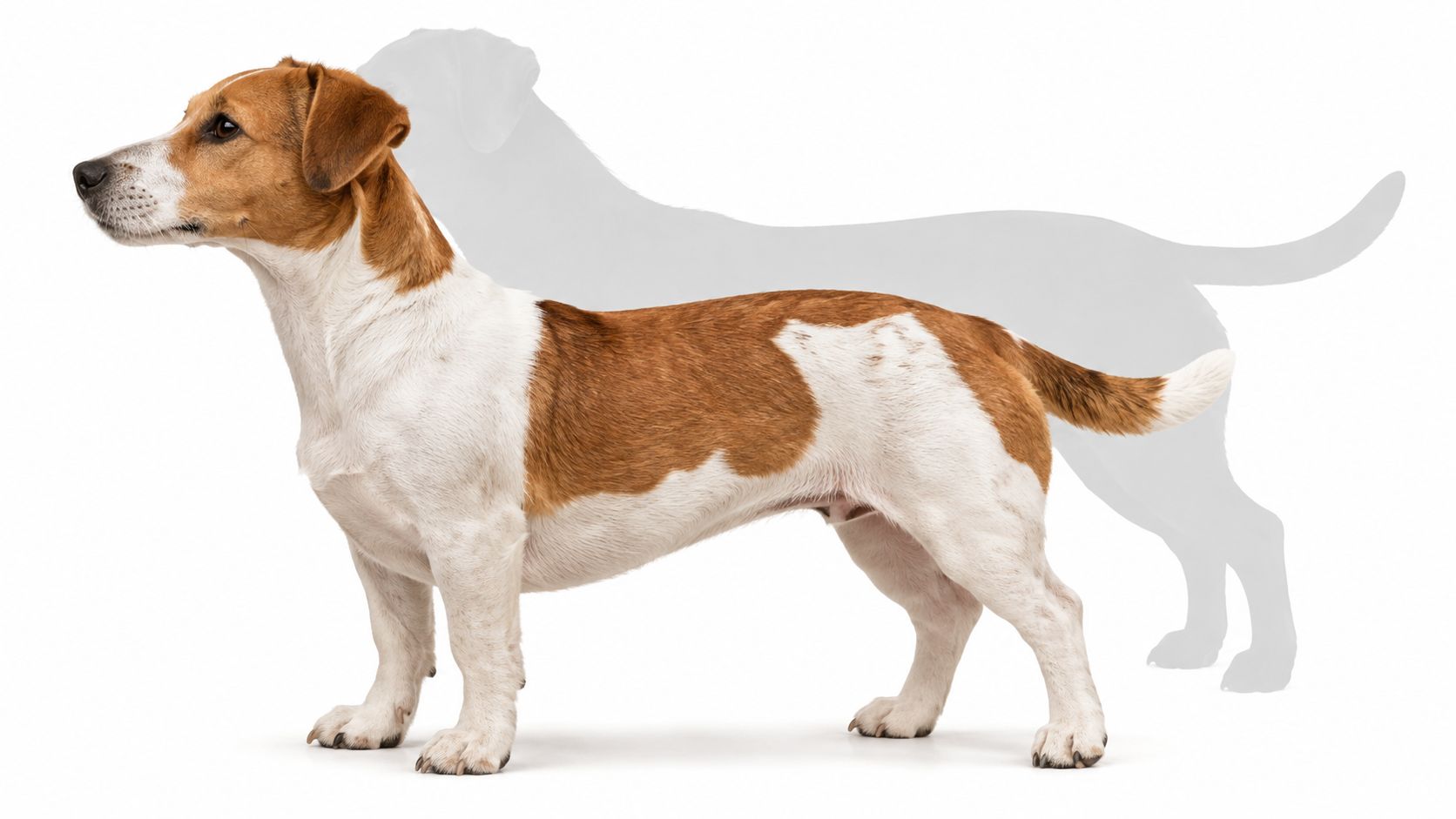
The breed name alone cannot predict back risk. Body shape is a useful starting point for assessing mechanical demands, but it isn't a test for inherited disc disease. A longer-legged Jackshund can still retain a disproportionately long body.
Look at the dog from the side while it stands naturally, rather than judging a posed photograph.
| Build | What you might notice | Practical interpretation |
|---|---|---|
| Terrier-leaning | Longer limbs and a relatively compact trunk | Don't assume athletic appearance rules out spinal disease |
| Dachshund-leaning | Short limbs beneath a noticeably elongated trunk | Give particular attention to movement, access to furniture and spinal assessment |
| Intermediate | Less shortened legs but a back that remains long | Assess the whole dog rather than treating longer legs as protection |
Make the viewing useful
Use a tape measure to compare body length with height at the shoulder, without trying to apply a homemade pass-or-fail ratio. Record the measurements for your vet, who can interpret them alongside the examination.
Watch the dog walk across a level, non-slip surface. Look for an uneven stride, a hind leg that briefly lifts, a hunched posture or hesitation when turning. A dog that's frightened or tired may move differently, so ask to see ordinary, unhurried movement rather than encouraging a performance.
Ask directly whether either parent has received treatment for disc disease, undergone back surgery or had persistent lameness. A vague assurance that the parents are healthy isn't the same as a documented history.
For comparison with another short-legged cross, the Shorgi insights from Pure Paw Labs offer context on mixed-parent appearance, but they aren't clinical evidence for a Jackshund's spinal risk.
Your vet can assess spinal proportions, gait and joint stability together. Shape helps identify concerns; genetics, physical condition and the dog's own clinical findings determine what happens next.
Temperament and Daily Behaviour
Living with this mix can feel like sharing a home with a clever, determined toddler who has discovered the garden gate. Terrier curiosity and Dachshund independence can make everyday training entertaining, but persistence works both ways.
Say you open the front door for a delivery. Your dog barks, spots movement beyond the gate and forgets the treat you're holding. That situation needs management before it needs a louder recall command.
Plan for the behaviour you'll actually meet
- Chasing: Use a secure harness and lead around roads, livestock and wildlife. Practise recall on a long line in an appropriate open space.
- Alert barking: Reward a move away from the door and give visitors a predictable arrival routine. Repeated shouting can add excitement rather than settle it.
- Digging: Provide a permitted digging patch or sand-filled container, while securing fence bases and removing hazardous garden materials.
- Difficulty being alone: Build comfortable absences gradually. Persistent howling, pacing or destruction deserves support rather than punishment.
Early socialisation means helping the puppy feel safe around ordinary sights, sounds, visitors and suitable dogs. It doesn't mean allowing everyone to pick it up or expecting it to tolerate crowded interactions.
Keep training sessions short enough that the dog remains interested. Reward checking in on walks, settling on a mat and releasing objects, not just tricks that look impressive.
Match the household to the dog
Active adults and considerate older children may enjoy this combination. Children need to leave a resting dog alone and avoid grabbing, chasing or lifting it awkwardly.
A busy home with constant visitors can work, but only if the dog has a quiet retreat and adults manage introductions. Long, unpredictable periods alone are a harder fit, especially for a dog already showing separation-related distress.
Before choosing a puppy, spend time with the adult parents where possible. For a rescue dog, ask about behaviour in a home or foster setting, then write down your own working hours, school runs and visitor patterns. Choose the dog whose needs fit that routine, not the personality described in an advert.
Health Conditions to Screen For
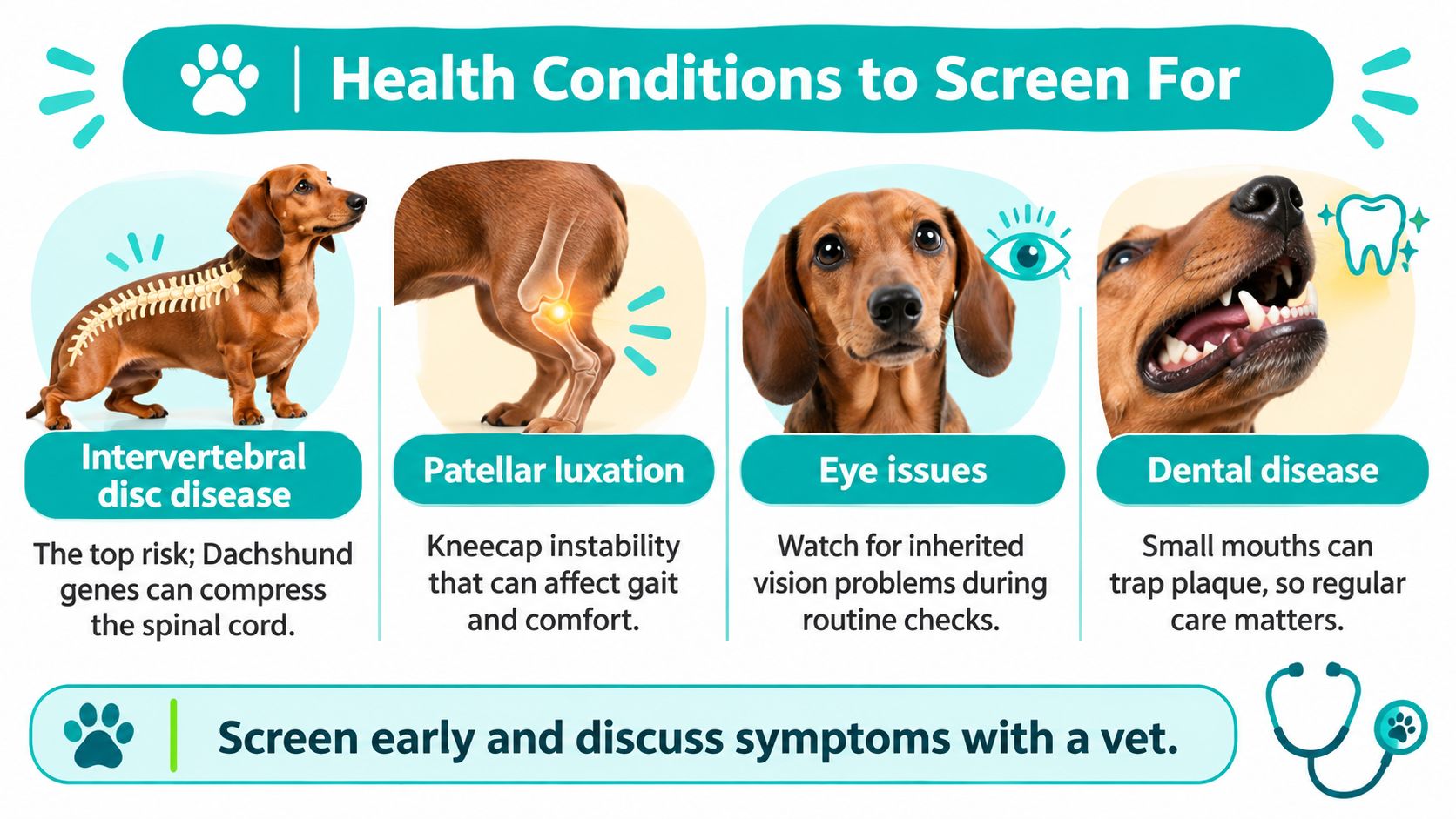
Intervertebral disc disease, or IVDD, is the priority spinal concern. Disc material can press on the spinal cord, causing pain and neurological problems. A cross can retain the Dachshund's long-backed proportions without looking as short-legged as a pedigree Dachshund.
Use the checklist as a prompt for discussion, not as evidence that every condition is common in this particular cross.
Health conditions, early signs and the right action
| Condition | Linked parent | Early signs | Action |
|---|---|---|---|
| Intervertebral disc disease (IVDD) | Dachshund | Reluctance to jump, hunched back, yelping, hind-leg weakness | Seek prompt veterinary assessment |
| Patellar luxation | Jack Russell and small breeds | Skipping or hopping gait | Ask for a kneecap examination; arrange an earlier appointment for pain |
| Legg-Calvé-Perthes disease | Small breeds, including Jack Russell | Limping and thigh muscle wasting | Book a lameness assessment |
| Gastric dilatation-volvulus | Deep-chested dogs | Bloated belly, retching without vomiting | Seek emergency veterinary care |
| Dental disease | Both parents | Bad breath, reduced chewing | Arrange dental checks |
| Obesity | A risk multiplier for spinal problems | Loss of waist, heavy rib cover | Review feeding and monitor condition |
These are conditions to consider, not a ranked prevalence list for Jackshunds. In particular, deep-chested conformation warrants awareness of gastric dilatation-volvulus, but it doesn't justify describing it as common in this cross.
What the examination should cover
Ask your vet to assess gait, spinal comfort, limb positioning responses, kneecap stability and body condition. Mention eye changes too, particularly bumping into objects, cloudiness or difficulty seeing in dim light.
The Dachshund IVDD information document reports approximately 1.8 times higher IVDD prevalence after age three in neutered than entire Dachshunds, and cites Royal Veterinary College findings linking excess body fat with IVDD. These are Dachshund findings, not a measured risk estimate for this cross, so settle neutering timing individually with your vet rather than treating that association as proof of cause.
Reluctance to move, yelping, a hunched back, hind-limb weakness or urinary changes need prompt veterinary advice. Sudden weakness or inability to walk warrants an emergency call.
Keep a useful home record
Check weight and body condition monthly, and record any limp with a short video when it's safe to do so. Don't press along the spine to test for pain or repeatedly ask the dog to jump.
For gradual stiffness in later life, understanding arthritis in older dogs can help you describe changes, but don't assume new weakness is ageing.
Discuss movement concerns with your vet rather than trying to diagnose them from a video. This accompanying video is supplementary viewing, not a substitute for an examination.
Buyer Checks, Microchipping and Records
Hybrid vigour isn't a health guarantee. Mixing breeds may reduce some inherited risks, but it doesn't automatically remove spinal vulnerability, orthopaedic problems or challenging behaviour.
The Wamiz Jackshund guide outlines relevant health concerns, but a breed guide cannot establish an individual puppy's prognosis. Cross-specific evidence is limited, so promises that this mix is healthier deserve scrutiny.
Take a viewing checklist
- Request parental records. Ask which health tests were performed, what the results mean and whether you can see the actual documents.
- Compare proportions. Look at body length and leg length in the puppy and both parents, not just the puppy's face or coat.
- Ask about the family history. Include disc treatment, back surgery, slipping kneecaps and unexplained lameness.
- Match identification and paperwork. Have the microchip scanned and compare its number with the vaccination record and transfer documents.
- Arrange a pre-purchase discussion. Ask a practice whether it offers advice on likely health needs before you commit.
A missing history doesn't prove that a dog is unhealthy. It means you're accepting uncertainty, which should influence your preventive-care plan and financial reserve.
Check the legal essentials
In England, dogs must be microchipped by eight weeks, unless a vet certifies in writing that implantation would harm their health; Arun District Council's microchipping guidance also explains registration requirements before transfer and a compliance notice allowing 21 days, with a fine of up to £500 for ignoring it.
The chip must meet ISO 11784 and ISO 11785, use FDX-B at 134.2 kHz, and be implanted by an authorised person under the English microchipping regulations. In practical terms, confirm that it scans correctly and is registered on an authorised database to the current keeper.
A microchip doesn't replace visible identification: the British Veterinary Association's microchipping position statement explains the collar-and-tag requirement showing the owner's name and address in public places in England, Scotland and Wales.
Keep the chip number, database details and vaccination record together. Update keeper information promptly after transfer or a change of contact details.
Prepare for your first vet visit by bringing those records and any parental results. Ask the practice to record the dog accurately as a crossbreed, alongside its weight and examination findings.
Exercise and Weight Control Without Back Strain
The terrier side may want another chase when the sensible choice is a quieter activity. The aim isn't exhaustion. It's comfortable fitness, useful mental work and controlled movement.
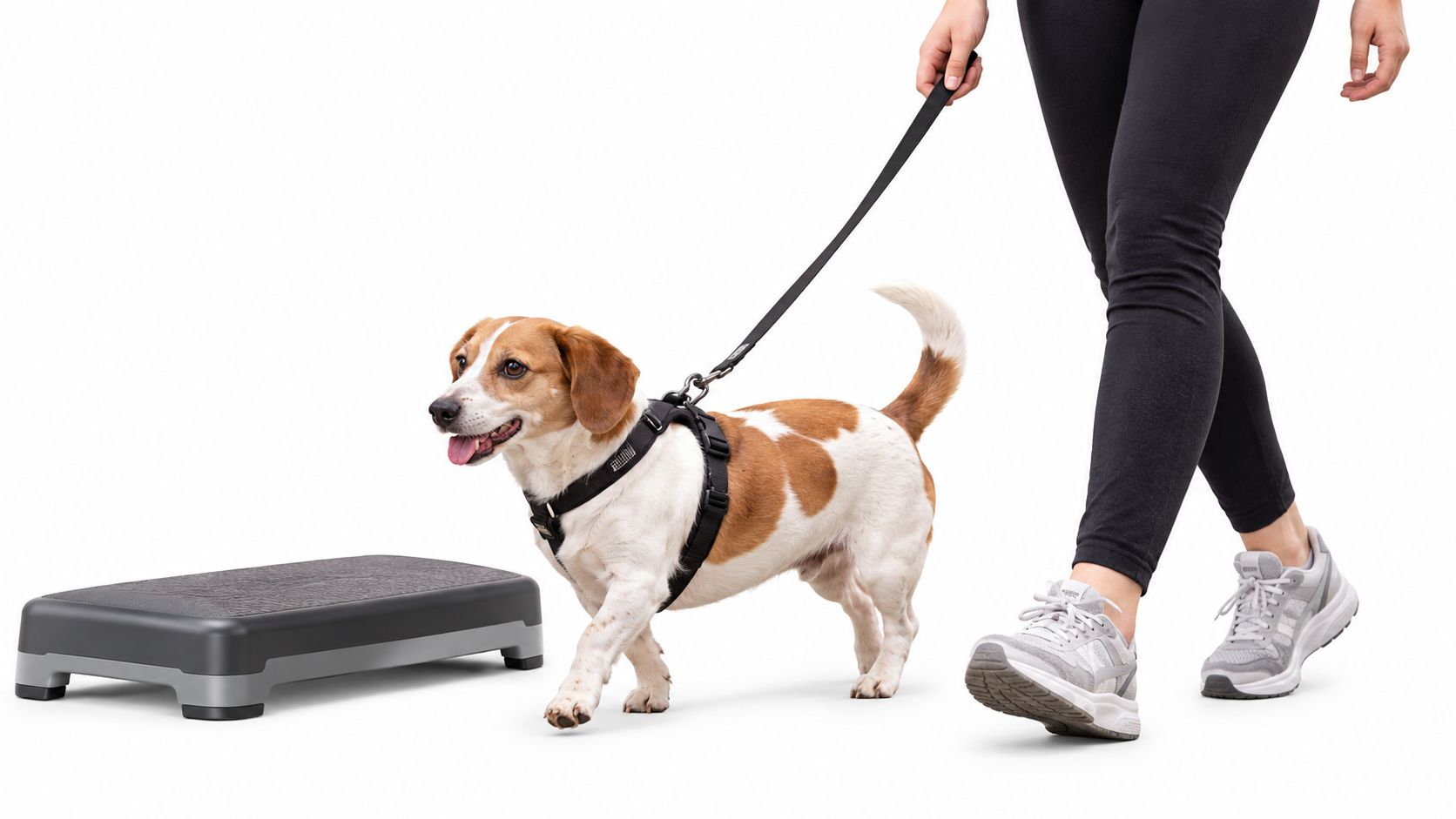
The Dogs Trust Dachshund guide highlights the parent breed's spinal concerns and care needs. For this cross, controlled walking and scent-based enrichment are more defensible starting points than repeated leaping or frantic ball chasing.
Choose a walking setup that lets the dog move naturally without constant lunging.
Low-impact and high-impact activities for this mix
| Activity | Impact on back | Suitability | Practical note |
|---|---|---|---|
| Controlled lead walks | Low | Daily base | Lengthen walks gradually as comfort allows |
| Sniffing and scent walks | Low | Daily | Add mental work without repeated jumping |
| Food puzzles and recall games | Low when controlled | Daily | Use level ground and avoid frantic turns |
| Repeated stair and sofa jumping | High | Limit | Use a stable ramp or suitable shallow steps |
| Ball launching and repeated fetch | High | Avoid | Leaping and sharp turns add mechanical demands |
| Rough play with larger dogs | High | Limit | Supervise and interrupt body-slamming |
Build a routine the dog can sustain
Start with walks the dog completes comfortably, including the return journey. Increase them in small increments, watching how it moves later that day and after resting, rather than following a rigid target.
Hide part of a meal in a snuffle mat or scatter it across a safe patch of grass. For recall practice, reward coming towards you on level ground without encouraging skidding stops.
At home, use non-slip runners on slick routes. A ramp should be stable, have a grippy surface and lead somewhere the dog can access calmly; a steep, wobbly board isn't an improvement.
Make feeding measurable
Weigh the daily ration on kitchen scales and set aside some for training. Account for chews and treats rather than adding them automatically on top.
Feel for the ribs beneath a light covering and look for a waist from above. If you can't judge through a thick coat, ask a vet nurse to demonstrate body-condition scoring and help set a target.
The guide to dog obesity and its health risks can help you organise a weight-management discussion. Don't respond to weight gain by suddenly adding strenuous exercise.
Stop activity and call the vet for sudden reluctance to move, back pain, wobbliness, dragging toes or hind-leg weakness.
Yearly Ownership Costs
Build your budget from published practice fees and individual quotes, not a generic Jackshund ownership total. Use puppy and adult-dog cost calculators to organise expected care, then confirm what the local practice includes.
There isn't a supported published fee available here for each item, so no estimate is substituted. An unknown price is a reason to ask, not a reason to leave the expense out.
Yearly ownership cost items
| Cost item | What it covers |
|---|---|
| Vaccinations | Puppy course and yearly boosters, as advised by the vet |
| Microchip and database updates | Registration checks and updates after a move |
| Routine consultations | First health check and routine back and weight checks |
| Preventive dental care | Routine dental checks and home-care advice |
| Emergency fund | Out-of-hours care, neurological assessment, imaging and referral |
Ask what the fee includes
Check whether a vaccination appointment includes a full health examination and whether nurse weight appointments are charged separately. Monthly home monitoring doesn't mean an otherwise healthy dog needs a paid veterinary back examination every month.
For microchipping, distinguish implantation from database registration or later administration charges. Dental assessment and dental treatment are separate budget items too.
Use the new puppy first-year costs guide to prepare your questions. Discuss insurance exclusions, excesses and referral arrangements before symptoms develop, and keep accessible funds for care that can't wait for a claim.
Find a Local Vet Before You Need One
Choose a practice while your dog is well, when you have time to ask sensible questions. A convenient location helps with routine visits, but you also need to know what happens if your dog suddenly becomes painful or weak.
Look for a team comfortable examining small dogs with back and joint concerns. The useful question isn't whether they recognise the Jackshund name, but whether they can assess neurological signs and arrange appropriate referral.
Shortlist on practical grounds
- Search locally. Use your postcode to identify reachable practices, including the journey at busy times.
- Compare published fees. Check consultation and vaccination charges side by side, making sure the appointments include comparable services.
- Check species treated. Practice profiles should confirm that dogs are among the animals the team sees.
- Phone with clinical questions. Ask about back assessments, access to imaging and specialist referral.
- Book an initial examination. Bring identification records, health history and any movement videos.
A practice doesn't need every diagnostic facility on site to provide good first-line care. It does need a clear plan for stabilisation, advice and onward referral when a case exceeds its facilities.
The guide to choosing the right vet practice can help you weigh continuity, opening hours and emergency arrangements alongside price. Ask where out-of-hours patients are seen, because it may be a different address.
Choose a regular practice, save its number and store the emergency provider's contact details in your phone. That preparation leaves you free to concentrate on the dog if something changes suddenly.
The Vet Price Comparison Site lets you search by postcode, compare published consultation and vaccination fees, and check which species local practices treat. Visit The Vet Price Comparison Site to shortlist routine care for your Jack Russell Dachshund mix, then ask your chosen practice about back assessments and emergency referral arrangements.