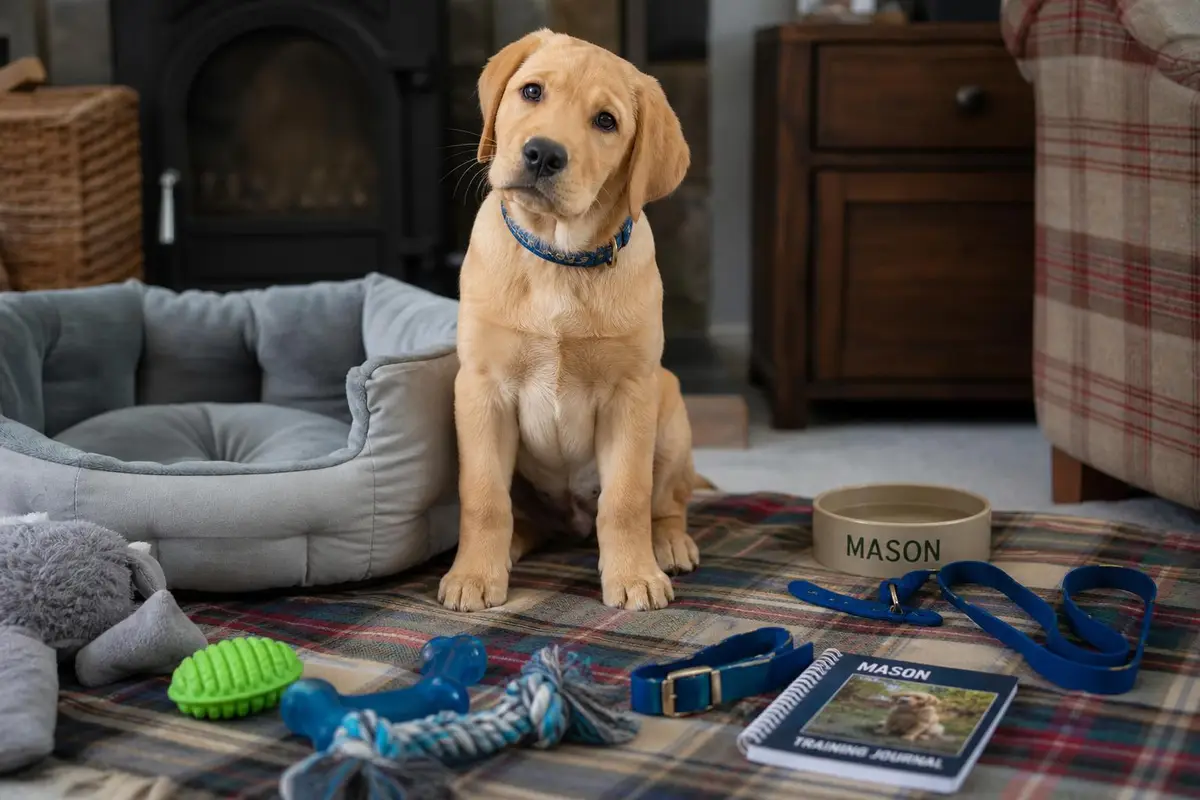
TL;DR (small/medium breed, healthy puppy, June 2026)
- • One-off vet & kit: £550–£900
- • Year 1 ongoing (food, insurance, prevention): £1,200–£2,100
- • Realistic "oops" buffer: £150–£500
- • Realistic total Year 1: £2,000–£3,500
One-off vet costs (using live UK averages)
| Item | Typical cost |
|---|---|
| First puppy consult + health check | £35–£65 |
| Primary vaccination course (2 doses) | £60–£100 |
| Kennel cough vaccine (optional) | £30–£50 |
| Microchip (legal requirement) | £26 avg (£15–£35) |
| Castration (small/medium male) | £258 avg (£140–£400) |
| Bitch spay (small/medium female) | £350 avg (£200–£550) |
| Vet total Year 1 | ~£450–£700 |
One-off kit and setup
- Crate (size for adult): £40–£100
- Bed, bowls, lead, harness, collar, ID tag: £50–£120
- Toys, training treats, puppy pads: £40–£80
- Puppy training class (6 weeks): £80–£150
- Subtotal: £210–£450
Ongoing monthly costs
| Item | Per month | Year 1 |
|---|---|---|
| Food (small/medium breed) | £30–£60 | £360–£720 |
| Pet insurance (lifetime, puppy) | £20–£45 | £240–£540 |
| Flea / tick / worm prevention | £8–£15 | £96–£180 |
| Poo bags, shampoo, treats | £10–£15 | £120–£180 |
| Ongoing total | £68–£135 | £816–£1,620 |
The "oops" budget — almost every puppy needs one
- Upset stomach / scavenging (one consult + meds): £80–£150
- Kennel cough or "puppy strangles" episode: £80–£200
- Foreign body (sock, stone, corn cob): £1,200–£4,000 (this is where insurance pays for itself)
- Microchip move + Defra Petlog update if you change address: £6–£20
Budget at least £150–£300 for an "oops" event — and take out lifetime insurance early to cover the rare big one.
Breed adjustments
- French Bulldog, Pug, Bulldog (brachycephalic): add £400–£1,000 — higher insurance premiums, BOAS soft-palate check, often need C-section if breeding considered.
- Labrador, Spaniel, Golden Retriever: Year 1 food costs significantly higher; bitch spays £400+.
- Giant breeds (Great Dane, Newfoundland): spay/castration £450–£700; food £80+/month.
- Working breeds with hip/elbow scoring: +£200–£300 for screening pre-purchase or before neutering.
Where to save without compromising care
- Compare published vet prices before registering. Within a 10-mile radius of most UK postcodes, consultations vary by £30+. Search your postcode here.
- Take insurance before symptoms appear. A pre-existing exclusion is forever. See our insurance breakdown.
- Use the £21 prescription fee cap. Buy flea/wormers online with a written prescription — savings of ~30–50%.
- Check puppy packages — many practices bundle the primary vaccine course + microchip + first nail clip + free 4-week insurance for £80–£140 total.
- Crate, bowls and toys from Facebook Marketplace and gumtree — typically half the price of new.
Where NOT to economise
- Primary vaccination course — completing it on schedule is the highest-ROI £80 you'll spend.
- Insurance — see above.
- Skipping training class — saves £100 now, costs thousands in reactive-dog behaviour treatment later.
- Cheap food too early — switching to adult food before 12 months in large breeds is linked to joint problems.
FAQs
What's the cheapest realistic first year?
About £1,500 if you take a charity (PDSA/Blue Cross) route for neutering, buy used kit, and stay on basic insurance. Most owners land at £2,000–£3,500.
Does my puppy really need monthly flea/worm year-round?
BVA and ESCCAP UK guidance recommends a year-round risk-based protocol. Skipping months saves £20–£40 but materially increases risk of flea infestation, lungworm and toxocara — all of which cost far more to treat.
When should I get insurance?
Before the first vet visit if at all possible — anything noted at the puppy check is pre-existing.
Is neutering really £350?
That's the UK average for a bitch spay (£350.28). Cat castration averages £108, dog castration £258. See our neutering cost guide for the full breakdown.
About the data: Vet figures are calculated from prices published by UK practices' own websites and refreshed June 2026. Food, insurance and kit ranges from independent comparison shopping in June 2026. This is general budgeting guidance, not breed-specific advice — ask your vet.