TL;DR
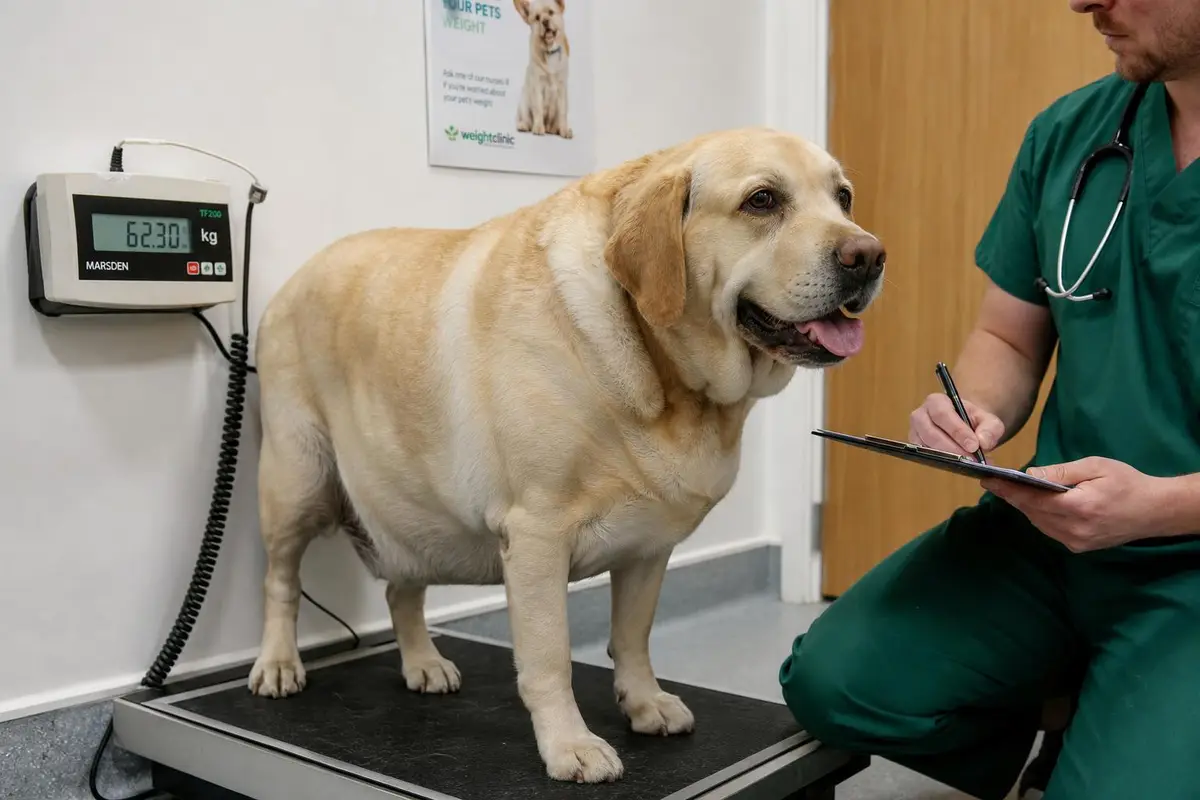
- • 56% of UK dogs are overweight or obese (PDSA PAW Report).
- • Excess weight is independently linked to arthritis, diabetes, certain cancers and a 2-year reduction in median lifespan (Purina Lifespan Study).
- • Estimated additional lifetime vet cost: £2,000–£5,000.
- • The two highest-impact interventions — accurate portion control and a measured daily walk — cost nothing.
How big is the problem?
Obesity is now the single most common nutritional disorder in UK dogs. The 2024 PDSA Animal Wellbeing (PAW) Report puts the figure at 56% of dogs and 49% of cats. The Royal Veterinary College's VetCompass database links overweight body condition to dramatically higher rates of orthopaedic disease, neoplasia and shortened lifespan.
Health risks — and what each one costs
| Condition | Typical UK lifetime cost |
|---|---|
| Osteoarthritis management | £3,000–£6,000 |
| Cruciate ligament surgery (TPLO) | £2,800–£5,500 per knee |
| Diabetes management (insulin + monitoring) | £1,500–£2,500/year |
| Heart disease investigations | £600–£1,800 |
| Anaesthetic risk premium for routine ops | £50–£150 added per procedure |
Add it together and an overweight dog typically costs £2,000–£5,000 more in lifetime vet bills than a lean littermate. The landmark Purina 14-year Labrador study also found lean dogs lived almost two years longer than their overweight siblings.
How to recognise overweight
Most UK practices use the 9-point Body Condition Score (BCS). A healthy dog (BCS 4–5/9) should have:
- Ribs easily felt under a thin fat layer
- A visible waist when viewed from above
- An abdominal "tuck" when viewed from the side
The action plan that actually works
- Get an objective starting weight. Many UK practices run free weigh-in / nurse weight clinics — book one.
- Calculate calories for target weight, not current weight. Your vet can give you a kcal/day figure.
- Weigh food in grams. Cups overestimate by 30–50%.
- Slash treats. Replace with carrot, green beans or kibble subtracted from daily ration.
- Two short walks beat one long one for weight loss and arthritis.
- Consider prescription weight-loss diets (Hill's Metabolic, Royal Canin Satiety) for dogs needing >15% weight loss.
- Re-weigh fortnightly. Target 1–2% body weight loss per week.
What about ozempic-style drugs?
No GLP-1 weight loss drug is currently licensed for dogs in the UK. Off-label use is not recommended; the evidence base in non-human species is poor.
FAQs
My dog seems hungry all the time on the diet
Switch the same calorie allocation onto a high-fibre prescription weight-loss diet — satiety improves dramatically without adding calories.
How long should weight loss take?
Realistic: 4–9 months to reach ideal body condition for most dogs.
About the data: Prevalence from PDSA PAW Report 2024; lifespan data from the Purina/Nestlé Labrador Lifespan Study; UK cost data from our practice pricing database (June 2026).