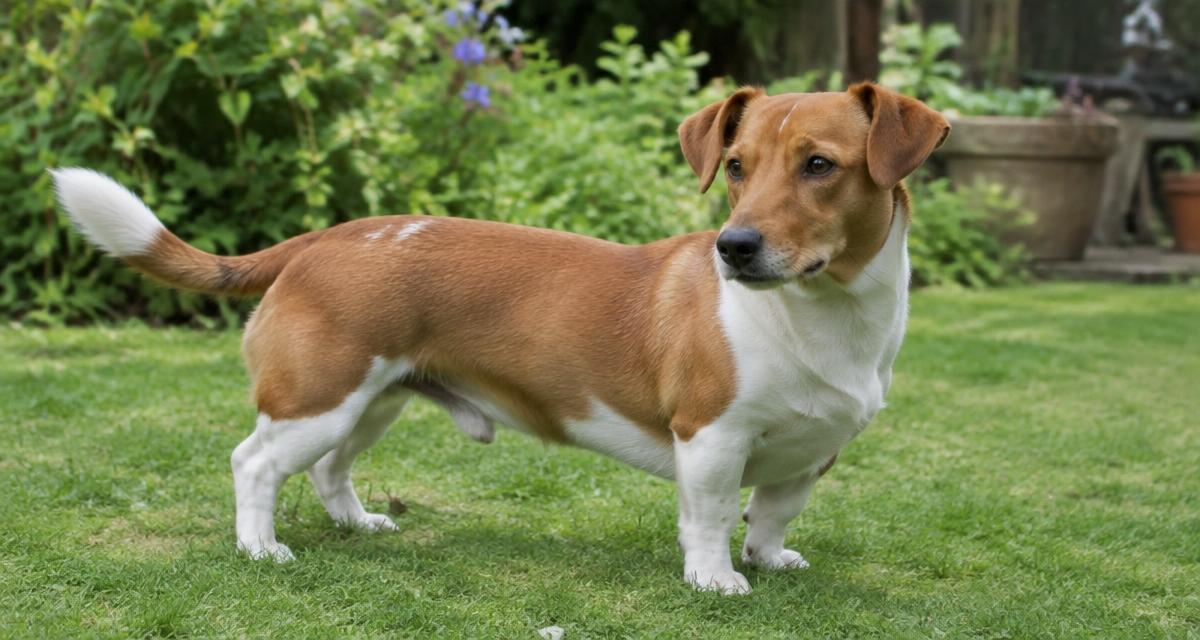
Jackshund
A Jackshund is a Jack Russell crossed with a Dachshund. You get a small, lively, fearless dog that is often longer than it is tall. They are bright, funny and very loyal, and they can also be loud, stubborn and suspicious of strangers. Two terrier-ish personalities in one small body.
About the Jackshund
Where they come from
Both parents are hunting dogs bred to go to ground after foxes and badgers. The cross has been around for a long time in rural Britain, but it has become much more popular as a small family dog in the past couple of decades. Leg length and back length vary a lot between puppies, even in one litter.
Temperament
Confident, busy and often very attached to one person. Many are great with their own family and wary of visitors. They will bark at the postman, the neighbours and the wind. Early socialisation makes a big difference.
At a glance
- Small but tough, with a big personality
- Can be vocal
- Strong digging and chasing instincts
- Can be stubborn to train
- The long back needs protecting
Jackshund health and vet costs
The problems we see most
- Intervertebral disc disease (IVDD). A disc in the spine bulges or bursts and presses on the spinal cord. Signs range from back pain and a hunched posture to wobbly or paralysed back legs. Mild cases are treated with strict rest and pain relief. Severe cases need an MRI and surgery, which at referral centres often costs £4,000–£7,000 or more.
- Dental disease. Small mouths crowd teeth. Many need a scale and polish, and sometimes extractions, by middle age.
- Luxating patella. A kneecap that slips out of place. You may notice a skip in the step. Bad cases need surgery.
- Obesity. Extra weight puts more strain on the spine. Keeping a Jackshund lean is the single best thing you can do for its back.
- Eye conditions. Both parent breeds can carry inherited eye diseases, including lens luxation in Jack Russells and PRA in Dachshunds.
Health checks to ask the breeder about
Ask about any history of back problems in either parent. For the Dachshund parent, ask whether it has been X-ray screened for disc calcification (some breed clubs promote this) and DNA tested for cord1 PRA. For the Jack Russell parent, ask about primary lens luxation (PLL) DNA testing.
When to go to the vet the same day
Treat any of these as urgent: crying when picked up, a hunched back, reluctance to move or climb stairs, knuckling or scuffing of the back feet, wobbly back legs or loss of bladder control. With IVDD, how quickly a dog is seen can affect how well it recovers. Ring your practice's emergency number out of hours.
Living with a Jackshund
With children
Better with older, calmer children who understand that the dog should be lifted properly, supporting the chest and back end together. Small children dropping a long-backed dog is a real risk.
With other pets
Usually fine with other dogs if socialised. Most will chase cats unless raised with them. Small furries are best kept out of reach.
At home
Their size suits flats, but the barking may not suit the neighbours. Use ramps or steps for sofas and beds, carpet runners on slippery floors, and a stair gate if you can. These small changes reduce jarring on the spine every day.
Exercise and training
How much exercise
Around 45–60 minutes a day, split into walks and sniffing time. Steady walking is ideal. Avoid lots of jumping, ball-flinging that ends in sharp twists, and running up and down stairs.
Training
Short, fun sessions with food rewards work best. Teach a solid "quiet" and a reliable recall. Many are diggers, so check your fence line.
Grooming and coat care
Coat
Smooth coats only need a weekly rub over. Wire coats need regular brushing and occasional hand stripping. Longer coats need brushing a few times a week.
Teeth and nails
Brush teeth as often as you can. It is the cheapest way to delay dental work. Keep nails short so the dog is not walking awkwardly.
Diet and nutrition
Feeding
Feed a complete small-breed diet and weigh it out. You should be able to feel the ribs easily and see a waist from above. Small dogs gain weight very quickly from table scraps, and a kilo extra on a 9kg dog is a lot.
How much does a Jackshund cost at the vet?
UK average prices
These are current UK averages taken from published vet price lists on our site:
| Treatment | UK average |
|---|---|
| Routine consultation | £60.23 |
| Annual booster vaccination | £70.70 |
| Kennel cough vaccination | £63.71 |
| Microchipping | £28.55 |
| Castration (male) | £268.54 |
| Spay (female) | £361.91 |
Neutering is often priced by weight, and most Jackshunds fall into the smaller bands, so many practices will quote below the medium-dog figure. Always ask for a written quote.
A realistic yearly budget
A healthy adult typically costs £250–£450 a year in routine care. The unpredictable cost is the back. A mild disc episode might mean a few consultations and medication. A severe one can mean an emergency referral bill of several thousand pounds.
Pet insurance for a Jackshund
Is it worth it?
Strongly recommended. Insure early, before any back problem shows up, because anything noted on the vet record before the policy starts is likely to be excluded. Check whether the policy limits back and spinal claims, and whether it covers referral MRI.
How to list a cross
Most UK insurers let you list a dog as a crossbreed and pick the two parent breeds, or choose a size-based "mixed breed" option. It is worth trying both on comparison sites, because the quote can change noticeably depending on which parent breed is named. Be honest either way. A mismatch between what you declared and what your vet's notes say can cause problems at claim time.
Choosing a vet for your Jackshund
What to look for
Any good small-animal practice can look after a Jackshund. What matters more is how they explain costs and whether you can see the same vet when something drags on. Ask what a consultation includes, whether they run a monthly health plan, and where your dog would go out of hours. You can compare consultation and vaccination prices at practices near you, and our emergency vets page lists dedicated out-of-hours clinics across the UK.
It also helps to know which referral centre your practice uses for neurology, so you are not working it out in a hurry.
Frequently asked questions
What is a Jackshund?
How big does a Jackshund get?
Do Jackshunds get back problems?
Are Jackshunds good with children?
Do Jackshunds bark a lot?
How much does IVDD surgery cost in the UK?
Related breeds
By The Vet Price Comparison Site editorial team · Last reviewed15 October 2026. Sources: RCVS, The Kennel Club, RVC VetCompass, ABI, and our live UK vet pricing index.