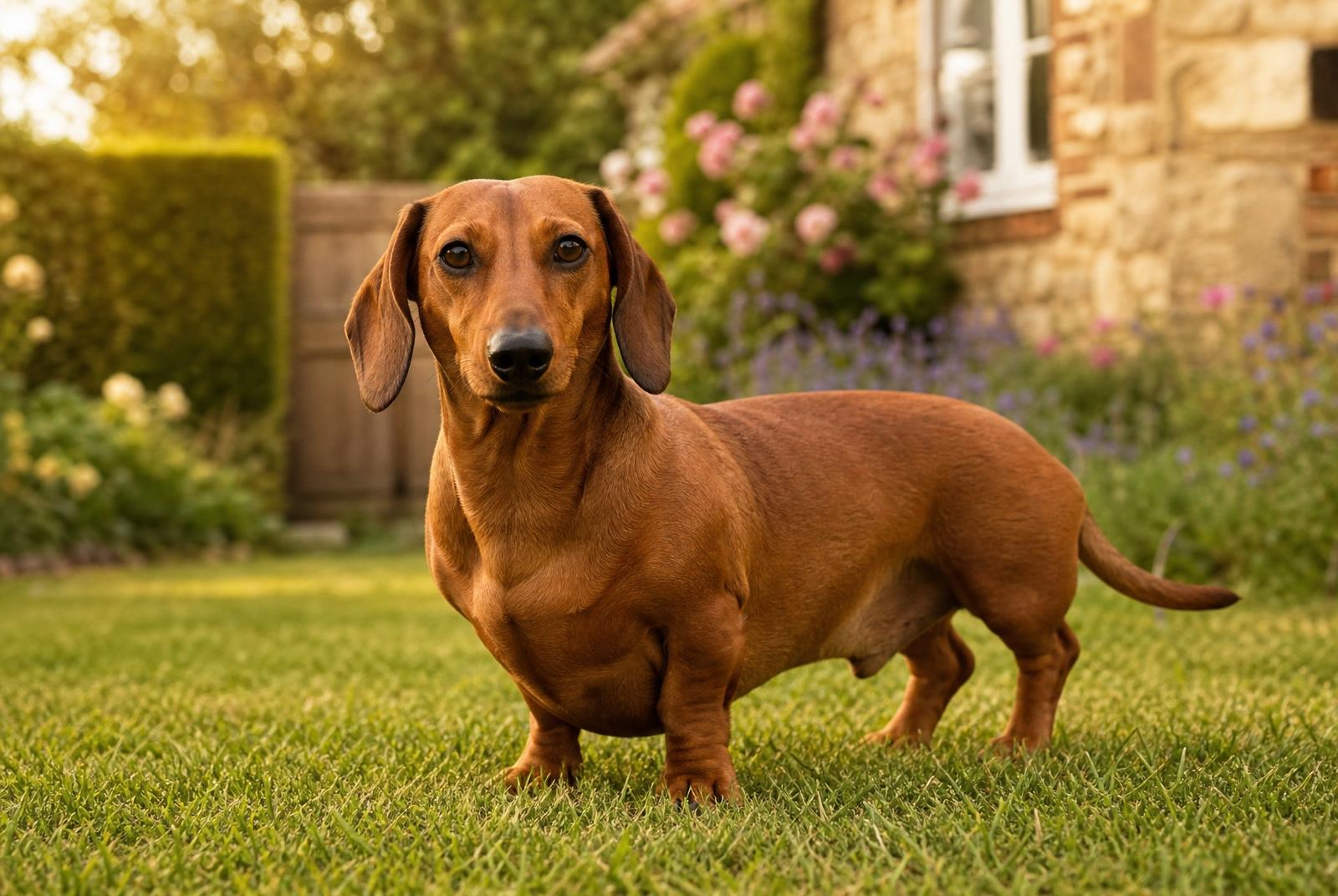
Dachshund
The Dachshund is a small, distinctive hound with a long body, short legs and a confident personality. Developed in Germany to work below ground, the breed combines courage, persistence and a keen sense of smell. UK owners can choose between Standard and Miniature Dachshunds, with smooth-haired, long-haired and wire-haired coats. Although compact enough for many homes, these dogs are active, vocal and mentally alert rather than simply decorative lap dogs.
About the Dachshund
History & background
The Dachshund originated in Germany, where dogs with elongated bodies and short, strong legs were developed to follow quarry into underground burrows. The breed's name translates as badger dog, reflecting its original purpose. Different sizes were used for different quarry, while a deep chest, powerful forequarters, loud voice and determined nature helped the dogs work in challenging terrain.
Modern Dachshunds retain many working traits, even when kept solely as companions. The UK recognises Standard and Miniature varieties across three coat types: smooth-haired, long-haired and wire-haired. These varieties share the characteristic outline but can differ subtly in coat care and temperament. Size labels should not distract from healthy body condition; a vet should assess each dog's build rather than owners relying only on a target weight.
Temperament & personality
Dachshunds are typically lively, curious and devoted to their household. Many enjoy burrowing under blankets, following scent trails and supervising everything around them. They may be reserved with strangers and can make surprisingly effective watchdogs because their bark is loud for their size. Early, positive exposure to visitors, handling, travel and everyday sounds helps confidence develop without encouraging excessive suspicion.
The same independence that once enabled a Dachshund to work underground can appear as selective hearing. Harsh correction is likely to create anxiety or resistance, whereas rewards and short, engaging sessions generally work well. Separation should be introduced gradually because some individuals become distressed or noisy when left. Temperament varies between dogs, so breeding, early experience and ongoing training matter as much as coat or size.
Personality traits
Common Dachshund characteristics include:
- Affectionate: often closely attached to one person or the wider family.
- Bold: frequently more courageous than their small size suggests.
- Alert and vocal: quick to announce visitors, wildlife and unfamiliar noises.
- Scent-driven: inclined to investigate smells and pursue moving animals.
- Independent: intelligent but not always automatically compliant.
- Playful: enjoys suitable games, digging activities and food puzzles.
- Persistent: may repeat behaviours that previously earned attention or rewards.
- Comfort-seeking: often appreciates warmth, soft bedding and close companionship.
Dachshund health — common conditions and vet costs
Top 6 conditions
Dachshunds can live long, active lives, but their body shape creates particular health considerations. Costs depend on severity, location, diagnostic requirements, referral care and insurance terms, so the bands below are qualitative. Ask your vet for a written estimate before planned investigations or treatment.
- Intervertebral disc disease: Degeneration or rupture of spinal discs can cause pain, an arched back, reluctance to move, weakness or paralysis. Management may involve examination, imaging, strict rest, medication, surgery and rehabilitation. Typical cost band: high, particularly for referral imaging and surgery.
- Dental disease: Plaque, gum inflammation, loose teeth and tooth-root disease are common concerns in small dogs. Daily brushing and regular checks help, but a professional dental procedure or extractions may be required. Typical cost band: moderate, rising with extractions or advanced disease.
- Obesity: Excess weight increases strain on the spine and joints and may worsen other conditions. Treatment centres on measured nutrition, appropriate activity and investigation of contributing illness where indicated. Typical cost band: moderate if consultations, dietary support or tests are needed.
- Patellar luxation: The kneecap may slip from its normal groove, causing intermittent skipping, discomfort or persistent lameness. Mild cases can be monitored, while more serious cases may need specialist surgery. Typical cost band: moderate to high.
- Eye disease: Dachshunds can develop inherited or acquired conditions affecting the retina, lens or other eye structures. Warning signs include cloudiness, redness, discharge, impaired vision or difficulty in dim light. Typical cost band: moderate to high if specialist assessment or surgery is required.
- Ear and skin problems: Allergies, infections and parasites can cause itching, redness, odour, discharge or recurrent inflammation. Long-haired ears and reduced ventilation may contribute in some dogs. Typical cost band: moderate, although recurrent disease can require ongoing care.
Breed-specific screening tests
Before buying a puppy, check the current health-testing recommendations published by the Royal Kennel Club and the relevant UK Dachshund breed organisations for the exact size and coat variety. Recommended DNA tests and eye schemes can differ between varieties and may be updated as evidence develops. Ask the breeder to show verifiable results for both parents rather than accepting a verbal assurance that a line is healthy.
Discuss spinal health and intervertebral disc disease risk openly. Where an evidence-based back-screening programme is available and applicable, ask whether the parents have participated and request the results. Screening can reduce risk at population level but cannot guarantee that an individual dog will remain unaffected. A responsible breeder should also discuss longevity, temperament, mobility and relevant illness among close relatives, avoid exaggerated body shape and allow puppies to be seen with their mother.
When to see a vet — red flags
Contact a vet promptly if your Dachshund cries when moved, trembles, develops a hunched posture, refuses stairs or walks, appears unusually quiet, or shows neck or back pain. Sudden wobbliness, dragging paws, weakness, paralysis, loss of bladder control or inability to urinate is an emergency. Keep the dog as still as reasonably possible, support the chest and pelvis during transport, and do not massage the spine or give human painkillers.
Other reasons for veterinary attention include persistent vomiting or diarrhoea, breathing difficulty, collapse, seizures, a swollen abdomen, eye pain, sudden blindness, marked lameness, inability to eat, or severe dental discomfort. Changes in thirst, urination, appetite, weight or behaviour also warrant assessment. Early advice is particularly important because dogs may hide pain and spinal signs can progress quickly.
Family life with a Dachshund
With children
A well-socialised Dachshund can live happily with considerate children, but interactions require adult supervision. Children should sit down to handle the dog, support both chest and hindquarters, and never lift by the front legs, squeeze the body, ride on the dog or disturb it while sleeping or eating. Rough play and accidental drops can injure the back. Provide a quiet retreat that children do not enter, and teach them to recognise signs of discomfort such as turning away, freezing, lip licking or growling. Homes with very young or exuberant children should consider carefully whether they can manage these boundaries consistently.
With other pets
Many Dachshunds coexist well with dogs and cats when introductions are gradual and experiences are positive. Their hunting background means some have a strong urge to chase rabbits, rodents, birds or unfamiliar cats, so small pets need secure accommodation and should not be left accessible. Food, resting places and valued toys may cause tension in any multi-pet household; separate resources and supervise early interactions. Socialisation should build calm behaviour rather than forcing close contact. Outdoors, use a lead or secure enclosed area where recall is not reliable.
Home environment
Dachshunds can adapt to flats or houses if they receive regular outdoor activity, enrichment and help with barking. Secure fencing is essential because they can follow scents, dig under boundaries and squeeze through small spaces. Reduce repeated jumping from furniture and uncontrolled stair use with sensible management, such as blocking access, providing stable ramps where appropriate and placing non-slip rugs on smooth floors. This cannot remove IVDD risk, but it may limit avoidable falls and strain. Warm, supportive bedding and a predictable toileting routine are useful, especially for puppies and older dogs.
Exercise & training
Exercise needs
Most healthy adult Dachshunds benefit from daily walking divided into manageable outings, alongside sniffing, play and mental enrichment. Exercise should support lean muscle and cardiovascular fitness rather than be avoided because of the breed's back risk. Build activity gradually, choose well-fitting equipment, and favour controlled movement over repeated high-impact jumping, abrupt twisting or strenuous ball chasing. Individual needs vary with age, health, size and fitness.
Puppies need short, varied experiences without forced endurance exercise while they mature. Senior dogs may prefer shorter, more frequent walks. During recovery from spinal disease, follow the treating vet's restrictions exactly; normal exercise guidance does not apply. Stop and seek advice if there is pain, reluctance to move, altered gait or unusual fatigue. A vet or veterinary physiotherapist can advise on safe conditioning for dogs with mobility concerns.
Training approach
Use reward-based training with small food rewards, toys or access to sniffing. Brief sessions suit the breed's independent nature and help prevent frustration. Prioritise recall, loose-lead walking, settling quietly, cooperative handling, leaving dropped objects and calm responses to visitors. Because chasing instinct can override recall, practise initially on a long line attached to suitable equipment in safe spaces, never beside traffic.
House training may take patience, particularly in cold or wet weather. Offer frequent outdoor opportunities, reward toileting immediately and avoid punishment for accidents. Teach a comfortable ramp gradually rather than forcing its use, and practise being lifted safely: one hand supports the chest while the other supports the hindquarters, keeping the spine level. Address barking by managing triggers and reinforcing quiet behaviour, not by shouting, which can add excitement.
Grooming & coat care
Coat & routine
Smooth-haired Dachshunds generally need a weekly brush or grooming mitt to remove loose hair. Long-haired dogs require brushing several times a week, especially behind the ears, around the legs and beneath the body where tangles form. Wire-haired coats need regular brushing and periodic hand-stripping or appropriate professional grooming to maintain texture; clipping changes the coat and may not suit every owner's preference. Check the low-slung chest and abdomen after walks for mud, seeds, parasites or skin irritation. All three coat types shed to some degree.
Bathing, ears, nails & teeth
Bathe when dirty using a dog-appropriate shampoo, drying the coat and ears thoroughly. Check ears weekly for redness, odour, discharge or soreness, but do not insert cotton buds into the canal. Nails need regular trimming because long nails can alter posture and grip; ask a vet nurse or groomer for guidance if the quick is difficult to see. Brush the teeth daily with dog toothpaste, introducing the process gradually. Dental chews do not replace brushing, and hard objects capable of fracturing teeth should be avoided. Arrange a veterinary dental check if there is bad breath, bleeding gums, difficulty eating or a damaged tooth.
Diet & nutrition
Feeding a Dachshund
Feed a complete, balanced diet appropriate to life stage and measure each portion. Include treats and training rewards within the daily allowance rather than adding them on top. The ribs should be easy to feel beneath a light covering, with a visible waist when viewed from above; the breed's deep chest and long body can make visual assessment less straightforward, so ask your veterinary team to demonstrate body-condition scoring. Weigh the dog regularly and adjust food in response to body condition, not appetite alone.
Keeping a Dachshund lean is one of the most useful steps owners can take to reduce avoidable load on the back and joints. Avoid sudden diet changes and do not use human supplements or severe calorie restriction without veterinary advice. Puppies, pregnant dogs and animals with medical conditions have specific needs. If weight changes unexpectedly, swallowing becomes difficult, or appetite or thirst alters, arrange an examination rather than assuming the cause is dietary.
How much does a Dachshund cost at the vet?
UK average prices
Across published UK vet price lists, the UK average consultation is £60.60. For a dog the typical booster vaccination averages £70.56, castration averages £257.13 and spaying averages £348.88. Neutering is priced by size at many practices. For a small dog under about 10kg, the typical castration is around £250 (most £199–£335) and a spay around £331 (most £265–£446). Microchipping averages £26.49. Individual practice charges vary regionally and by ownership (corporate vs independent). Always request a written estimate.
Routine annual budget
A Dachshund's routine annual veterinary budget is generally moderate and should allow for a health check, vaccination when due, parasite prevention based on individual risk, and dental monitoring. Preventive products, long-term medicines and nurse clinics may be charged separately. Senior dogs or those with recurring skin, ear, dental or mobility problems may require more frequent appointments and tests.
Spinal disease can create high costs if emergency assessment, advanced imaging, referral surgery, hospitalisation or rehabilitation is needed. Ask what an estimate includes, whether follow-up care is separate, and how out-of-hours fees differ. A written estimate is not a guarantee because treatment needs can change, but it supports informed decisions. Keep an emergency fund even if your dog is insured, as excesses, co-payments and excluded conditions may still be payable.
Pet insurance for a Dachshund
Why insurance matters
Insurance can help owners manage unexpected veterinary costs, which is particularly relevant for a breed predisposed to intervertebral disc disease. Spinal investigation and treatment may involve emergency care, specialist imaging, surgery and rehabilitation. Buy cover before illness develops because policies normally exclude pre-existing conditions, and symptoms recorded before the policy begins may affect later claims. Insurance does not replace preventive care, responsible weight management or an emergency fund.
What to look for
Compare more than the monthly premium. Check the veterinary-fee limit, whether it renews each year, and whether separate limits apply per condition or across the whole policy. Read the wording for spinal disorders, hereditary and congenital disease, diagnostic imaging, specialist referral, physiotherapy, hydrotherapy, dental illness and complementary treatment. Review excesses, age-related co-payments, waiting periods and exclusions. Lifetime cover can be useful for recurring conditions if the policy remains continuously active, but terms vary. Confirm whether the insurer pays the practice directly and ask your vet whether direct claims carry an administration charge.
Choosing a vet for your Dachshund
What to look for
Choose a practice that communicates clearly about Dachshund spinal risk, pain assessment, weight control and dental prevention. Ask about emergency arrangements, access to imaging, referral pathways, rehabilitation support and how quickly a dog with sudden weakness would be triaged. Accessible premises, non-slip flooring and staff confident in back-safe handling are useful. Compare what routine charges include, request written estimates for planned procedures and check whether out-of-hours care is provided on site or elsewhere.
Use our vet price comparison tool to compare practices near you.
Frequently asked questions
Are Dachshunds at high risk of back problems?
Yes. Intervertebral disc disease is the breed's principal health concern because spinal discs can degenerate and rupture, causing pain, weakness or paralysis. Risk cannot be eliminated, but keeping the dog lean and fit, preventing falls, using non-slip surfaces and handling the body with support may reduce avoidable strain. Seek urgent veterinary advice for pain, wobbliness, dragging paws or loss of bladder control.
How should I pick up a Dachshund safely?
Place one hand beneath the chest and the other beneath the pelvis or hindquarters, then lift smoothly while keeping the spine reasonably level. Hold the dog close to your body and lower it with the same support. Never lift a Dachshund by the front legs or allow the rear end to hang. Children should only lift one under close adult supervision, and many young children should not carry the dog at all.
How much exercise does a Dachshund need?
A healthy adult usually benefits from around 45-60 minutes of daily activity, divided into manageable walks, with additional sniffing and enrichment. Build fitness gradually and avoid repeated high-impact jumping or abrupt twisting. Puppies, seniors and dogs with health conditions need individual plans. If a dog has spinal symptoms or is recovering from IVDD, follow the vet's exercise restrictions rather than general breed guidance.
Are Dachshunds suitable for families with children?
They can suit families with calm, respectful children who understand that the dog's back must be protected. Adults should supervise every interaction, prevent rough play and provide a child-free resting area. Dachshunds may object to painful or intrusive handling, so children should learn canine body language and never disturb a sleeping or eating dog. Careful socialisation and consistent boundaries are important.
Do Dachshunds bark a lot?
Many Dachshunds are naturally vocal, reflecting their watchdog and hunting background. They may bark at visitors, outdoor movement, noises or when left alone. Early socialisation, sufficient activity, gradual separation training and rewarding calm behaviour can help. Persistent barking should be assessed for triggers such as fear, frustration, pain or separation-related distress rather than treated as simple disobedience.
How much does a Dachshund cost at the vet in the UK?
Costs vary by region, practice and the care required. Across published UK vet price lists, the UK average consultation is £60.60 and a dog booster vaccination averages £70.56. Routine annual care is usually a moderate expense, but spinal investigation, surgery and rehabilitation can be high-cost. Request written estimates, consider suitable insurance before symptoms arise and retain an emergency fund for excesses or exclusions.
Related breeds
By The Vet Price Comparison Site editorial team · Last reviewed12 October 2026. Sources: RCVS, The Kennel Club, RVC VetCompass, ABI, and our live UK vet pricing index.