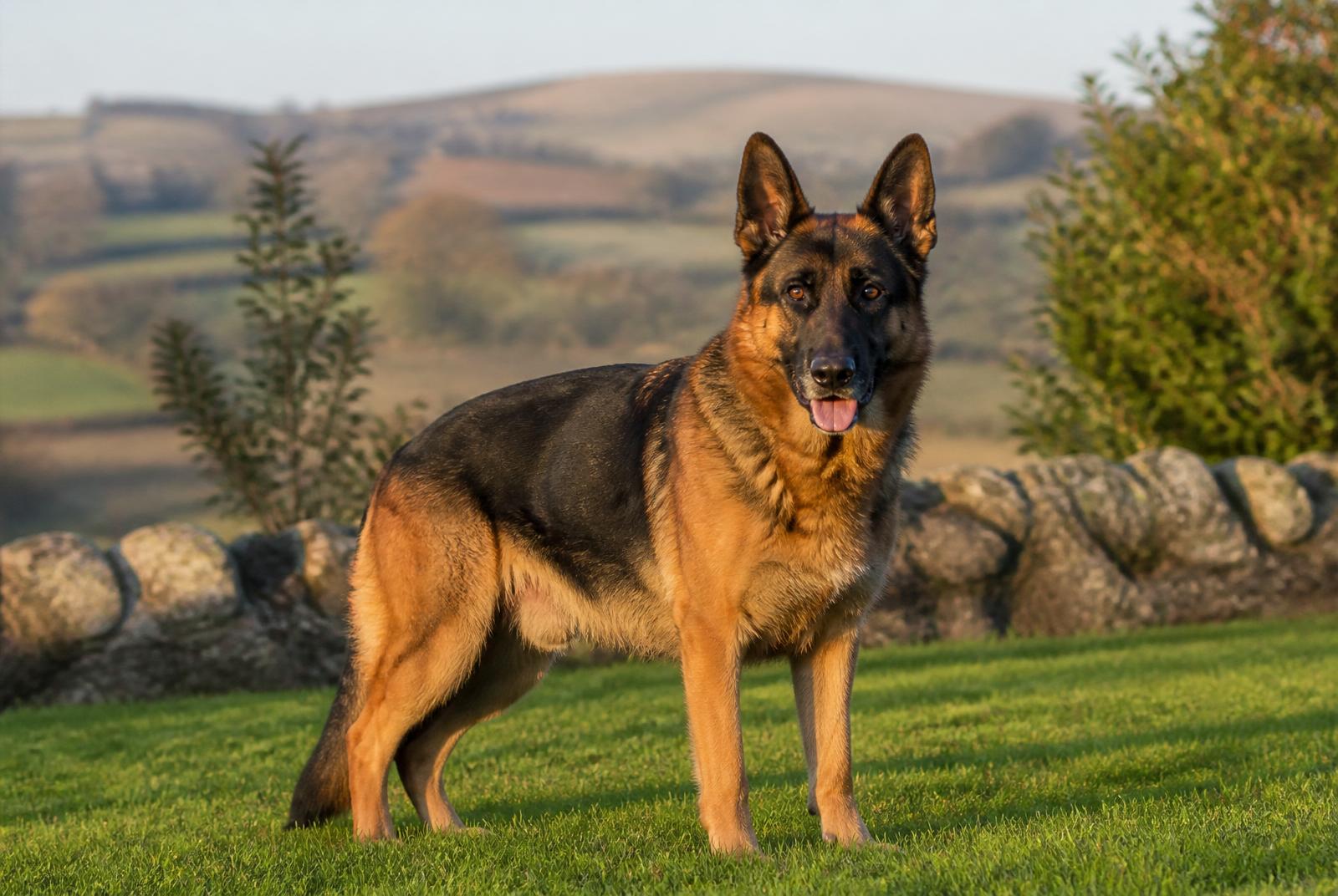
German Shepherd
The German Shepherd is a large, athletic pastoral breed known for intelligence, loyalty and versatility. Developed as a working dog, it forms close bonds with its household and often takes a watchful interest in everything happening around the home. A well-bred, carefully socialised German Shepherd can be a steady family companion, but this is not a low-maintenance breed. It needs daily physical activity, purposeful training and regular opportunities to use its mind.
About the German Shepherd
History & background
The German Shepherd was developed in Germany around the turn of the twentieth century from regional herding and farm dogs. Breeders sought a capable, intelligent working dog with stamina, responsiveness and a stable character. Although its original purpose centred on moving and guarding livestock, its versatility soon led to work with the police, armed forces, search and rescue organisations and assistance-dog programmes.
The breed remains part of the UK Pastoral Group. Modern German Shepherds vary in build and working drive, with differences between working, show and companion lines. Appearance should never take priority over sound movement, health or temperament. A responsible breeder should understand the pedigree's working qualities and health history, raise puppies in a stimulating home environment and avoid exaggerations such as an excessively sloping back or unstable hindquarters.
Temperament & personality
A typical German Shepherd is observant, devoted and eager to work with its handler. Many are naturally reserved with unfamiliar people without being fearful or aggressive. Their guarding instincts can make them vocal and quick to notice visitors, movement outside or changes in routine. Early, positive socialisation is therefore essential, as is teaching calm behaviour around guests, dogs, traffic and everyday handling.
This sensitive breed generally responds poorly to intimidation, harsh correction or chaotic training. German Shepherds often mirror tension in their environment and may develop reactivity if pain, fear, frustration or inadequate socialisation is overlooked. They thrive with predictable boundaries, companionship and tasks that have a clear purpose. Long periods alone, insufficient stimulation or repeated high-arousal games can contribute to barking, destruction or difficult behaviour.
Personality traits
Common German Shepherd characteristics include:
- Strong loyalty: close attachment to family members and a preference for being involved in daily life.
- High intelligence: rapid learning, including habits that owners may not intend to teach.
- Watchfulness: awareness of unfamiliar sounds, people and activity around the home.
- Working drive: enjoyment of scent work, obedience, tracking and other purposeful activities.
- Sensitivity: responsiveness to body language, tone and changes within the household.
- Physical confidence: strength and athleticism that require reliable lead manners and self-control.
- Potential reserve: some dogs need carefully managed introductions to strangers and unfamiliar dogs.
- Playfulness: many retain an enthusiastic, youthful style well into adulthood.
German Shepherd health — common conditions and vet costs
Top 6 conditions
German Shepherds can live healthy lives, but several inherited or breed-associated conditions deserve particular attention. Costs depend on severity, diagnostic work, treatment choice, location and whether referral care is required. The bands below are qualitative; ask your vet for a written estimate before planned investigations or treatment.
- Hip dysplasia: abnormal hip development can cause pain, stiffness, reduced exercise tolerance and arthritis. Management may involve weight control, physiotherapy, medication or orthopaedic surgery. It is prevalent enough in the breed to make parental hip screening particularly important. Typical cost band: moderate for assessment and ongoing conservative care; high if advanced imaging or surgery is needed.
- Elbow dysplasia: developmental abnormalities within the elbow may cause forelimb lameness and progressive osteoarthritis, sometimes beginning in a young dog. Diagnosis can require detailed imaging, while treatment ranges from rehabilitation and medication to surgery. Typical cost band: moderate to high.
- Degenerative myelopathy: DM is a progressive spinal-cord disorder associated with worsening hindlimb weakness and loss of coordination, usually in older dogs. A DNA result indicates genetic risk rather than providing a definitive diagnosis, and other causes must be investigated. Treatment is supportive rather than curative. Typical cost band: moderate for investigation and rehabilitation, potentially high with prolonged mobility support.
- Gastric dilatation-volvulus: the stomach becomes distended and may twist, compromising blood flow. This is an immediate, life-threatening emergency associated with deep-chested breeds. Signs include unproductive retching, abdominal swelling, drooling, distress and collapse. Typical cost band: high because emergency stabilisation and surgery may be required.
- Exocrine pancreatic insufficiency: inadequate digestive-enzyme production can lead to weight loss despite hunger, bulky stools and poor coat condition. Diagnosis usually involves blood testing, and affected dogs commonly need lifelong enzyme supplementation plus dietary management. Typical cost band: moderate, with continuing treatment costs.
- Chronic skin and ear disease: environmental or food-related allergies may cause itching, recurrent infections, hair loss and inflamed ears. Identifying triggers can take time, and some dogs need long-term medication or dermatology input. Typical cost band: moderate, rising to high for extensive investigation or referral care.
Breed-specific screening tests
When choosing a puppy, ask to see verifiable results for both parents rather than accepting a general claim that they were checked by a vet. Relevant screening includes assessment of hips and elbows under recognised schemes. Eye examination and DNA testing relevant to the breeding line, including testing associated with degenerative myelopathy, may also inform responsible mating decisions. A DNA result must be interpreted correctly: genetic status does not by itself confirm that an individual dog has clinical DM.
Screening reduces risk but cannot guarantee that a puppy will remain free from disease. Ask about relatives affected by mobility problems, skin disease, digestive disorders or unstable temperament. Adult dogs should receive regular veterinary examinations, weight monitoring and prompt assessment of altered gait. Maintaining a lean body condition and avoiding excessive repetitive impact while a puppy is growing can support joint health, although these measures cannot correct inherited joint abnormalities.
When to see a vet — red flags
Arrange a veterinary appointment if your German Shepherd develops persistent limping, stiffness after rest, reluctance to climb stairs, difficulty rising, loss of muscle, repeated ear problems, ongoing itching, chronic diarrhoea, unexplained weight loss or a noticeable change in behaviour. Hindlimb scuffing, crossing of the back legs, wobbliness or weakness requires prompt assessment because joint, spinal and neurological disorders can look similar.
Seek emergency veterinary care for repeated unsuccessful attempts to vomit, a swollen or painful abdomen, sudden collapse, breathing difficulty, pale gums, severe weakness, uncontrolled bleeding, seizures lasting unusually long or suspected poisoning. Do not wait to see whether possible gastric dilatation-volvulus settles. Telephone the practice while travelling so the clinical team can prepare, and never give human painkillers unless a vet has specifically instructed you to do so.
Family life with a German Shepherd
With children
A well-socialised German Shepherd can be affectionate and protective with children, but its size, speed and enthusiasm mean active supervision is essential. Teach children not to climb on the dog, disturb it while sleeping or eating, take toys away, or approach it when it has withdrawn to a safe space. Adults should learn to recognise subtle stress signals such as lip licking, turning away, freezing or leaving. Puppy mouthing and herding-style chasing need calm redirection before they become established. No dog, regardless of breed or familiarity, should be left unsupervised with a young child.
With other pets
Many German Shepherds live successfully with other dogs and cats, especially when introduced carefully at a young age. Individual prey drive, social confidence and previous experience matter more than breed labels alone. Use gradual introductions, separate feeding areas and barriers that allow each animal to retreat. Avoid forcing face-to-face contact. Some adults are selective around unfamiliar dogs or may chase smaller animals, so lead control and recall training are priorities. Seek help from a suitably qualified behaviour professional if there is stalking, guarding, repeated intimidation or aggression.
Home environment
This breed benefits from secure outdoor space, but a garden does not replace walks, training or companionship. Fencing should be robust and high enough to prevent escape, with gates kept securely closed. German Shepherds can adapt to a smaller home if their needs are met, although flats may present challenges involving stairs, close encounters in communal areas and noise sensitivity. A calm resting place, non-slip flooring and enough room for a large bed are useful. The breed is generally happiest living indoors with its family rather than being routinely housed outside or left alone for long working days.
Exercise & training
Exercise needs
A healthy adult commonly needs around two hours of activity spread across the day, adjusted for age, health, weather and individual drive. Combine walking with sniffing, controlled free movement where safe, training and mentally engaging games. Constant ball throwing or relentless high-speed exercise can increase arousal and place repetitive strain on joints. Scent searches, tracking, steady hill walking and structured play often provide a more balanced outlet.
Puppies should not follow an adult exercise schedule. Their activity should centre on short, varied outings, gentle play, exploration and life skills, with opportunities to rest. Avoid forced running, repetitive jumping and excessive stair use while the skeleton is developing. Older dogs may need shorter walks, warmer bedding and pain management rather than simply being dismissed as slowing down. Consult your vet before changing exercise if there is lameness, stiffness, weakness or reduced stamina.
Training approach
Begin reward-based training from the day your dog arrives. Priorities include responding to a name, recall, loose-lead walking, settling, leaving items, giving up objects and accepting handling. German Shepherds learn quickly, so reward calm choices as deliberately as active obedience. Short sessions with food, toys or access to valued activities usually work better than drilling. A well-fitted harness can aid management but does not replace lead training.
Socialisation should mean positive, manageable exposure rather than meeting every person or dog. Allow distance and give the puppy choice, particularly around traffic, veterinary handling, livestock and busy public places. Do not encourage guarding or suspicious behaviour. If barking, lunging, separation distress or aggression develops, first arrange a veterinary check because pain can affect behaviour, then seek a qualified, reward-based clinical animal behaviourist or trainer with experience of large working breeds.
Grooming & coat care
Coat & routine
The German Shepherd has a weather-resistant double coat with a dense undercoat. Standard and longer-coated dogs both shed throughout the year, with heavier seasonal coat loss. Brush several times a week using tools suited to the coat, increasing to daily during moulting. Work gently down to the skin without scraping it, paying attention behind the ears, around the trousers and under the collar. Long-coated dogs may mat more readily. Avoid routine clipping or shaving unless medically necessary because the coat provides protection and may regrow unevenly. Check the skin for redness, parasites, lumps and sore areas as you groom.
Bathing, ears, nails & teeth
Bathe when dirty using a dog-specific shampoo, rinse thoroughly and dry the dense coat well. Check ears weekly for redness, odour, discharge or discomfort, but do not insert cotton buds into the canal or apply cleaners without suitable advice. Trim nails as needed, including dewclaws, and ask a vet nurse or groomer for help if you are unsure. Introduce daily tooth brushing gradually with canine toothpaste; human toothpaste is unsuitable. Persistent bad breath, bleeding gums, broken teeth, head shaking or painful ears should be assessed by a vet rather than managed repeatedly at home.
Diet & nutrition
Feeding a German Shepherd
Feed a complete, balanced diet appropriate to life stage and body condition. Large-breed puppy food can help provide controlled energy and mineral balance during growth. Use the manufacturer's guide as a starting point, weigh portions and adjust with veterinary advice because requirements vary. You should be able to feel the ribs beneath a light covering and see a waist from above. Excess weight places additional strain on hips, elbows and the spine.
Divide the daily ration into meals rather than one very large serving, and account for training rewards within the allowance. Avoid intense activity around substantial meals and learn the emergency signs of gastric dilatation-volvulus, although feeding practices cannot remove risk entirely. Sudden dietary changes may cause digestive upset, so transition gradually where possible. Persistent loose stools, weight loss despite a strong appetite, vomiting, excessive thirst or reduced interest in food warrants veterinary assessment. Supplements should only be added after professional advice, particularly for a growing puppy already receiving a complete diet.
How much does a German Shepherd cost at the vet?
UK average prices
Based on our dataset of ~5,000 UK vet practices, the UK average consultation is £60.60. For a dog the typical booster vaccination averages £70.56, castration averages £257.13 and spaying averages £348.88. Microchipping averages £26.49. Individual practice charges vary regionally and by ownership (corporate vs independent). Always request a written estimate.
Routine annual budget
A German Shepherd's routine annual veterinary budget is generally moderate to high. It may include an examination, vaccination where advised, parasite prevention tailored to lifestyle, dental monitoring and prescribed medication. Large body size can increase the cost of weight-based medicines, anaesthesia and some preventive products. Neutering and microchipping are not annual expenses, and microchipping is a legal requirement for dogs in the UK.
Routine budgeting should be kept separate from provision for illness or emergencies. Investigation of lameness, digestive disease or neurological signs may involve blood tests, imaging, rehabilitation, referral or long-term medication, moving costs into a high band. Ask what is included in any health plan, check whether emergency and out-of-hours services are charged separately, and request a written estimate before non-urgent procedures. An estimate may change if findings alter the treatment required.
Pet insurance for a German Shepherd
Why insurance matters
Insurance can help owners manage unexpected treatment costs, which may be substantial when a large dog needs emergency surgery, specialist imaging or continuing care. German Shepherds have recognised risks involving joints, the digestive system, skin and nervous system, and some problems require support over many years. Arrange cover before symptoms arise because pre-existing conditions are commonly excluded. Insurance does not remove the need for an emergency fund: owners may have to pay the practice first, and excesses, co-payments or excluded items can still apply.
What to look for
Compare the policy type, veterinary-fee limit, period of cover and whether an ongoing condition can continue to be claimed for when the policy is renewed. Check exclusions for hereditary, congenital, dental, behavioural, rehabilitation and complementary treatment, alongside any age-related contribution. Understand whether separate conditions share a limit and whether referral fees, diagnostic imaging and prescribed diets are covered. Read the full wording rather than choosing on premium alone, disclose medical history accurately and ask how claims and pre-authorisation work. Terms vary, so confirm that the cover suits your dog's needs and your ability to meet uncovered costs.
Choosing a vet for your German Shepherd
What to look for
Look for a practice that handles large, potentially anxious dogs calmly and uses low-stress methods. Useful considerations include accessible entrances, non-slip floors, enough waiting-room space, suitable weighing equipment and a clear plan for urgent care. Ask about experience with orthopaedic assessment, access to radiography and physiotherapy, referral arrangements, overnight monitoring and out-of-hours provision. Continuity with a clinical team that knows your dog can be particularly valuable for tracking gait, weight, skin disease and behaviour over time.
Compare fees alongside service, opening hours and facilities. Ask for written estimates, clarify what diagnostic or postoperative care is included, and check whether a health plan is a budgeting scheme rather than insurance. Register before an emergency and make positive social visits if the practice permits them, helping your dog become comfortable with the building and weighing scales. Use our vet price comparison tool to compare practices near you.
Frequently asked questions
Is a German Shepherd a good family dog?
A well-bred and properly socialised German Shepherd can be a loyal, affectionate family dog. The breed needs consistent training, substantial daily activity and close involvement with its household. Its size and guarding tendencies mean interactions with children require adult supervision, while every dog should have a quiet area where it will not be disturbed.
How much exercise does a German Shepherd need?
A healthy adult generally benefits from around two hours of varied activity each day, divided into manageable sessions. Include walking, sniffing, training and controlled play rather than relying on repetitive running or ball chasing. Puppies, older dogs and those with joint or neurological conditions need an individually adjusted plan agreed with a vet where appropriate.
What health problems are common in German Shepherds?
Important breed concerns include hip dysplasia, elbow dysplasia and degenerative myelopathy. Gastric dilatation-volvulus, exocrine pancreatic insufficiency, skin allergies and recurrent ear disease are also relevant. Screening breeding dogs can reduce some inherited risks but cannot guarantee health. Seek veterinary advice for lameness, hindlimb weakness, chronic digestive signs or persistent itching.
How much does a German Shepherd cost at the vet in the UK?
Based on our dataset of approximately 5,000 UK practices, an average consultation is £60.60, a dog booster vaccination is £70.56, castration is £257.13, spaying is £348.88 and microchipping is £26.49. Charges vary by practice, region and the care required. Joint investigations, emergency surgery or long-term treatment can fall into a high cost band, so request a written estimate.
Can a German Shepherd live in a flat?
It is possible if the dog receives sufficient exercise, mental stimulation, training and opportunities to toilet, but flats can be challenging for this large, watchful breed. Consider communal stairs, lift access, noise, close encounters with neighbours and whether an injured dog could be moved safely. A garden is useful but does not replace daily activity.
Do German Shepherds shed a lot?
Yes. Their dense double coat sheds throughout the year and more heavily during seasonal coat changes. Brushing several times weekly, and daily during heavy moulting, helps remove loose undercoat and allows skin checks. Neither coat type is considered low-shedding, and shaving is generally inappropriate unless required for veterinary treatment.
Related breeds
By The Vet Price Comparison Site editorial team · Last reviewed23 September 2026. Sources: RCVS, The Kennel Club, RVC VetCompass, ABI, and our live UK practice pricing dataset.