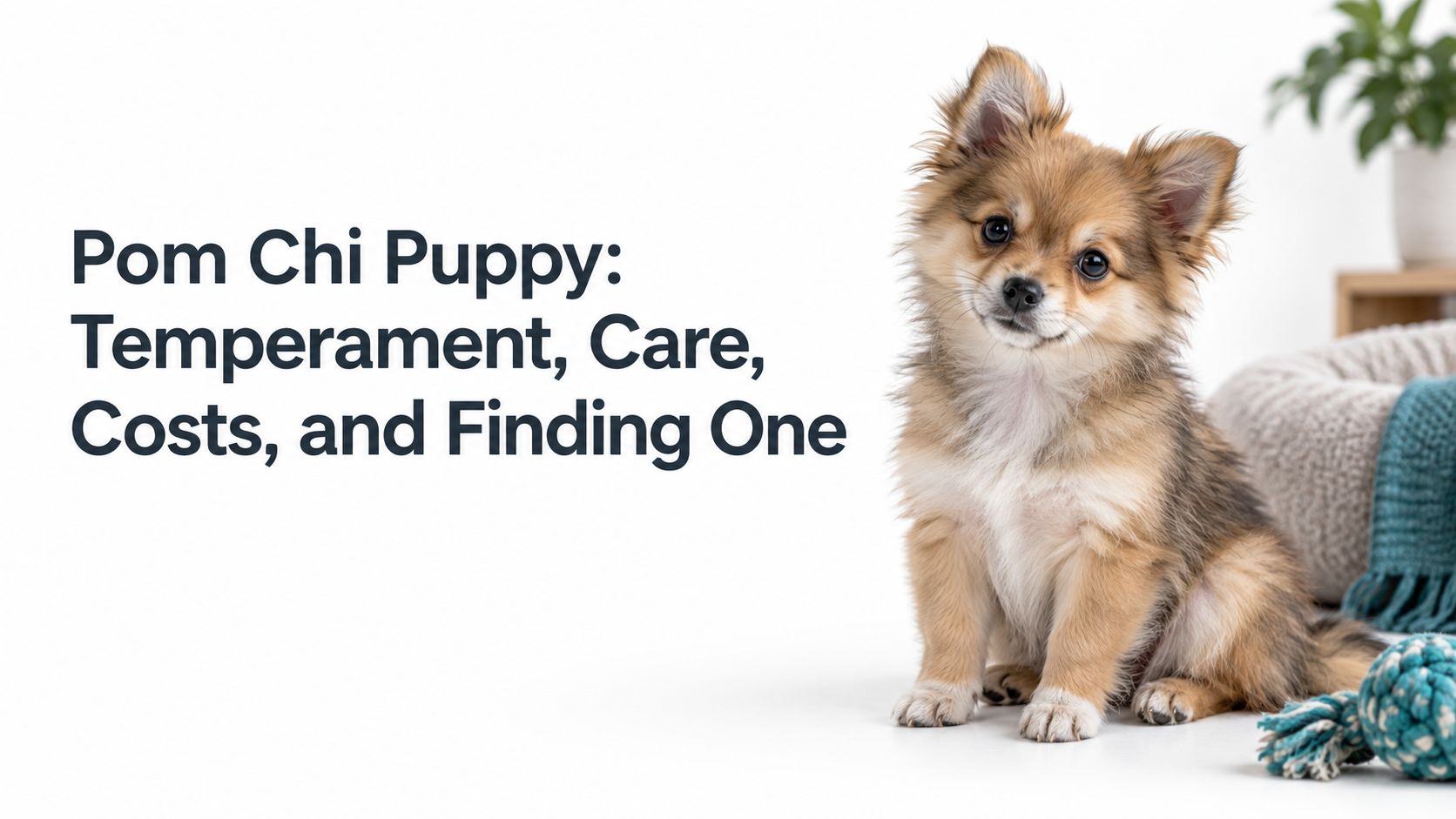
You're probably here because you've seen one. Maybe in a litter photo, maybe on social media, maybe in person. A tiny fox-faced fluffball, ears up, eyes bright, looking like the easiest yes in the world.
That is exactly when people get themselves into trouble with a Pom Chi puppy. They buy the cute bit and miss the fragile bit. This cross can be funny, loyal, sharp as anything and lovely to live with, but it also needs sensible handling, realistic budgeting and a bit of discipline from day one. If you want a toy dog you can treat like a handbag accessory, walk away now. If you want a small companion with a lot of character and you are willing to do the boring responsible bits properly, keep reading.
Table of Contents
- The Pom Chi Puppy at a Glance
- What a Pom Chi Is Really Like to Live With
- Health Conditions Worth Planning For Early
- Day-to-Day Care That Actually Works for a Pom Chi
- How Much a Pom Chi Puppy Actually Costs in the First Year
- Finding a Pom Chi Through a Breeder or a Rescue
- Questions to Ask and a Calm First-Month Plan
The Pom Chi Puppy at a Glance
The usual scene goes like this. You lean over a pen or a basket, one puppy charges forward like it owns the place, another slips behind a sibling, and one climbs into your hand as if the decision has already been made. That is when a lot of people decide they have found a Pom Chi, then go home and discover the breed facts sound tidier than real life.

A Pom Chi, also called a Chihu Pomchi or Pomahuahua, is a cross between a Pomeranian and a Chihuahua. In the UK, it is not recognised as a Kennel Club breed, so there is no official breed standard, no recognised breed club, and no mandatory breed-specific health testing programme for the cross itself, as outlined in this UK Pomchi breed overview. That matters more than many buyers expect.
Why reliable UK numbers are hard to find
Pom Chis sit inside the wider crossbreed population, so they are not tracked cleanly like a pedigree breed. A UK dog-population report found 12.64 million owned and unowned pet dogs in the UK in 2019, with 14.2%, around 1.80 million dogs, classed as crossbreds, and 1,070 crossbred categories identified in the data. That is why there is no dependable national count for Pom Chi puppies. The same report also put small dogs at 52.5% of the UK dog population, around 6.63 million dogs, which tells you where this cross sits in practical terms. The primary source behind those figures is the PDSA Paw Report.
Do not trust anyone who talks about Pom Chis in the UK as if they are a formally tracked breed with fixed traits. They are not.
What they usually look like and who they suit
You can get a smoother-coated puppy, a fluffier one, a more delicate Chihuahua-style build, or a rounder, puffier Pomeranian look. That variation is normal. What stays fixed is the size. This is a very small dog, and that should shape your home setup, your handling, your exercise expectations, and your vet budget.
For one side of that mix, the Pomeranian breed guide is worth reading because the grooming habits, toy-dog handling, and common owner mistakes carry straight across.
A Pom Chi suits people who want a close companion, can supervise properly, and will not leave a tiny dog to cope with rough children, boisterous larger dogs, or careless visitors. Cute is the hook. Management is the job.
What a Pom Chi Is Really Like to Live With
Living with a Pom Chi is a bit like living with a big dog personality packed into a very small body. That's the part many owners adore, and the part some regret when they realise confidence in a toy dog can easily tip into noisiness, clinginess or full-blown bossiness if nobody sets boundaries.
Start with the parent breeds
The simplest way to understand this cross is to picture the alertness and puffed-up self-belief of a Pomeranian meeting the watchful, devoted, opinionated nature of a Chihuahua. That combination often creates a dog that's intensely attached to its people, quick to notice everything and not shy about announcing an opinion.
Read any seller listing and they'll often call that “spirited” or “cheeky”. Sometimes it is. Sometimes it's just a dog that hasn't been taught how to settle.
For a feel for the Chihuahua side of the equation, the Chihuahua breed guide gives useful context on why these dogs can seem bold one minute and suspicious the next.
What daily life often looks like
A well-handled Pom Chi usually wants to be near you. Not vaguely near. Properly near. On your lap, beside your chair, following you room to room, listening for every movement near the front door. They can be affectionate and funny, and they often form very strong preferences about their favourite person.
Typical home behaviour often looks like this:
- Lap-dog instinct: They love warmth, routine and contact.
- Watchdog bark: They'll often react fast to noise, visitors and movement outside.
- Fast learning: They pick things up quickly, including habits you didn't mean to teach.
- Selective confidence: They may act fearless, then suddenly become overwhelmed by handling, children or unfamiliar dogs.
Practical rule: Reward calm behaviour early. Don't accidentally build a tiny household tyrant by laughing at every bark, snap or demand for attention.
Bold isn't the same as stable
This matters. People see a puppy marching up to everything and assume that means confidence. Sometimes it means arousal, overexcitement or poor recovery when things change. A Pom Chi that charges at visitors, screams at the post, or stiffens when picked up isn't being “cute and feisty”. It's showing you where training needs to start.
My advice is simple. Teach four things immediately and don't wait until the puppy is older:
- Quiet matters. Don't reward frantic barking with instant attention.
- Handling should be gentle and predictable. Tiny dogs often become reactive because people grab them.
- Visitors are normal. Calm introductions beat forced fussing.
- Being alone briefly is a skill. Velcro behaviour becomes a problem if you encourage it all day.
If you like a dog with character, a Pom Chi can be brilliant. If you secretly want an effortless soft toy with no opinions, this isn't that dog.
Health Conditions Worth Planning For Early
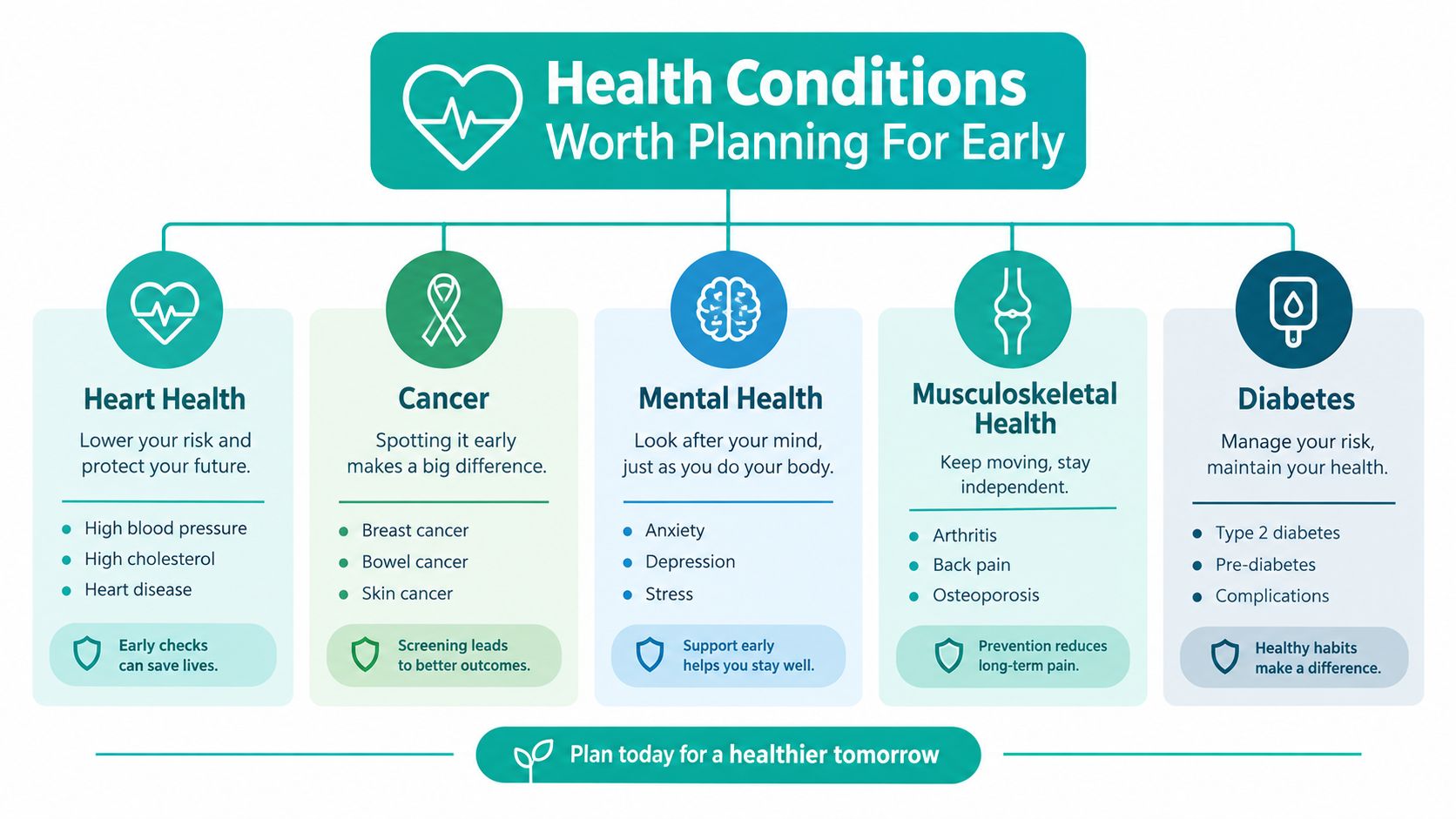
This is the part where I get blunt. A Pom Chi puppy should be treated as a very small toy-breed puppy with overlapping parent-breed risks, not as a magical cross that somehow cancels them out. Crossbreeding can produce variation, yes. It does not guarantee protection.
The big issues to think about before purchase
UK guidance on Chihuahuas highlights patellar luxation and hip dysplasia among recognised concerns, while Pomeranians are associated with tracheal collapse, hydrocephalus, cataracts, progressive retinal atrophy, and Chiari-like malformation or syringomyelia, as set out in this PDSA Chihuahua health guide. For a Pom Chi owner, the practical takeaway isn't to panic. It's to stop pretending the cross is low-maintenance by default.
The small frame matters too. Tiny jaws can mean crowded teeth and retained baby teeth. Narrow airways mean rough collar pressure is a stupid risk. A toy dog that gains a little too much weight can feel the effect quickly in both movement and breathing.
Patellas deserve proper attention
The strongest UK primary-care evidence here is on patellar luxation. A study of 210,824 dogs attending 119 primary-care veterinary clinics in England found an overall diagnosis prevalence of 1.30%, with a 95% confidence interval of 1.21% to 1.39%. In that same study, prevalence was 6.5% in Pomeranians with a 95% confidence interval of 3.9% to 9.2%, and 4.9% in Chihuahuas with a 95% confidence interval of 3.8% to 6.0%. Crossbred dogs in the study sat at 1.2%, but that broad figure can't be used as a Pom Chi-specific estimate, as shown in this VetCompass patellar luxation study.
That doesn't mean your puppy will get it. It does mean I'd insist on documented parent information and an early vet examination that includes an orthopaedic check.
| Condition | Pomeranian link | Chihuahua link | What owners should do |
|---|---|---|---|
| Patellar luxation | Recognised concern in the parent breed, and higher recorded prevalence in UK primary-care data | Recognised concern in the parent breed, and higher recorded prevalence in UK primary-care data | Ask for parental orthopaedic history, watch for skipping, limping or hind-leg hopping, book a vet check promptly |
| Tracheal collapse | Associated with Pomeranians in UK guidance | Not the main Chihuahua-linked issue in the cited UK guidance | Use a harness, avoid neck pressure, act on repeated honking cough or noisy breathing |
| Hydrocephalus | Associated with Pomeranians in UK guidance | Toy-breed type concern worth discussing in context of very small skull shape | Ask about family history and get odd neurological signs checked quickly |
| Inherited eye disease | Parent screening can matter | Parent screening can matter | Request documented eye testing where available and follow up any cloudiness or vision concerns |
| Dental crowding | Small mouth can create practical dental problems | Small mouth can create practical dental problems | Start tooth brushing early and ask your vet to monitor retained puppy teeth and bite alignment |
Breathing and breeding decisions
Pomeranians are recognised in UK guidance as susceptible to tracheal collapse, a progressive weakening of the windpipe structures that can narrow the airway. The practical response is clear in this PDSA Pomeranian health guide. Use a properly fitted harness. Keep the dog lean. Avoid overheating. Treat repeated honking cough, exercise intolerance, noisy breathing or any bluish tinge as warning signs that need veterinary attention.
That same source also points to breeding caution from Royal Veterinary College VetCompass data. In a dataset of nearly 20,000 UK emergency-care bitches, 3.7% received emergency treatment for difficult birth, and Chihuahuas were 10.4 times more likely than crossbred bitches to experience dystocia. That statistic applies to pregnant Chihuahua-type females, not directly to every puppy, but it's a very good reason to ask about the mother's history and avoid anyone breeding extremely small females casually.
Buy the puppy in front of you only after you've checked the health story behind it.
Day-to-Day Care That Actually Works for a Pom Chi
Most toy-dog problems don't start with dramatic illness. They start with ordinary owner mistakes repeated every day. Too much food. Patchy routine. Collar pulling. No dental care. A fluffy puppy gets forgiven for everything, then grows into a delicate adult with habits that are harder to fix.
Feed and exercise like this is a toy breed, because it is
A Pom Chi puppy does best with a routine that respects its size. Small meals, given consistently, are easier to manage than casual overfeeding and random treats. I'd rather see an owner measure properly and monitor body shape than free-feed because the bowl “looks small anyway”.
Exercise should be regular but modest. Don't turn a tiny puppy into a weekend athlete. Short walks, calm play, little training sessions and plenty of rest are far more sensible than long, tiring outings that put strain on developing joints and soft tissues.
A few rules are worth sticking on the fridge:
- Keep them lean: Extra weight adds stress to joints and breathing.
- Use a harness: Neck pressure is a risk you don't need.
- Skip rough play: No jumping off sofas, no grabbing games with children, no body-slamming from bigger dogs.
- Build rest into the day: Overstimulated toy puppies become barky, bitey and impossible to settle.
Grooming and teeth need an early start
Coat care depends on what your puppy inherits. A fluffier coat needs regular brushing. A smoother coat is lower effort, but still not no-effort. Either way, start handling the feet, ears, chest and mouth early so grooming doesn't become a wrestling match.
Dental care is where too many Pom Chi owners fail. Tiny mouths get messy fast. Start brushing early, keep it calm, and ask your vet to keep an eye on retained puppy teeth and general mouth development as your dog grows.
Small-dog dental care isn't an optional extra. It's basic maintenance.
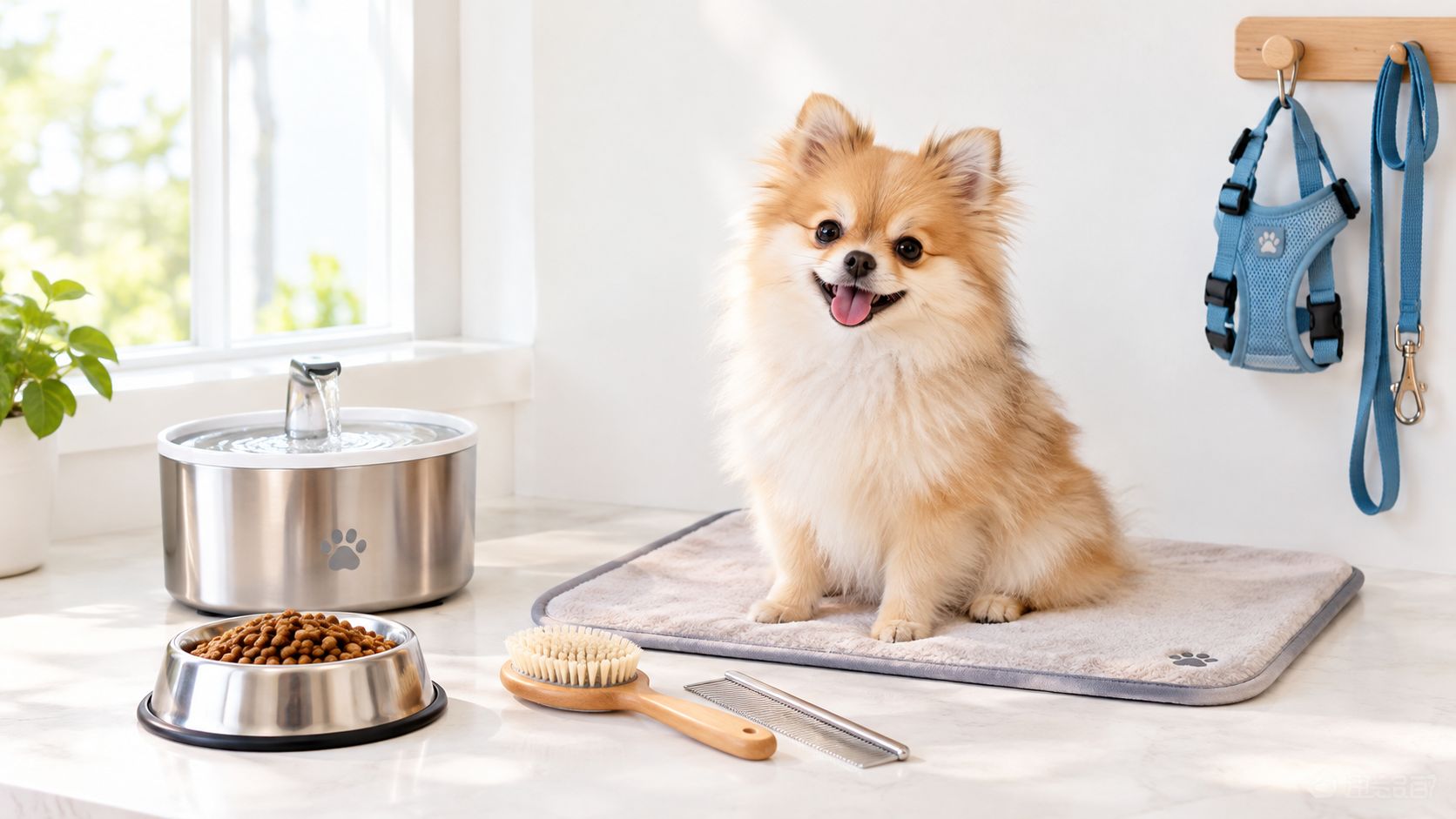
The gear that actually matters
Forget buying piles of novelty accessories. Buy the practical things and use them properly.
- A fitted harness: This is essential for a dog with toy-breed airway vulnerability.
- A secure crate or pen: Useful for rest, toilet routine and preventing accidents.
- Lightweight grooming tools: Choose brushes that suit the coat you have, not the coat you expected.
- Parasite prevention you'll stick to: Read a straightforward UK flea and tick prevention guide and set reminders.
The right daily routine is boring, repetitive and effective. That's exactly why it works.
How Much a Pom Chi Puppy Actually Costs in the First Year
A Pom Chi can look like a small-breed bargain until the first vet bill lands. The sensible way to budget is to split the year into two pots, routine spend and contingency spend, then reserve for both.
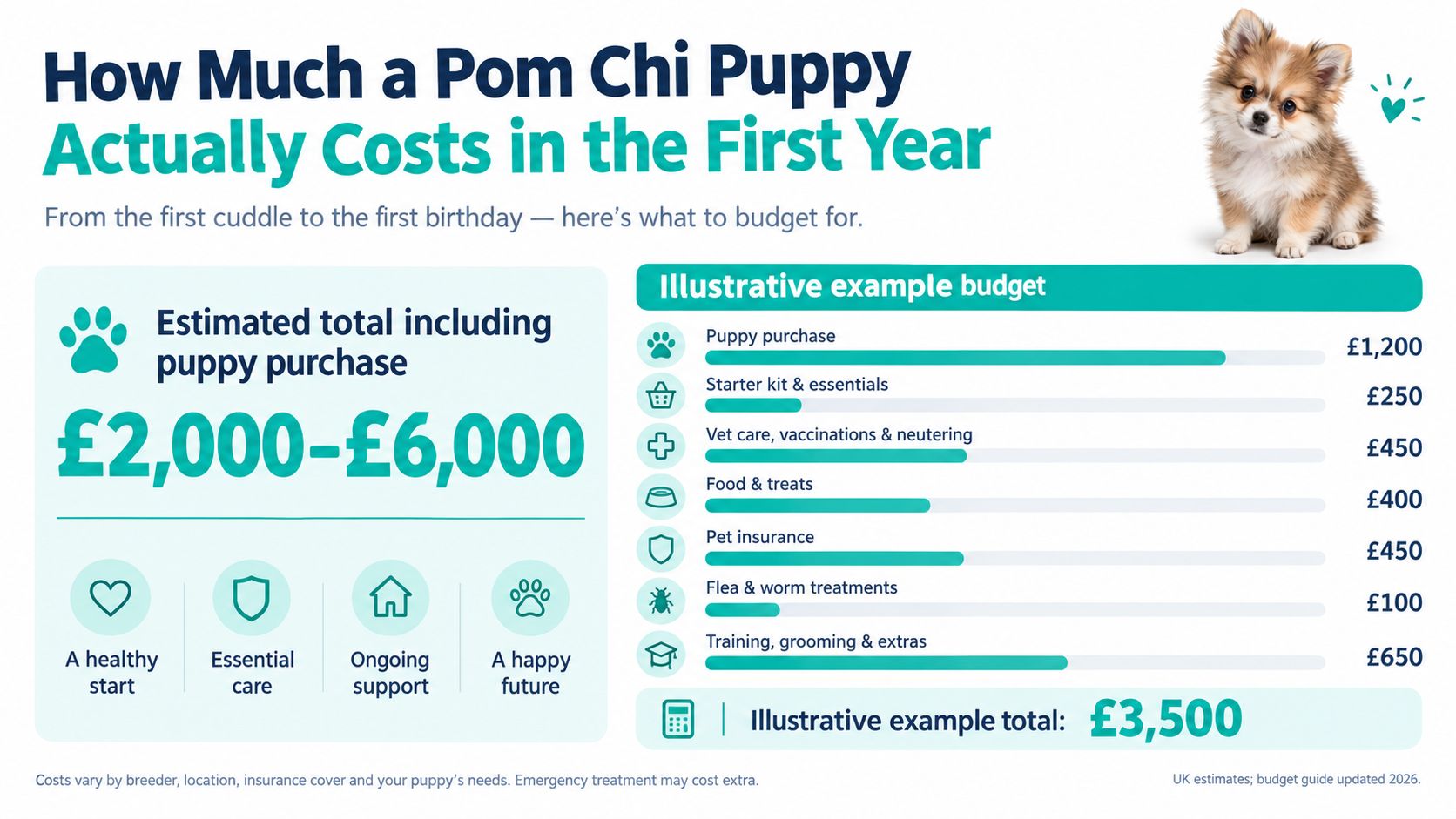
Split the budget into two pots
Routine costs are the predictable ones, vaccinations, microchipping, consultations, parasite prevention, and later neutering. Contingency costs are the ones that make or break the year, illness, injury, dental work, emergency visits, follow-up checks, and anything that needs quick treatment.
A UK puppy-owner study found that 23.5% of owners spent more on veterinary care than expected, with reported puppy veterinary costs sitting at a median of £250 and a range from £0 to £15,000. The same research found that one in four owners still said vet costs were higher than expected by the time the dog was 21 months old, as reported in this UK puppy-owner cost study.
That is the reality with a Pom Chi. Small dogs can still need expensive care, and a tiny frame does not protect you from sudden costs.
What belongs in each budget pot
| Cost type | Typical items | Rough UK range | How to estimate locally |
|---|---|---|---|
| Predictable first-year care | Vaccinations, microchipping, routine consultations, parasite prevention, later neutering | Varies by postcode and practice | Check published local fee lists and compare like-for-like inclusions |
| Contingency spending | Illness, injuries, dental problems, respiratory workups, emergency appointments, follow-up checks | Highly variable and can escalate fast | Build a reserve, then review emergency, follow-up and prescription fees in your area |
PDSA's own published minimum of £69 a month for a small dog is a useful floor for routine ownership, but it explicitly excludes illness, injury and special-diet costs, so it is not a complete Pom Chi budget.
What to compare before you register with a practice
Postcode pricing matters. Compare more than the headline consultation fee. Ask what is included in vaccinations, whether rechecks cost extra, what prescription fees look like, how same-day urgent appointments are handled, and what out-of-hours care can cost.
A practical starting point is this new puppy first-year costs guide, then checking local prices with postcode-based comparison data. The Vet Price Comparison Site lets owners compare published fees by postcode for routine items such as consultations, vaccinations, microchipping and neutering, which is far more useful than guessing from national averages.
A cheap appointment can still lead to an expensive first year if every follow-up, prescription and emergency visit sits outside the original quote.
Budget the routine care first, then keep a separate reserve for the kind of small-breed problems that do not wait. If that reserve feels uncomfortable, that is the right signal before the puppy comes home.
Finding a Pom Chi Through a Breeder or a Rescue
If you want a Pom Chi, you've got two sensible routes. A careful breeder or a good rescue. Both can work. Both can also be a mess if you lower your standards because the dog is adorable.
If you go to a breeder
A breeder should be open, organised and willing to show paperwork without acting offended. I'd want to see health information for both parents, meet the mother, ask about previous litters, and hear exactly how the puppies are being raised. If the answers are vague, breezy or over-rehearsed, I'd leave.
Bad signs are usually obvious if you stop trying to talk yourself into the puppy:
- Always-available litters: That often points to volume, not care.
- No documentation: “They're crossbreeds, so they don't need tests” is poor reasoning.
- No meeting with the mother: That's a serious warning sign.
- Pressure to pay quickly: Good breeders don't rush good homes.
If you go through rescue
Rescue is a strong option, especially if you'd rather avoid the most demanding puppy months. Small-breed rescues and crossbreed rescues do sometimes take in Pom-type and Chihuahua-type crosses, and an older Pom Chi can be a much easier prospect for someone who wants the companionship without the raw puppy chaos.
A rescue dog may also come with a clearer adult temperament than a tiny puppy whose future type is still developing.
The right dog is not always the youngest dog.
My checklist for either route is short. Ask for health history, ask how the dog has been handled, ask what support is offered after adoption or sale, and walk away if anything feels hidden. There will always be another cute puppy. There won't always be another chance to avoid a bad seller.
Questions to Ask and a Calm First-Month Plan
The phrase “designer cross” has done a lot of damage. It makes people think they're buying something deliberately balanced, almost upgraded. Sometimes what they're buying is a very small, poorly bred puppy with vague paperwork and a sales pitch built on looks.
So ask hard questions. A decent seller should answer them without wobbling.
Questions any seller should handle easily
Ask these plainly:
- Who are the parents, and what health information do you have for both?
- Has the puppy been examined by a vet, and what was noted?
- What have you used for feeding, worming and routine care so far?
- How is the puppy coping with handling, noise and being left briefly alone?
- Can I see the mother with the litter?
If the seller gets defensive, changes the subject or leans on “they're very popular”, that's your answer.
Your first month at home
Keep the first month simple and structured. Tiny dogs do better with calm repetition than with constant excitement.
Use this as your opening plan:
- Book the first vet appointment quickly. Don't wait for a problem. A first check should cover general health, movement, mouth, weight, and any early concerns. This guide on what to expect at your first vet visit is a useful place to start.
- Set up one safe base area. Crate or pen, bed, water, toilet routine. Keep the puppy from charging all over the house unchecked.
- Start harness practice immediately. Short, positive sessions. No dragging, no collar yanking.
- Begin tooth brushing and handling work. Gentle, brief and daily beats dramatic weekly attempts.
- Prioritise calm socialisation. New sights, sounds, people and surfaces, but in sensible doses. Don't flood a tiny puppy with chaos and call it confidence-building.
A Pom Chi can be a wonderful little companion. But I'd only recommend one to people who can separate cute from practical. If you plan for health checks, daily care and the possibility of uneven first-year vet costs, you're far more likely to enjoy the dog in front of you rather than struggle with the fantasy you were sold.
If you're pricing up life with a Pom Chi puppy, don't guess and don't rely on generic dog averages. The Vet Price Comparison Site lets you compare published UK vet fees by postcode, check routine costs like consultations, vaccinations and microchipping, and build a more realistic first-year budget before you commit.