
Under the 2026 UK veterinary reforms, practices must update published price lists before charging new fees and provide written updates if treatment estimates rise by 20% or £500, whichever is lower. A notification of price increase is now a mandatory compliance requirement, not merely a courtesy to clients.
That change matters because veterinary pricing was often difficult to compare before the reforms. The Competition and Markets Authority found that fewer than 40% of UK veterinary practices had prices on their websites, while only 29% of sampled pet owners received price information in writing according to the CMA's veterinary market investigation. Owners were too often asked to approve treatment without a clear, durable record of what it would cost.
The new framework changes the practical question from “Did the client hear about the increase?” to “Was the price published, updated and communicated at the correct point?” That distinction affects pet owners, practice managers and independent comparison platforms alike.
Table of Contents
- The New Reality of Veterinary Price Transparency
- Legal Thresholds for Communicating Fee Changes
- How Independent Platforms Track and Display Updates
- What Pet Owners Should Expect When Fees Rise
- Actionable Compliance Steps for Practice Managers
- Building Long-Term Trust Through Proactive Transparency
The New Reality of Veterinary Price Transparency
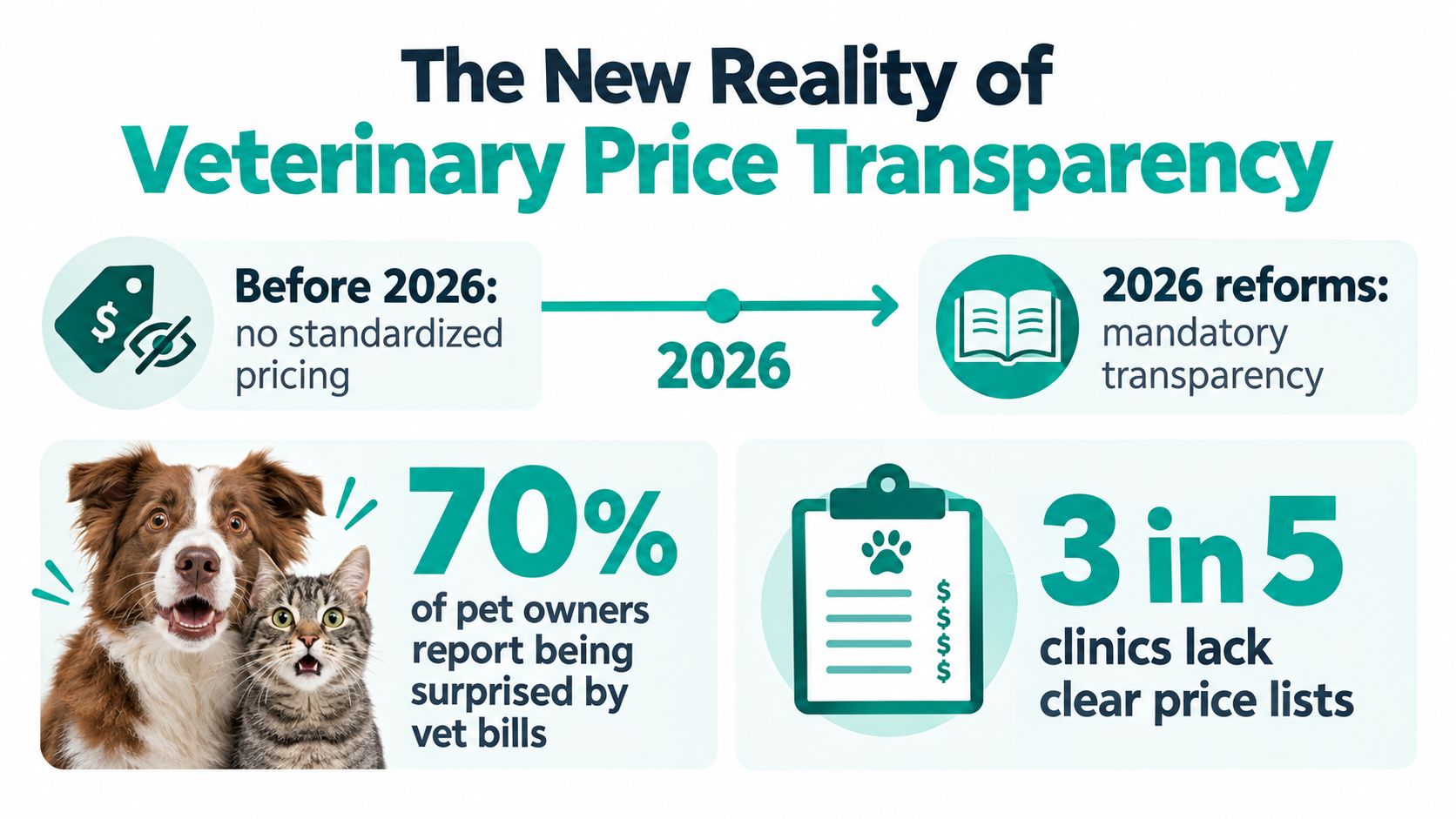
The 2026 reforms turn a notification of price increase into an operational compliance trigger. Practices must control what owners see, when they see it and whether staff, booking systems and published materials carry the same fee. Verbal explanations still matter, but they cannot replace a clear, current record.
Before the reforms, an owner might find a consultation fee online but need to telephone for vaccination, neutering, dental or dispensing costs. A final bill could then differ from an earlier conversation without a durable price record. As noted above, the CMA's findings showed that voluntary transparency left too much room for this problem.
A price change is an operational control point
Consider a practice that approves a higher dental fee but updates only its website. An old booking confirmation still shows the previous amount, reception staff quote different figures and the in-practice price sheet remains unchanged. The problem is not poor communication. The practice has allowed a price change to reach clients before its information controls were aligned.
A compliant workflow assigns responsibility for the new fee, records its effective date, updates public materials and checks every customer-facing channel before the charge is used. That includes the website, in-practice displays, automated booking messages and staff guidance. Keep the old and new prices in the change record so managers can explain when the notification took effect.
Published information should cover defined routine services with clear, accessible price lists. Typical prices for standard cases must include VAT and use language owners can understand. Common examples include consultations, vaccinations, neutering, microchipping, dental scale and polish, prescription dispensing fees and pet cremation the government's summary of the CMA remedies lists these routine services. These figures cannot describe every clinical outcome, but they give owners a usable basis for comparison.
Practical rule: If the new fee is not visible before charging, stop the rollout and correct the published information first.
Independent monitoring strengthens that control. A practice website shows what one business publishes. The Vet Price Comparison Site can place those fees beside other local listings, helping owners identify changes, question outdated quotes and check whether a notification of price increase matches the public record. Its UK veterinary pricing data report for 2026 provides context for comparing published fees across practices.
Legal Thresholds for Communicating Fee Changes
A notification of price increase is a compliance trigger, not a courtesy message. For routine services, the new fee must be published before the practice charges it. For higher-cost treatment, written estimates and further updates apply when expected costs increase beyond the permitted threshold. Practices should also use this guide to UK veterinary pricing transparency laws when reviewing their processes.
Routine services and published prices
A practice must maintain an online and in-practice price list for standard services. Each price should reflect the typical charge for a standard case, include VAT and use language owners can understand. When a fee changes, update every published reference before the new price is charged. The government guidance explains how veterinary price lists must be maintained.
Booking communication forms part of the same compliance chain. Digital appointment confirmations should show the consultation price and any standard treatment booked in advance, with a direct link to the complete price list. Updating the website alone does not correct an automated message that still shows the old fee.
Use this sequence:
- Approve the change: Record the service, old fee, new fee and effective date.
- Update public information: Change the website, in-practice list and every other published practice source.
- Refresh booking messages: Check automated confirmations, online booking pages and pre-appointment communications.
- Brief the team: Give reception staff the exact wording and current price.
- Retain evidence: Keep dated copies of the old list, new list and client communications.
The change record should show when the notification took effect and which channels were updated. That evidence lets managers explain the charge if an owner queries it.
Higher-cost treatment and written estimates
For treatment pathways expected to cost £500 or more, provide a written estimate in advance. After treatment, give the owner an itemised bill, except in emergencies. These records connect the expected treatment pathway with the services charged. The wider reforms have been described as the biggest changes to the vet sector in 60 years in the government's reform announcement.
If the estimate changes during treatment, send a written update when the expected cost rises by 20% or £500, whichever is lower. Reuters' coverage of the new veterinary rules reports this escalation requirement.
Build the calculation into practice software. The system should flag the estimate, prompt a written explanation and pause progression where appropriate before costs pass the permitted level. Staff should not calculate the threshold from memory during active treatment.
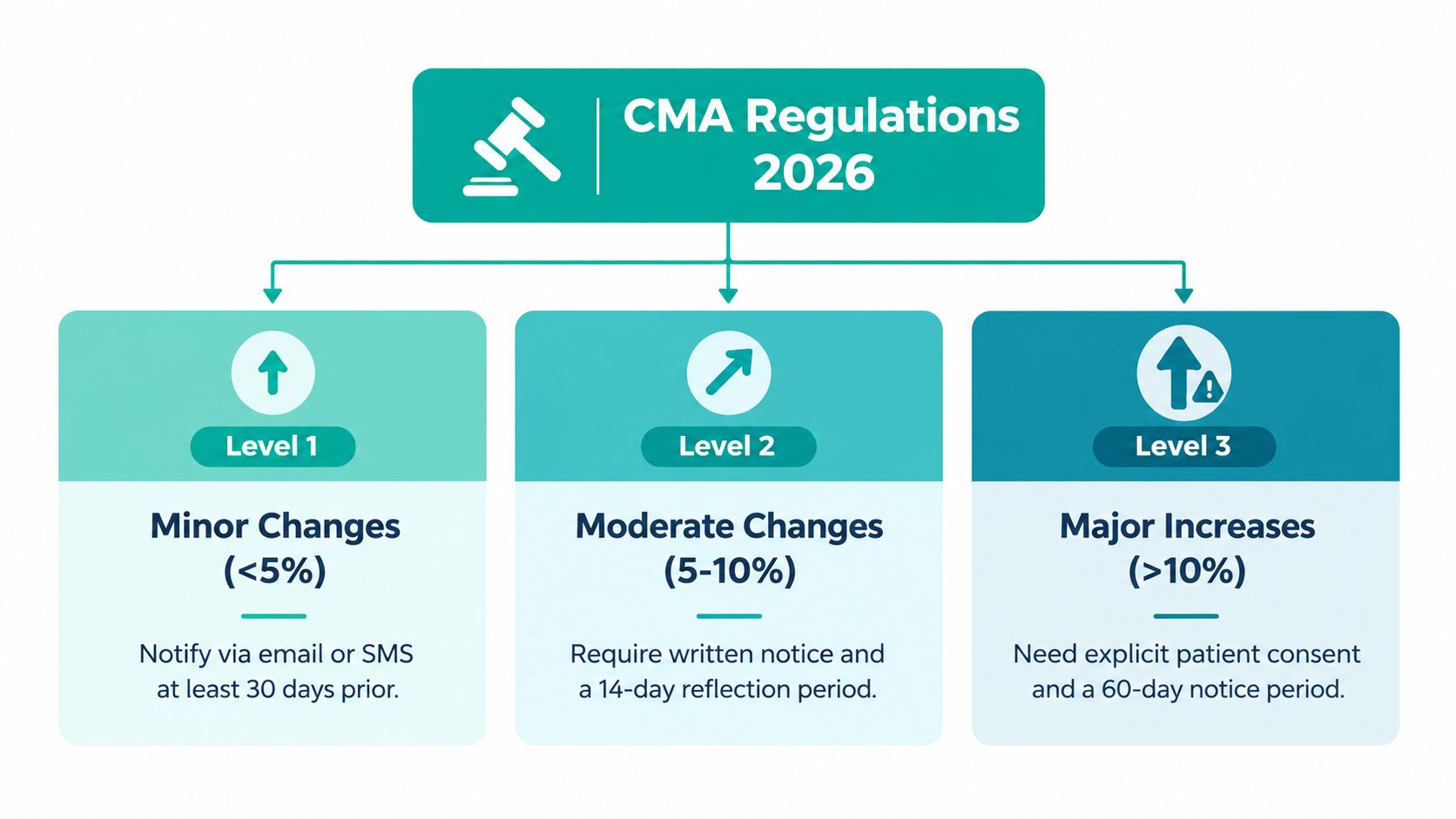
While some infographics show broader notification bands and notice periods, the verified UK requirements are the published-price obligations, the £500 written-estimate threshold and the 20% or £500 escalation trigger. Treat the diagram as an operational aid, not as a substitute for UK veterinary law or regulatory guidance.
Owners should request estimates in writing, ask for an update when treatment changes and keep the itemised bill. Practices need an auditable communication trail for every material change.
How Independent Platforms Track and Display Updates
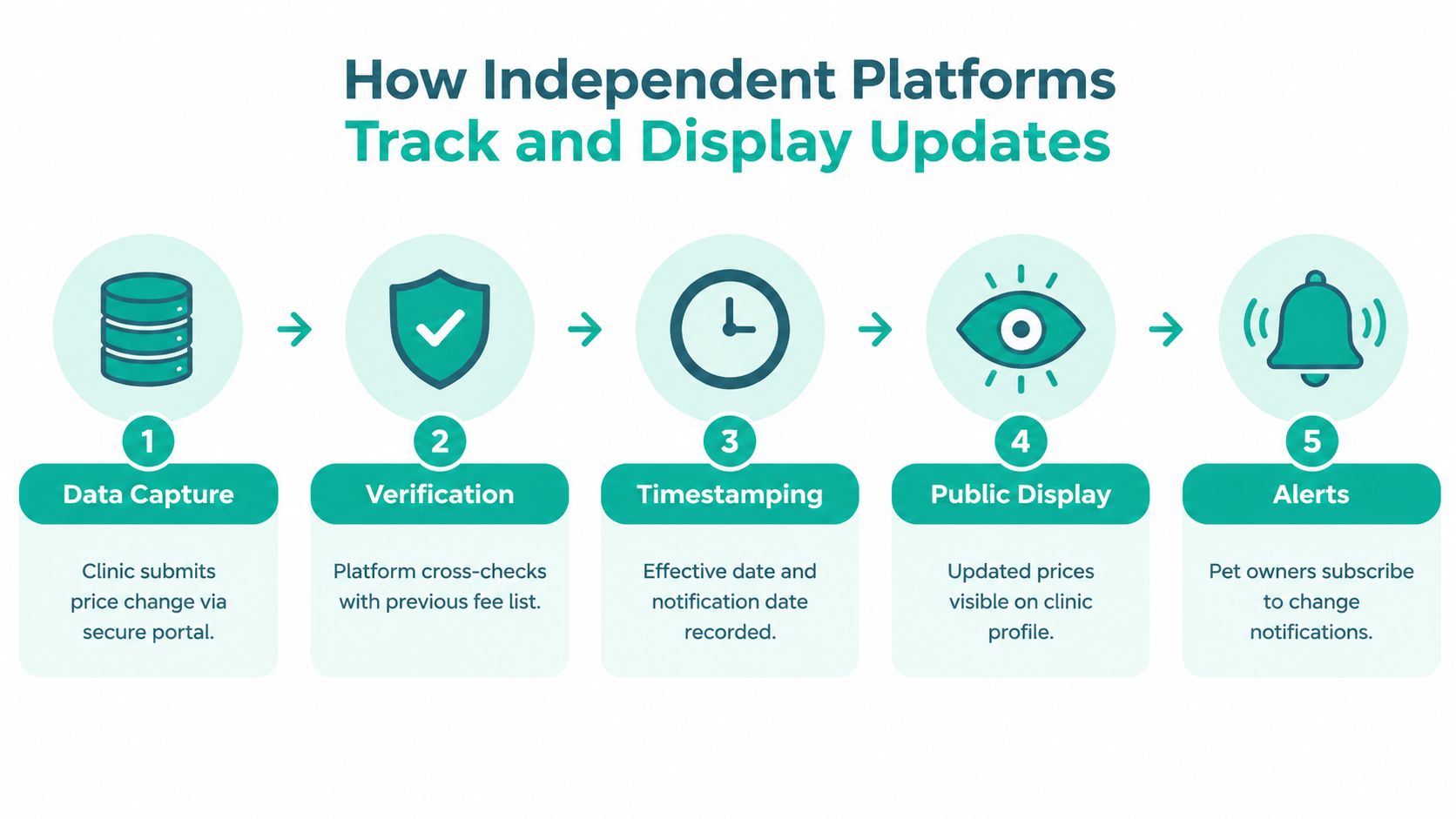
A price comparison platform shouldn't treat a listed fee as permanent. Veterinary prices change, practice websites change and booking systems may display information that doesn't match the main price page. A reliable platform therefore needs to track both publication events and booking-confirmation content.
The government guidance makes the connection important. A practice can only charge a new standard fee transparently if the updated price is available before the charge applies. That gives independent services a clear monitoring point: identify when a published list changes, record the effective date and check whether related booking information has changed as well.
Turning disclosures into usable comparisons
The data pipeline should preserve context, not just replace one number with another. A useful record identifies the practice, service, published price, VAT treatment where stated, source page and date observed. If a fee is withdrawn or redefined, the platform should mark that change rather than presenting an apparently comparable figure.
For owners, the result is more useful than a single clinic page. Postcode searches and county views can show which practices publish fees for the services being considered. Side-by-side listings help users distinguish a genuine price increase from a change in what the fee includes.
The Vet Price Comparison Site provides postcode-based searches, practice profiles and comparison tools for routine veterinary fees. It also offers optional price-change alerts for nearby practices, allowing owners to monitor disclosures instead of repeatedly checking individual websites. The platform's overview of the 2026 CMA veterinary reforms explains the regulatory context behind this approach.
For platforms, the timestamp is as important as the price. Without the date a fee was published or became effective, owners can't tell whether they're looking at a current disclosure or an outdated record.
Verification also protects practices. If a comparison listing appears wrong, a practice manager should be able to claim the profile, supply the current information and create a record of the correction. Independent data is most valuable when it remains transparent about where a price came from and when it was last checked.
For pet owners, use comparison information as a budgeting tool, not as a substitute for clinical advice. A standard consultation fee won't predict the cost of every diagnostic pathway, and a routine procedure may vary depending on the animal's condition. The point is to start conversations with better information.
What Pet Owners Should Expect When Fees Rise
A proper notification of price increase should arrive before the owner is committed to the new fee. It should identify the service affected, state when the new price applies and direct the client to the practice's complete price list. For treatment already under way, the practice should explain what changed in the estimate and why further approval may be needed.
That is very different from discovering a higher charge at reception. A verbal figure can be forgotten, misunderstood or based on assumptions about what the service included. Written information gives the owner something concrete to check against the booking confirmation, estimate and final itemised bill.

Compare the change before agreeing
Suppose a practice updates its vaccination fee. The owner should be able to see the new published price before booking and compare the service definition with nearby practices. The cheapest figure isn't automatically the right choice, because appointment availability, species expertise, included services and out-of-hours arrangements matter too.
For a more involved procedure, ask the practice to separate the expected components. The written estimate should make it easier to identify consultation charges, diagnostics, medicines, hospitalisation and follow-up care where those items apply. If the expected total changes materially, request the written update before authorising the additional work, unless the situation is an emergency.
A sensible owner's checklist looks like this:
- Check the date: Confirm when the revised fee takes effect and whether your booking was made before that date.
- Read the scope: Establish what the published price includes and what would be charged separately.
- Ask for writing: Request a written estimate for a treatment pathway expected to reach the relevant threshold.
- Watch the total: Ask for an update if the estimate is moving towards the 20% or £500 trigger.
- Keep documents: Save the booking confirmation, estimate, updates and itemised bill.
Independent comparison tools can help put a local increase into context. A county map or postcode search may show whether several practices publish similar fees or whether one practice has changed its pricing definition rather than raised the charge.
Owners can also use practical budgeting tools for recurring care. The guide on how to save on vet bills can support planning around routine appointments, preventative care and provider comparisons without encouraging owners to delay necessary treatment.
The strongest response to a higher fee isn't an automatic refusal. It's a clear question: what has changed, what does the price include and what alternatives are clinically appropriate? The reforms give owners a better basis for asking.
Actionable Compliance Steps for Practice Managers
Practice managers should treat price changes like controlled operational changes. A spreadsheet, website edit and staff email won't reliably manage the process if the practice has multiple branches, automated booking messages and separate systems for estimates and billing.
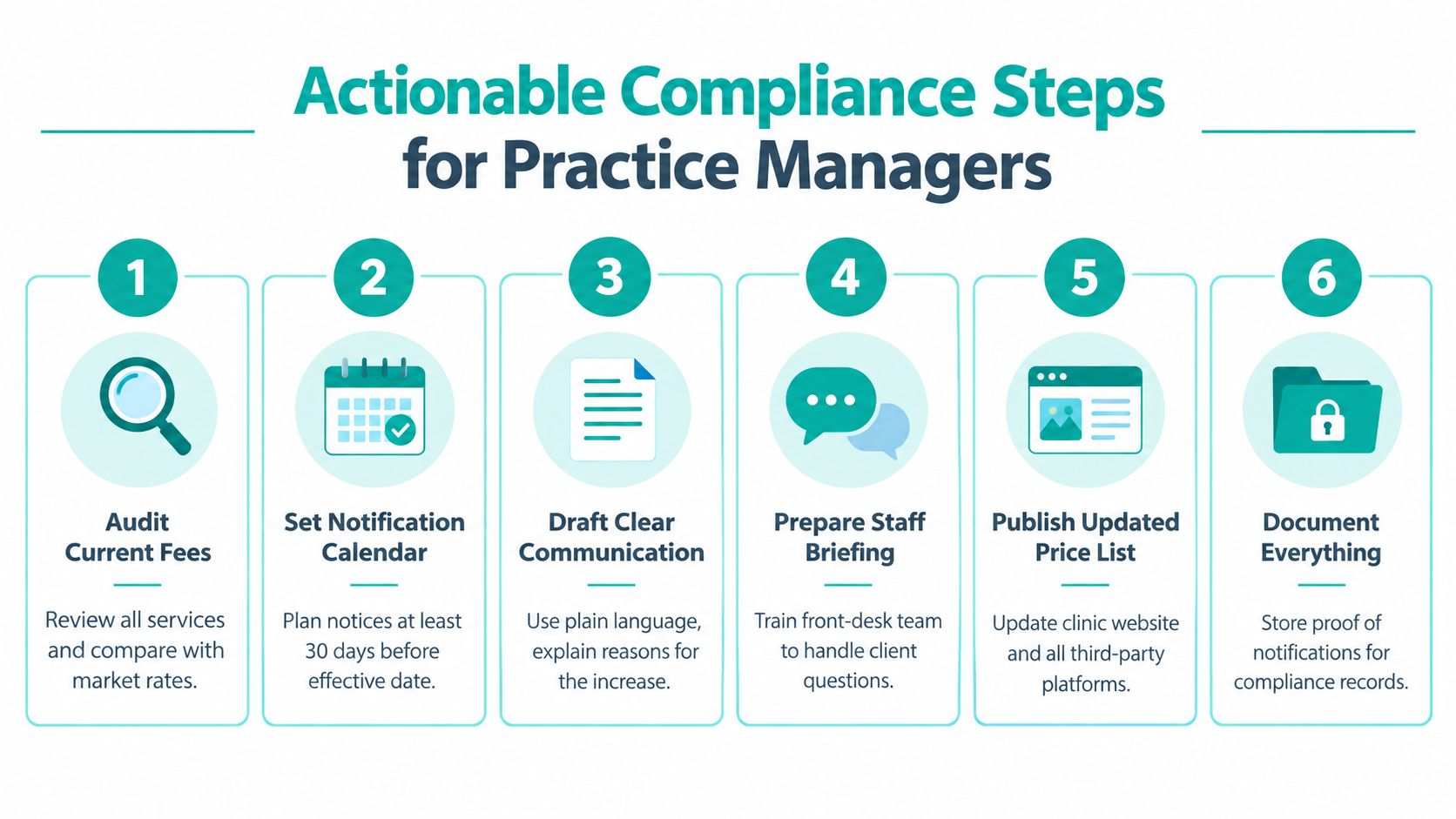
Start with an inventory. List every service that appears on the website, booking system, reception materials, client emails and third-party profiles. Include consultation types, vaccinations, neutering, microchipping, dental services, dispensing fees and cremation information where the practice offers them. The published list must be clear, accessible, VAT-inclusive and realistic for a standard case the government's veterinary business guidance sets out these requirements.
Build one controlled workflow
Use a named owner for each stage. Finance or leadership can approve the change, an administrator can update the public list, the digital team can revise booking content and the clinical lead can check that service descriptions remain accurate.
A workable sequence is:
- Audit current fees: Compare internal charges with every public version. Remove duplicate or obsolete lists.
- Set the effective date: Don't activate a new charge until the public information is ready.
- Update booking content: Check consultation and pre-booked treatment prices in digital confirmations.
- Configure escalation prompts: Add a written-update trigger when an estimate reaches the £500 threshold or rises by 20% or £500, whichever is lower.
- Brief reception staff: Give the team a short script, a current price list and a route for escalating disputes.
- Archive evidence: Store dated copies of lists, notices, estimates and client acknowledgements.
The practice should test the workflow with a dummy booking and a dummy treatment estimate. That exercise often exposes weaknesses, such as an old PDF on the website, a booking confirmation using a cached fee or a billing code that doesn't match the published service name.
A price change is complete only when the client-facing systems agree.
Practice managers should also review independent profiles. Claiming and managing a listing lets the practice correct contact details, service information and published prices rather than leaving third-party records unattended. The practice management area for veterinary businesses provides a route for maintaining a public listing and supporting accurate comparison information.
Keep the client message plain. Explain the revised fee, the effective date and what the charge covers. Don't bury a material change in a long newsletter or rely on reception staff to mention it verbally. Clear communication reduces arguments at the till because clients can see what they agreed to and when.
Building Long-Term Trust Through Proactive Transparency
A notification of price increase can either protect trust or damage it. The difference is rarely the existence of the increase itself. Owners are more likely to accept a change when the practice gives them time to understand it, explains what the fee covers and provides a realistic route to compare alternatives.
The 2026 reforms set a firm baseline. Practices must publish accessible prices for defined services, update those prices before charging new fees, include relevant information in digital booking confirmations and provide written estimates for higher-cost treatment. During an ongoing pathway, a written update is required when the estimated cost reaches the specified escalation point.
That framework benefits responsible practices as well as owners. A clinic that keeps its price list accurate reduces avoidable disputes, gives receptionists better information and makes budgeting conversations more productive. It also shows clients that the practice respects their ability to make informed decisions.
Independent comparison services have a supporting role, but they must present information carefully. A price should be tied to a named service, a practice and a clear publication date. Owners need comparable information, while practices need a fair opportunity to correct outdated listings. Neither side benefits from unexplained figures or hidden definitions.
Transparent pricing doesn't remove difficult treatment decisions. It gives owners a fairer basis for making them.
Pet owners should save written estimates, read booking confirmations and ask for updates when a treatment plan changes. Practice managers should audit every public price, connect estimate thresholds to internal systems and retain evidence of client communications. Those habits turn transparency from a regulatory task into a dependable part of patient care.
The era of discovering a fee increase only at checkout is ending. Practices that publish clearly and communicate early will be better placed to maintain confidence, while owners who compare published information can budget with fewer surprises.
Use The Vet Price Comparison Site to compare published veterinary fees by postcode, review local practice information and monitor available price updates. Visit the site before booking routine care, then use the written estimate and notification process to question any change that affects your pet's treatment budget.