You've booked the appointment, then the practice gives you a neutering quote that's far higher than expected. Your dog's sex, size and the clinic's pricing structure may all be pushing up the bill, while a local charity could reduce it substantially, provided you meet its rules and apply in the right order. The key is to compare the full cost first, then match your dog's exact profile to the right assistance scheme.
Table of Contents
- Understanding the True Cost of Neutering in the UK
- Comparing Local Vet Fees Before You Book
- Navigating Charity Vouchers and Council Subsidies
- The Exact Workflow for Securing Financial Assistance
- Managing the Remaining Balance and Timing the Procedure
- Final Checklist for a Cost-Effective Neutering Plan
Understanding the True Cost of Neutering in the UK
There isn't one standard UK price for dog neutering. Major animal-welfare and breed organisations commonly quote around £100 to £400, while the Royal Kennel Club's guidance on neutering explains that the final fee depends on the dog's breed, size and sex.
That range isn't a minor pricing detail. A male castration is usually less expensive than a female spay because the procedures differ in complexity. Larger dogs also tend to cost more because they require more anaesthetic and may involve more demanding surgery. A quote that looks high for a small male dog may be reasonable for a large female dog, but you shouldn't accept either figure without checking what it includes.
Why weight and sex change the quote
Recent UK pricing examples make the difference clear. A university veterinary practice publishes charges ranging from £190 for a small male castration to £620 for a large female spay, as shown in its published veterinary price list. A Scottish subsidy scheme also uses weight bands for spays, with prices rising from £160 for dogs under 10kg to £250 for dogs over 40kg from February 2026, according to the same verified pricing information.
Independent UK price surveys cited in the available research place typical female spay costs around £430 to £485, compared with roughly £320 to £360 for males. Those figures aren't a universal tariff, but they show why generic “low-cost neutering” advice can mislead owners. The right budget depends on the dog standing in front of you.
Practical rule: Weigh your dog, confirm its sex, and ask whether the quote falls into a different surgical or subsidy band before comparing assistance offers.
Why uptake makes affordable access important
Neutering affects a significant part of the UK dog population, but the measured rate varies according to the dataset. The PDSA 2024 Animal Wellbeing Report says 68% of UK dogs were neutered, unchanged from 2023 but down from 74% in 2019. Separate UK clinical-record research published in PLOS One recorded 975,966 neutered dogs among 2,231,064 dogs with a recorded neuter status in 2019, equal to 43.74% of that measured population.
The figures shouldn't be treated as directly interchangeable. They cover different populations and methods, but both show why affordable access matters. For owners on lower incomes, a local voucher may determine whether routine surgery is manageable.
Use the dog neutering cost calculator to build a more realistic starting estimate before contacting charities or practices.
Comparing Local Vet Fees Before You Book
Start with the local retail price, not the subsidy. A voucher that looks generous can still leave an uncomfortable balance if the participating practice charges more for your dog's weight or procedure type.
The Royal College of Veterinary Surgeons guidance on fees and practice information confirms that veterinary fees aren't statutory. Prices are negotiated between the veterinary surgeon and client, although practices must comply with consumer protection law and avoid misleading pricing. That's why two practices in the same area can publish different totals.
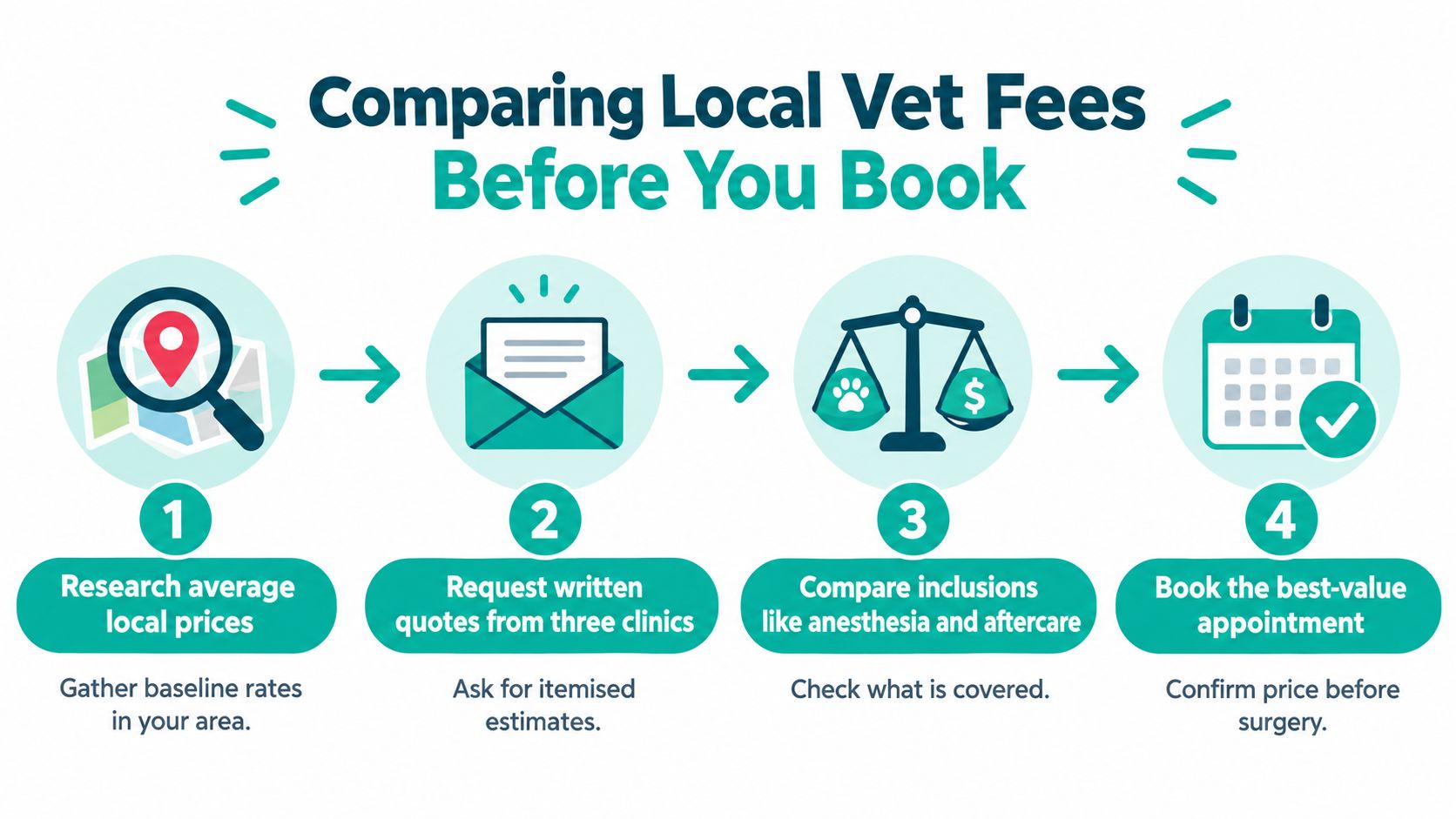
A sensible comparison process
-
Record the dog's details. Note sex, current weight, breed and any relevant medical information. Don't compare a female spay quote with a male castration quote or place a small-dog price beside a large-dog price without checking the bands.
-
Search published local fees. Use postcode-based tools, county pages and practice price lists to establish the local baseline. The Vet Price Comparison Site's guide to choosing a vet practice is useful when you're comparing more than the headline figure.
-
Request a written estimate. Ask the practice to list the surgery, anaesthetic, monitoring, pain relief, follow-up care and any required tests separately. A low headline fee is no bargain if essential aftercare appears as an unexpected add-on.
-
Check clinic eligibility. Before applying for a voucher, confirm that the practice accepts that scheme. Some assistance is limited to designated vets, while others may require the voucher to be sent directly to the selected practice.
-
Compare the balance, not just the quote. Subtract the confirmed subsidy from the written fee, then ask how payment is handled. The cheapest advertised procedure isn't automatically the cheapest complete appointment.
What to ask before booking
Ask whether the price changes if your dog is overweight, in season, pregnant, cryptorchid or found to need additional care. Also confirm whether a microchip can be included and whether the practice offers a follow-up appointment within the quoted fee.
Don't rely on a verbal promise that “it should be around” a particular amount. Request an itemised estimate and ask how long it remains valid. Clear paperwork gives you something concrete to compare with the charity's contribution rules.
Navigating Charity Vouchers and Council Subsidies
UK neutering help with cost is usually local, conditional and limited. It may come from an RSPCA branch, Blue Cross, a council-linked programme or another welfare organisation. These schemes don't operate as one national entitlement, so your postcode matters as much as your income.
The main distinction is between a fixed-value voucher and a subsidised price band. A fixed voucher deducts a set contribution from the practice bill. A subsidised band may offer a reduced procedure price, but it can still vary by weight and sex, and it may only be available at selected clinics.
Charity voucher value examples
| Organisation / Branch | Voucher type | Value / Coverage |
|---|---|---|
| RSPCA Oxfordshire | Fixed contribution voucher | £70 for a female dog or £50 for a male dog, plus £10 for microchipping, deducted from the vet bill |
| RSPCA Norwich branch | Fixed contribution voucher | £200 for a dog, with a free microchip potentially included; catchment and validity rules apply |
| Blue Cross | Tiered affordable pricing | Band A services are often fully subsidised, while Band B services are partially subsidised; example charges include £250 for a bitch spay and £180 for dog castration |
| RSPCA East Norfolk | Weight-and-sex-linked voucher bands | Full-cost voucher bands range from £128 for a male dog under 20kg to £348 for a female dog over 40kg |
| RSPCA Nottingham | Size-and-sex-dependent voucher | Contribution varies by the dog's size and sex and is restricted to designated vets |
The RSPCA Oxfordshire cost-help information shows how tightly some schemes control the process. Applicants may need proof of means-tested benefits, pet details and vet details, while the appointment must already be booked. Its voucher is emailed to the chosen practice and expires after one month.
The RSPCA Norwich branch scheme demonstrates a different model. Support is restricted to its catchment area, vouchers are valid for four months, and applicants may qualify whether or not they receive benefits. The fixed dog contribution is £200, but the owner remains responsible for any balance.
Match the scheme to the dog
Don't choose a scheme because it has the largest advertised contribution. Check four points first:
- Catchment area: Confirm that your home address falls within the branch or council's operating area.
- Procedure category: Establish whether the scheme distinguishes male castration from female spay.
- Weight band: Ask which weight will be used and whether the practice reassesses it on the day.
- Participating vet: Check whether you can use your preferred practice or must choose from an approved list.
The comparison of independent vets and corporate chains can help you assess the practice behind the subsidy, but the charity's own eligibility rules always take priority. Treat the voucher as a contribution, not a promise that the whole bill disappears.
The Exact Workflow for Securing Financial Assistance
Most failed applications aren't caused by complicated forms. They happen because the owner applies too early, books the wrong practice or misses the voucher's expiry period. Follow the scheme's sequence exactly.
Complete these steps in order
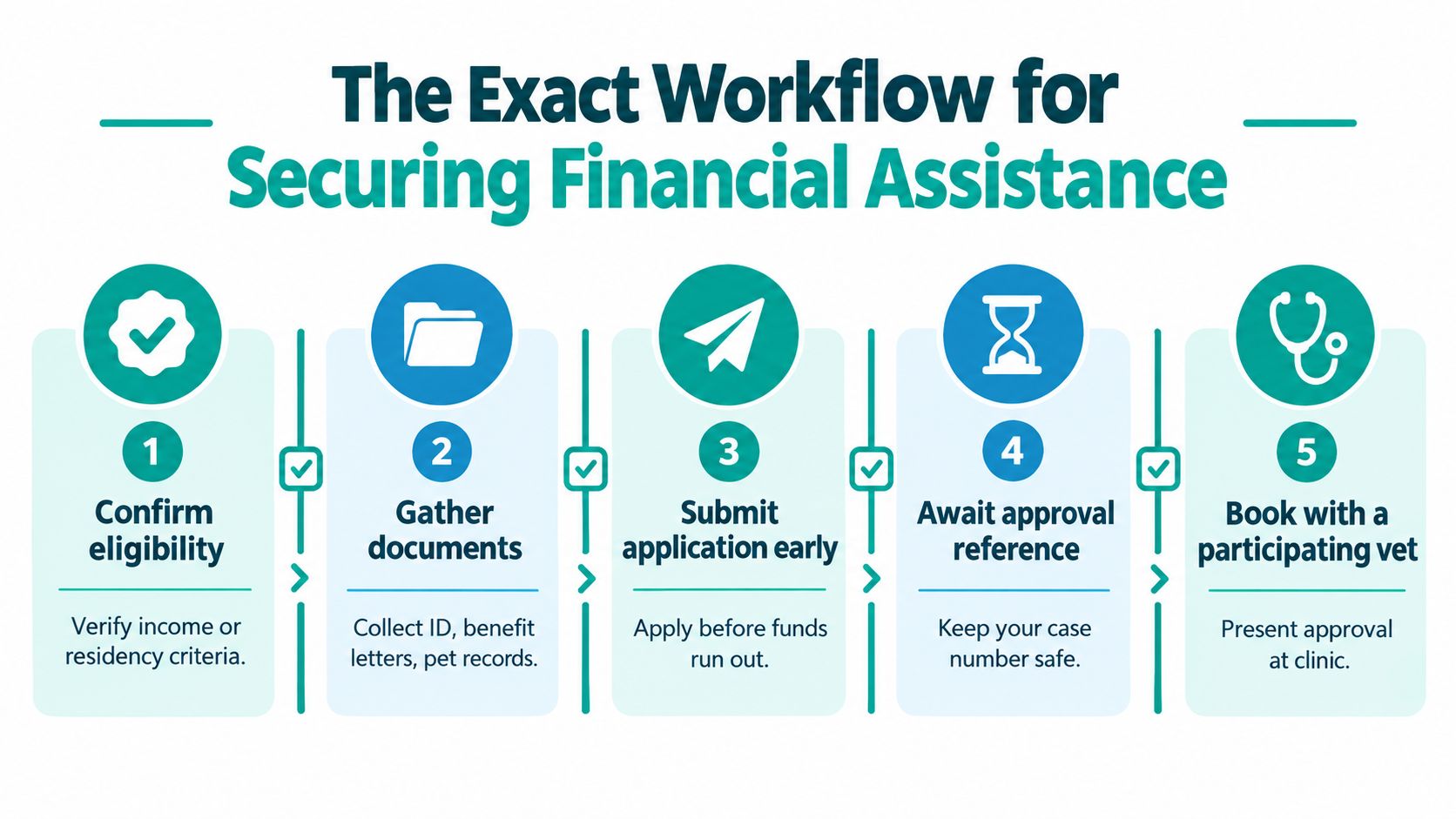
First, confirm eligibility. Contact the local charity, branch or council programme and check residency, income, benefit and dog-profile requirements. Ask whether funding is currently available and whether the scheme has a waiting list.
Next, identify an approved practice. If the scheme limits use to designated vets, choose from its list. Get a written estimate for your dog's actual sex and weight band, then ask the clinic how the contribution will be recorded on the invoice.
Book the appointment before applying where required. RSPCA Oxfordshire states that the appointment must already be booked before its application is submitted. This prevents a voucher being issued without a confirmed clinic, but it also creates a timing risk.
Gather the evidence. Prepare proof of means-tested benefits if the scheme requests it, alongside your pet's details and the chosen vet's information. Check names, addresses and reference details carefully. A small mismatch can delay approval.
Submit the application and monitor the deadline. Some schemes email the voucher directly to the vet rather than to the owner. Keep the approval message, case reference and appointment date together, and ask the practice to confirm receipt.
Pay the remaining balance. A contribution scheme usually reduces the bill rather than removing it. Confirm the amount due before surgery and ask whether payment must be made on the day.
A one-month expiry window, as used by the Oxfordshire example, leaves little room for postponement. Other branch schemes use longer windows, such as the four-month validity published by RSPCA Norwich, but you should never assume one branch follows another's rules.
This short video can sit alongside the written process as a reminder to check the scheme's current application requirements before committing to an appointment.
Managing the Remaining Balance and Timing the Procedure
A subsidy rarely makes a large-dog or female-dog operation free. The sensible approach is to calculate the balance before booking, then decide how you'll pay it without compromising the dog's care.
Start by asking the practice for its full estimate after the voucher is deducted. Get separate answers for pre-operative blood tests, pain relief, a protective collar, follow-up checks and any extra charge if the procedure becomes more complex. You need the post-assistance total, not just the published surgery price.
Choose a payment route before the appointment
Some practices offer their own payment plans, while others require payment in full. Ask directly whether staged payments or a finance option is available, and check the terms carefully, including any interest or administration charges. Never assume that a charity voucher can be combined with every clinic finance arrangement.
Pet insurance generally covers unexpected illness and injury rather than routine neutering. A preventative-care add-on may contribute towards routine services, but the policy wording controls what is covered, so check the benefit limits and exclusions before counting it in your budget.
For ongoing routine-care budgeting, the guide to whether pet care plans are worth it can help you compare a practice plan with paying separately. Don't buy a plan solely because you have one neutering bill. Check whether its wider benefits match the care your dog is likely to need.
Bundle only what makes practical sense
Neutering may be a useful time to ask about microchipping, particularly where a voucher adds a contribution towards it. RSPCA Oxfordshire's example includes an additional £10 for microchipping, while some branch schemes advertise a free microchip as part of the support.
That doesn't mean every service should be added automatically. Ask whether the dog is due a primary vaccination, whether combining services changes the fee, and whether the practice recommends separating anything for clinical reasons. The aim is to avoid a second unnecessary visit, not to turn a routine procedure into an oversized bill.
Timing matters too. Book when you can provide calm home recovery, arrange transport and monitor the wound. A cheap appointment that forces you to take unsuitable time off work or pay for avoidable logistics may not be the lowest total cost.
Budgeting principle: Secure the written quote, confirm the subsidy, and know the remaining balance before the dog goes under anaesthetic.
Final Checklist for a Cost-Effective Neutering Plan
A good plan is simple to audit. Take a dog whose weight places it near a charity's threshold. The owner shouldn't rely on a generic online claim that the dog is “small” or “large”. They should ask the participating practice which band applies, confirm the sex-specific contribution, and calculate the balance from the itemised estimate.
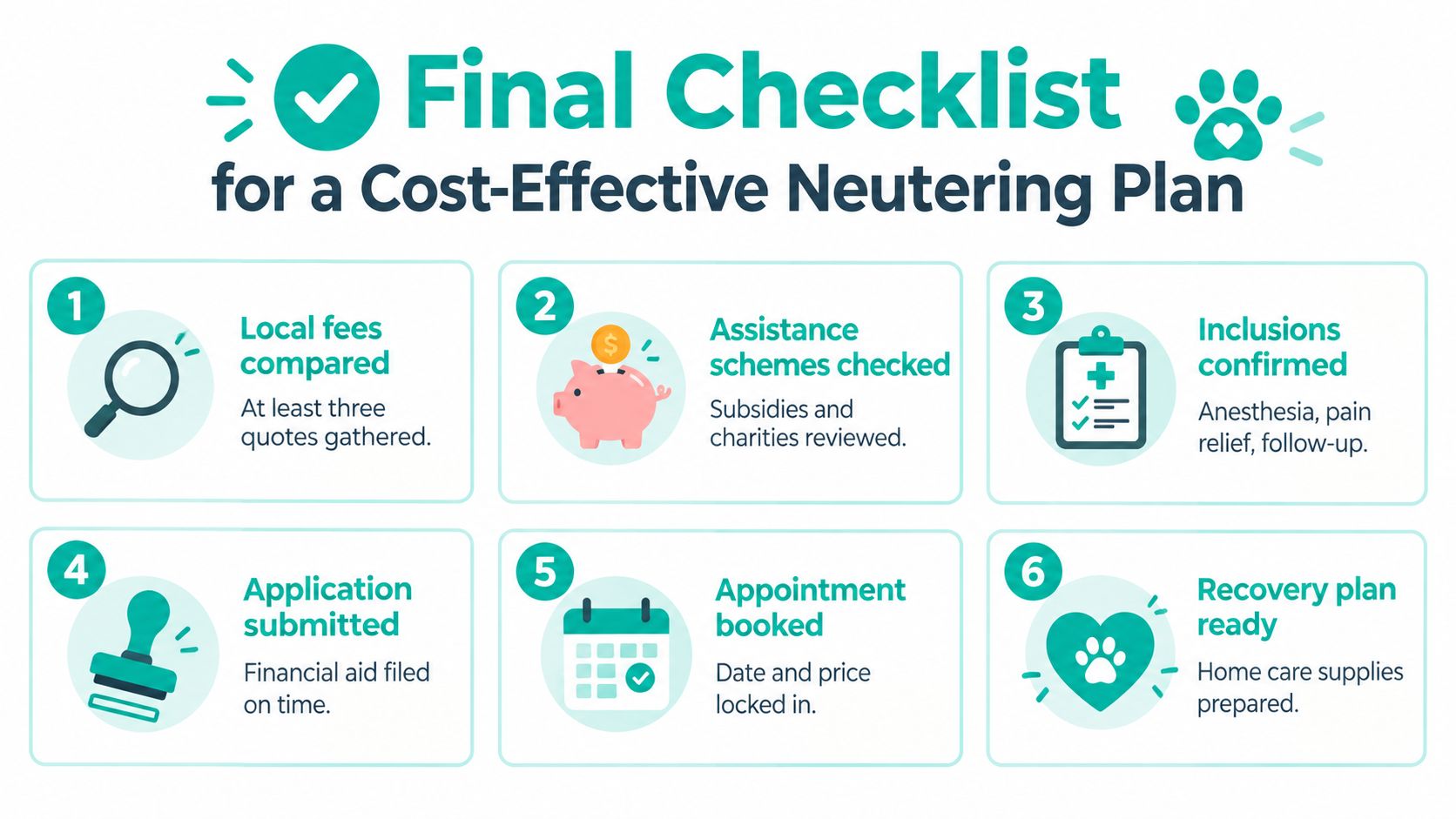
Use this checklist before paying a deposit or submitting an application:
- Compare local fees: Gather published or written estimates from several suitable practices, using the same procedure and dog profile each time.
- Check assistance schemes: Search local RSPCA branches, Blue Cross services, council-linked programmes and other welfare charities serving your postcode.
- Verify the weight band: Weigh the dog accurately and ask whether the scheme uses current weight, expected adult weight or a practice-defined category.
- Confirm inclusions: Check anaesthetic, monitoring, pain relief, follow-up care, microchipping and any required tests.
- Book with the right clinic: Make sure the practice is approved by the charity before you commit to the appointment.
- Submit paperwork promptly: Provide benefit evidence, pet details and vet information in the format requested.
- Record the deadline: Write the voucher expiry date beside the appointment date. Don't let a valid approval lapse.
- Plan the balance: Decide how you'll pay the remainder and ask about any available practice payment arrangement.
- Prepare for recovery: Arrange transport, a quiet recovery space and the supplies recommended by the veterinary team.
Don't delay solely because the first quote feels unaffordable. Check the local options, but don't rush into an unsuitable clinic or scheme either. The right decision combines clinical suitability, transparent pricing, confirmed assistance and a manageable final balance.
The guide to saving on vet bills offers further ways to control routine veterinary spending. Use it alongside a direct conversation with the practice, especially if your dog's weight, sex or health history creates a more involved estimate.
Use The Vet Price Comparison Site to compare published veterinary fees by postcode, review local practice pricing and build a realistic neutering budget before you book. Check the full estimate, then use the result to approach the charity or council scheme that matches your dog and location.