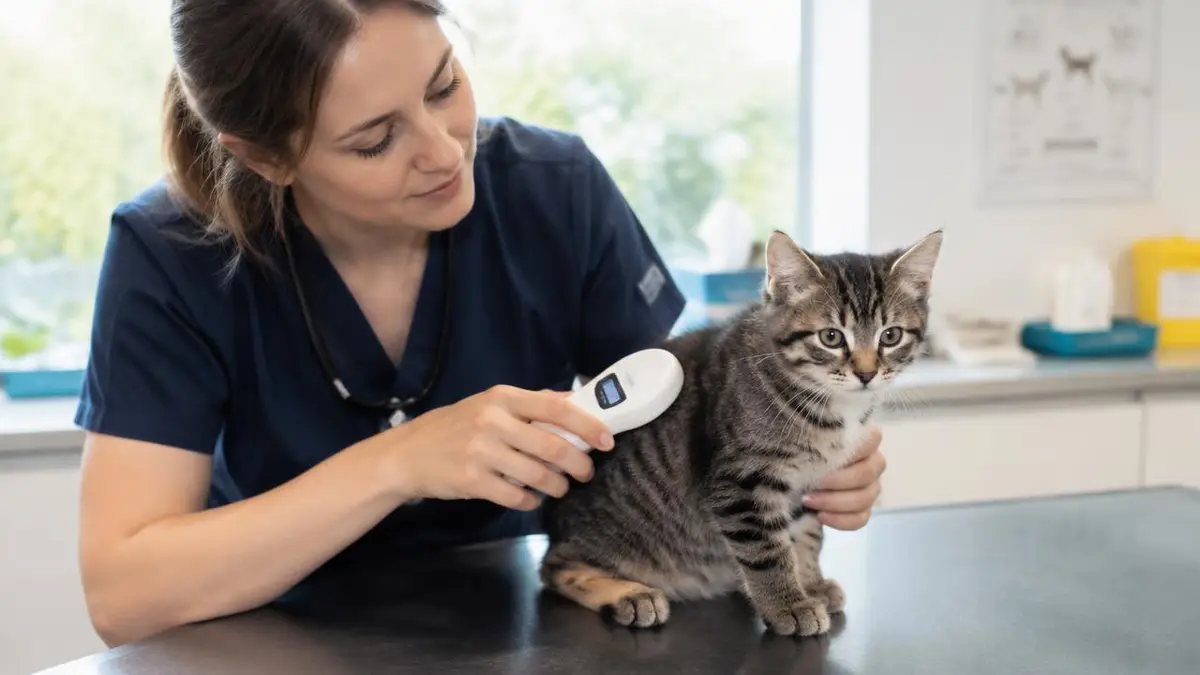
Microchipping is one of the cheapest things a vet does, and one of the few that is a legal requirement. Of the practices in our index, 2,238 publish a microchip price. The typical price is £27, and most charge between £22 and £35.
What practices charge
- Typical price: £27
- Middle half of practices: £22–£35
- Linnaeus practices: typically £25
- CVS practices: typically £22, the lowest of the large groups
- IVC Evidensia practices: typically £40, the highest of the large groups
Some practices include the chip in a puppy or kitten package, and many fit it while the pet is already under anaesthetic for neutering. Rehoming charities usually chip animals before they leave.
The price normally covers the chip, the implant and the first registration on a database. It takes a few seconds and is done through a needle between the shoulder blades.
What the law says
Dogs. In England, Scotland and Wales every dog must be microchipped by eight weeks old. The breeder must do it before the puppy is sold. In Northern Ireland a dog needs a microchip to get its dog licence.
Cats. In England, pet cats must be microchipped by 20 weeks old. This has applied since 10 June 2024. If a cat is found without a chip, the owner is given 21 days to have one fitted and can be fined up to £500 if they do not.
The chip is only useful if the details on the database are right. Keeping them up to date is also a legal requirement. Official guidance is on GOV.UK.
Updating your details
When you move house or change phone number, contact the database the chip is registered on. Your vet can scan the chip and tell you which one it is.
Some databases charge a small fee to change details or transfer a pet to a new owner, and some offer a paid lifetime account. Paying for the account is optional. Making sure the basic record is correct is what matters.
Before you travel
A microchip is needed before a rabies vaccination for travel. If you are taking a pet abroad, see our animal health certificate guide.
To see what practices near you charge, use find a vet.