TL;DR
- • A routine scale-and-polish under GA typically costs £250–£450 in the UK in 2026.
- • Add extractions and dental X-rays and the total commonly reaches £800–£2,000+.
- • Untreated periodontal disease is linked to heart, kidney and liver problems — the long-term cost is far higher than prevention.
- • Daily tooth-brushing remains the single most cost-effective preventative step.
Why dental disease is so common — and so expensive
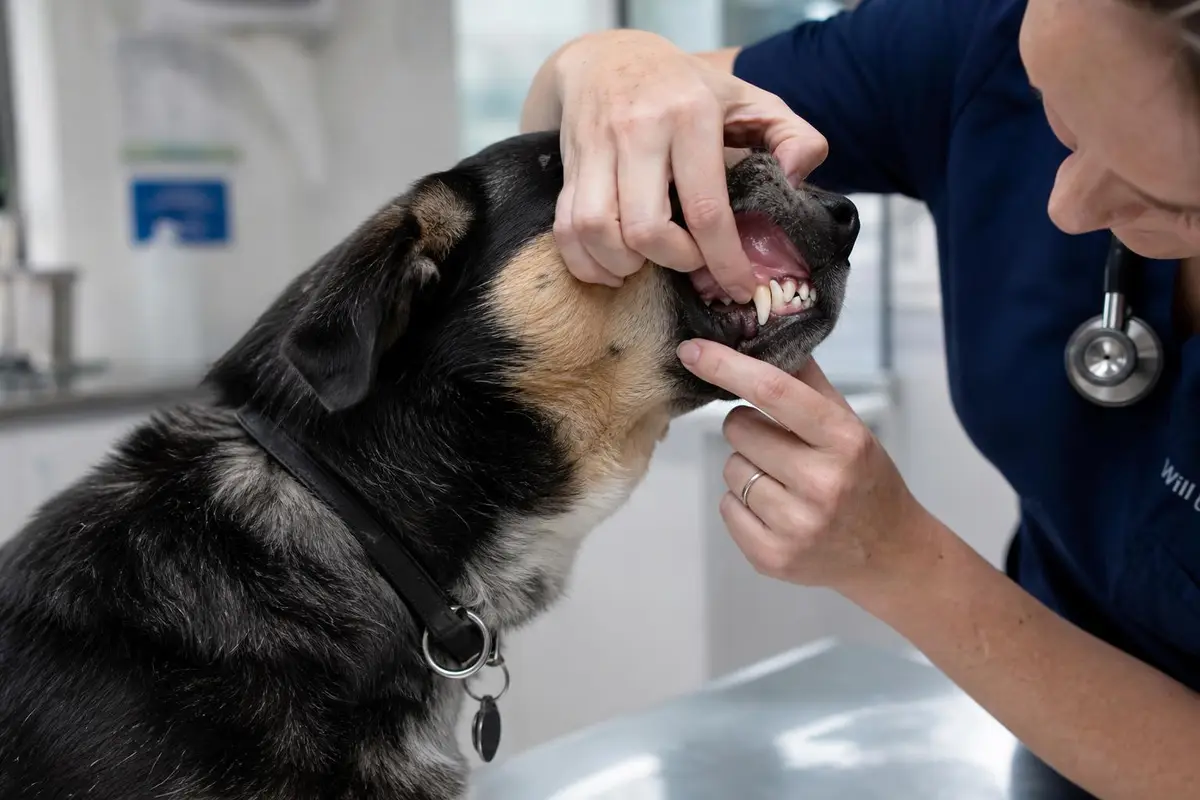
By the age of three, roughly 80% of dogs show signs of periodontal disease (RCVS, BVA). Plaque hardens to tartar within 24–72 hours and, once below the gumline, can only be removed under general anaesthetic. Because everything happens out of sight, owners often only notice when bad breath, bleeding gums or a reluctance to chew finally appear — by which point treatment is significantly more involved.
What UK practices actually charge in 2026
Pulling published pricing from across our database of 1,600+ UK practices, the most common dental treatment costs in June 2026 are:
| Procedure | Typical UK cost |
|---|---|
| Pre-anaesthetic consult + blood test | £60–£140 |
| Scale and polish (GA, no extractions) | £250–£450 |
| Single tooth extraction (simple) | £30–£80 |
| Surgical extraction (carnassial / canine) | £90–£250 per tooth |
| Full-mouth dental X-rays | £80–£180 |
| Advanced dental (root canal / referral) | £600–£1,800 |
A "full dental" with several extractions therefore commonly lands between £800 and £2,000. London and the South East run 15–25% above this; the North East and Yorkshire 10–20% below.
Why it costs more than human dentistry
Every dental on a dog requires general anaesthesia, IV fluids, monitoring by a registered veterinary nurse, dental X-rays and full sterile equipment. The hands-on procedure may take 60–120 minutes — comparable to a multi-hour human appointment performed across several visits, but completed in one. The GA package alone accounts for £150–£250 of the total.
The hidden long-term cost of doing nothing
- Cardiac disease: oral bacteria are repeatedly linked to endocarditis (BSAVA).
- Kidney and liver strain: chronic infection contributes to organ damage over time.
- Repeat anaesthetics: a dog who has annual scale-and-polishes from age 3 typically needs fewer extractions and shorter procedures — saving an estimated £1,500–£3,000 across a lifetime.
Prevention that actually works
- Daily brushing with a dog-specific enzymatic toothpaste — the single highest-ROI intervention.
- VOHC-accredited dental chews (Dentastix and similar help but do not replace brushing).
- Annual dental check bundled with the booster appointment — most practices include this free.
- Dental diets (Hill's t/d, Royal Canin Dental) for at-risk breeds.
- Avoid hard items (antlers, bones, stones) — slab fractures of the carnassial tooth are one of the most expensive single-tooth problems we see in our pricing data.
FAQs
How often should my dog have a dental?
Most healthy dogs benefit from a scale-and-polish every 1–3 years; small breeds (Yorkies, Cavaliers, Dachshunds) often need annual dentals.
Is anaesthesia-free dental cleaning safe?
The RCVS and BVDA strongly advise against it — it cannot clean below the gumline (where disease lives) and risks injury to a conscious patient.
Will my insurance cover it?
Most lifetime policies cover dental treatment only if you can prove an annual dental check has been performed. Read the policy carefully — see our insurance guide.
About the data: Price ranges are calculated from published price lists on UK practice websites, refreshed June 2026 and cross-checked against our internal pricing dataset of 1,600+ practices. Use our comparison tool to find dental pricing within your postcode.